
Full 25-point door and opener safety check with every visit - springs, cables, rollers, tracks, and your LiftMaster or Chamberlain opener included
You get a price before we start. It does not change when the truck arrives.
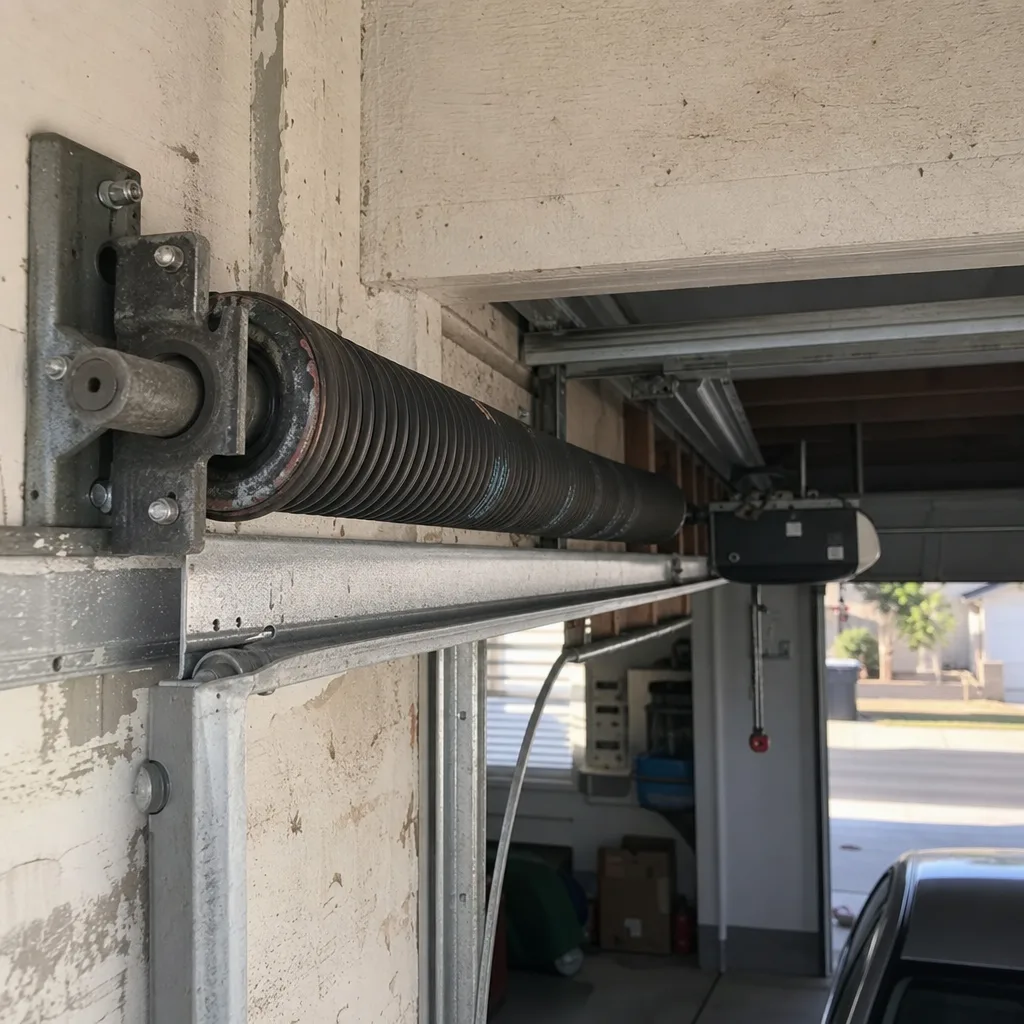 Before
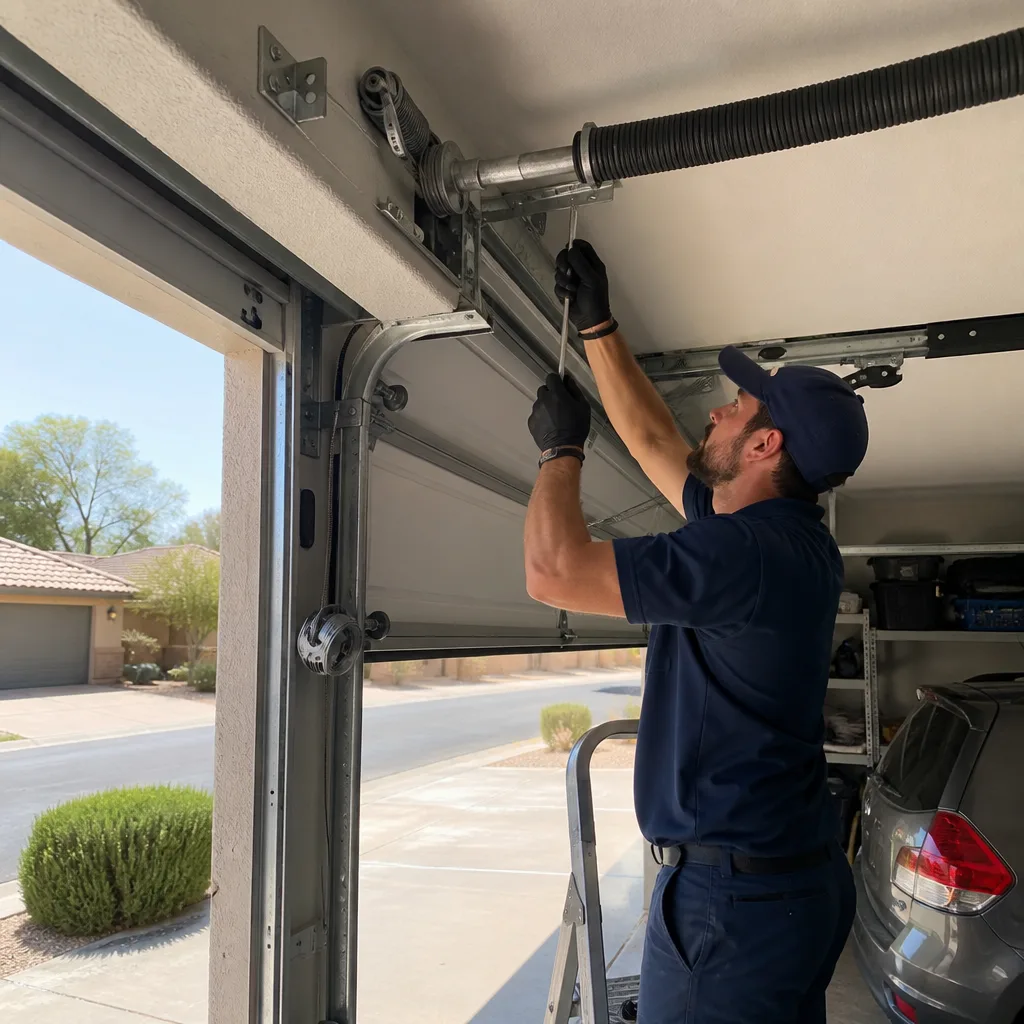 After
After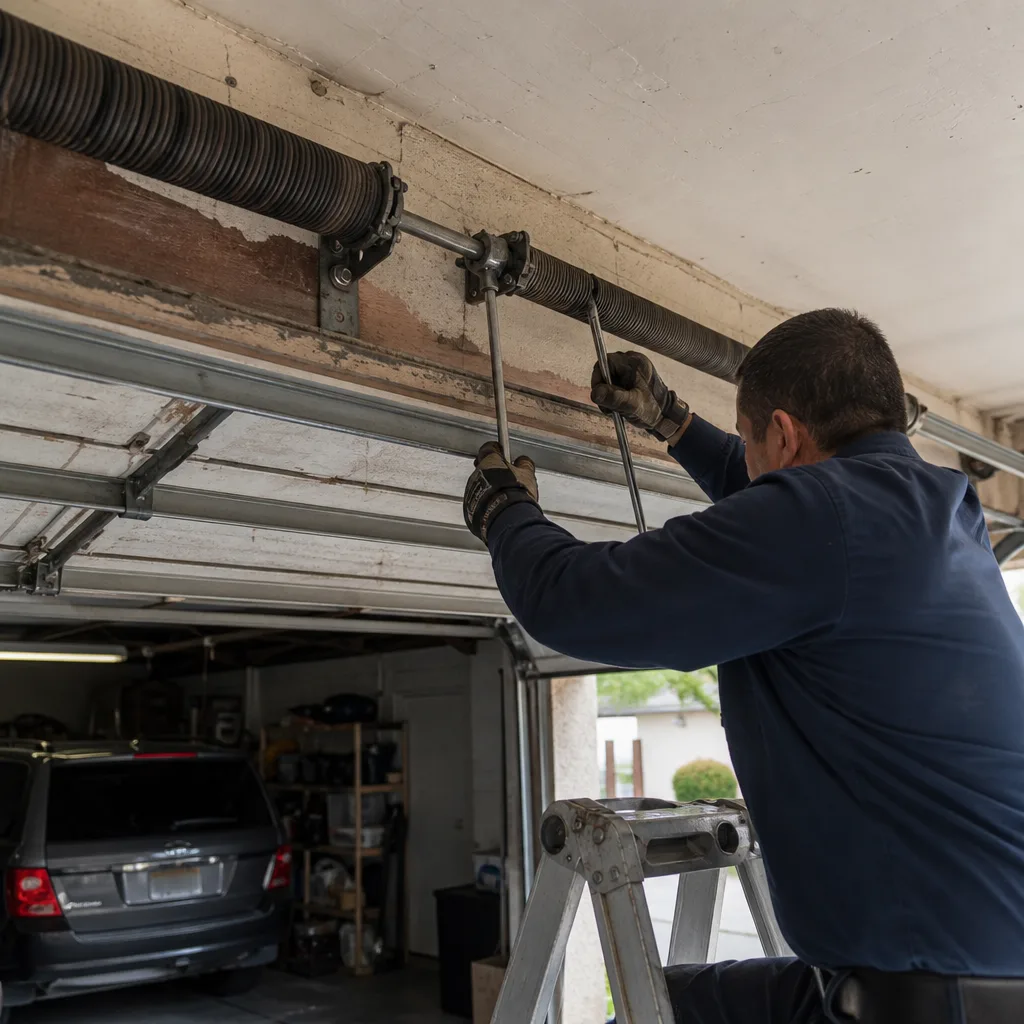 Before
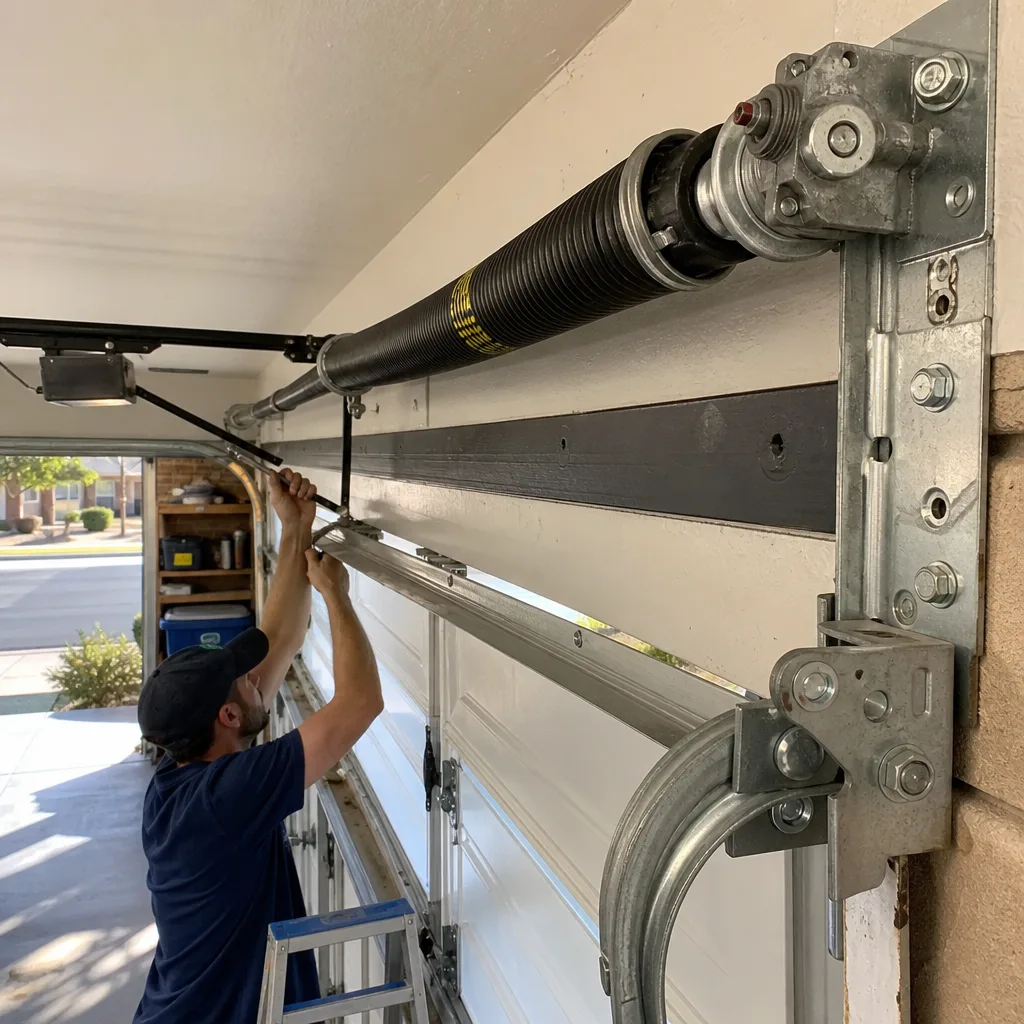 After
After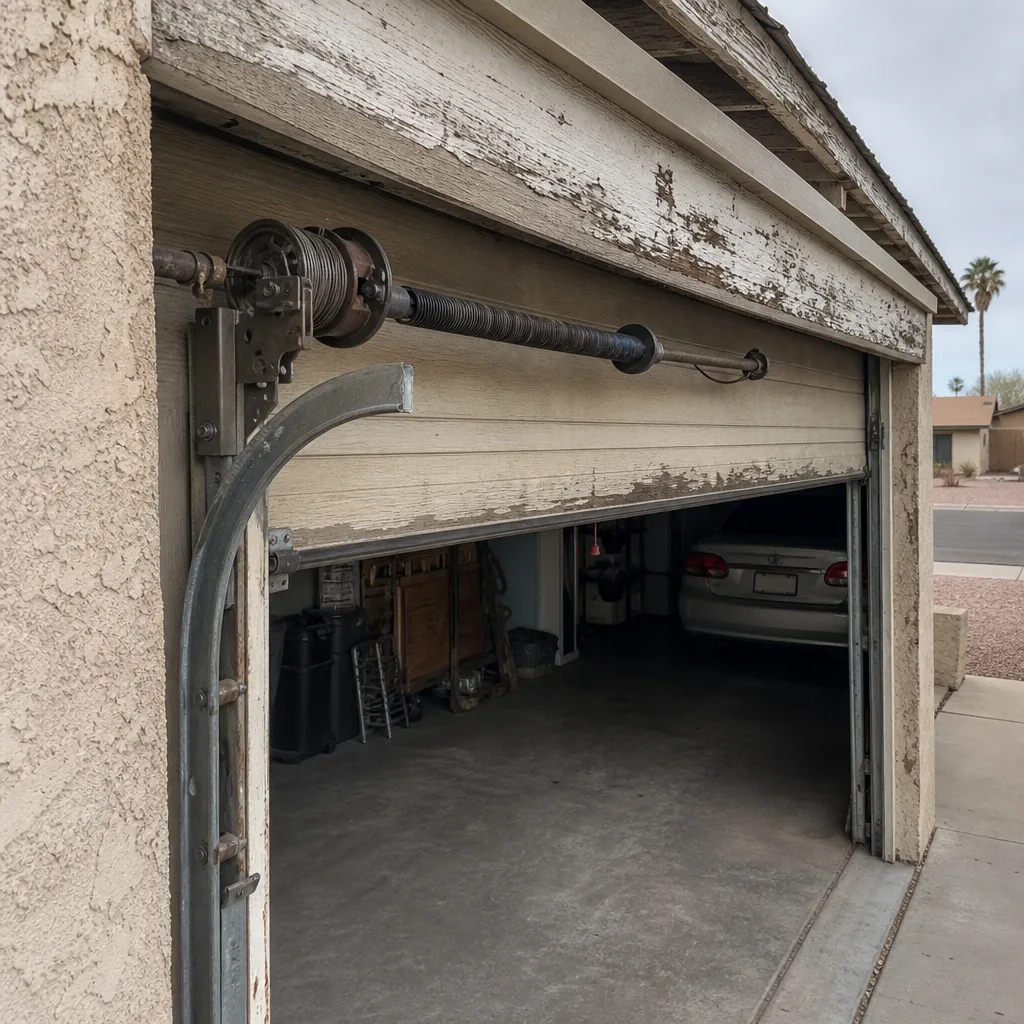 Before
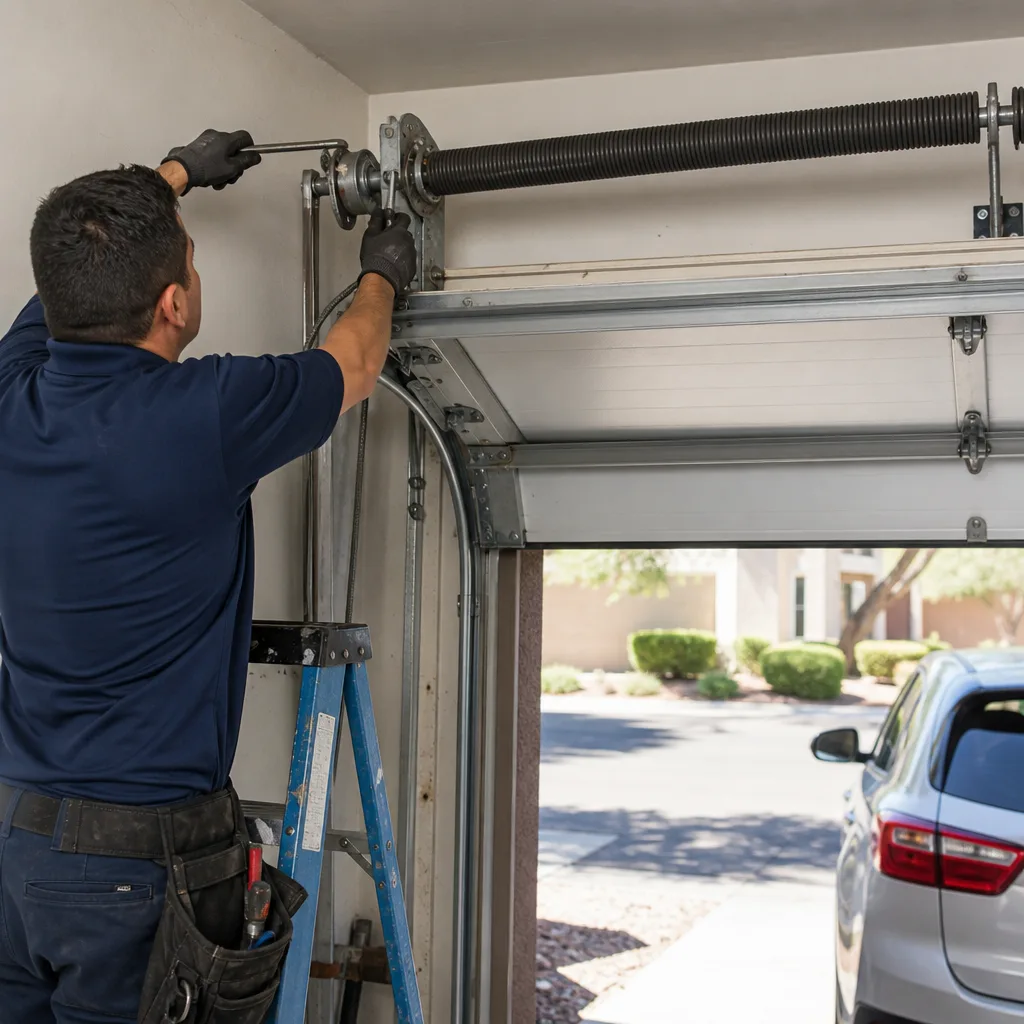 After
AfterGenie Roller Replacement: The Tempe Owner’s Guide
Genie roller replacement in Tempe typically runs $110-$220 installed, and most jobs are done the same day we arrive. We keep Genie-compatible rollers on the truck, so the technician who shows up is carrying the part, not a clipboard and a promise to come back. The way most Tempe homeowners discover a roller has failed is visual: the door starts jerking on one side, or you hear a grinding sound that gets worse by the week, not the hour.
Rollers are the small wheels mounted on the door’s side hinges that ride inside the vertical and horizontal tracks. A Genie door uses either 7/16-inch or 5/8-inch stems depending on the model year and whether the door is original or a retrofit. When one roller seizes, the door still opens – but the strain lands on the operator, the cables, and the other rollers, and that’s when a $140 swap becomes a $400 repair. We’d rather you call before the chain reaction starts.
Key takeaways:
- Installed price in Tempe: $110-$220, written and agreed before work starts
- We stock Genie-compatible rollers in both common stem sizes on the truck
- Same-day replacement is standard – no second visit for parts
- You get a photo record of the failed part and the new part installed, per Clause 4 of The Haven Standard
Which Genie Models This Applies To
Genie doesn’t make garage door panels or hardware themselves – they build the openers, and the doors come from manufacturers like Clopay, Amarr, or Wayne Dalton that install Genie openers at the factory or through dealer networks. That means a “Genie roller” is really a roller on a door paired with a Genie opener, and the roller spec is set by the door, not the opener. The compatibility question that actually matters is stem size and wheel diameter.
Genie-branded doors, typically sold through big-box stores and installed between the late 1990s and today, use either a 7/16-inch stem roller on standard residential doors or a 5/8-inch stem on heavier insulated doors. The stem is the metal shaft that inserts into the hinge barrel and clips or screws into place. The wheel itself is either 2-inch steel or 2-inch nylon, and in Tempe we strongly prefer nylon: steel rollers against steel tracks in 110-degree heat are a grinding match made in a junkyard.
OEM Genie rollers are fine but unremarkable. The aftermarket equivalent from a quality supplier – sealed ball bearings, nylon wheel, zinc-plated stem – typically outlasts the OEM part by three to five years and costs about the same. We’re an independent Tempe service provider, not affiliated with Genie, and we’ll install either one. Just know that if you’re comparing quotes, the difference between OEM and a quality aftermarket roller is about material, not about some Genie-specific magic.
How to read your door: open it halfway, look at the hinge on either side, and you’ll see the stem where the roller enters the hinge. If you can’t tell whether it’s 7/16 or 5/8, send us a photo with a quarter held next to the stem for scale. Marcus Deller has been matching rollers to doors long enough that a photo and a two-minute phone call usually settles it.
Signs Your Genie Roller Replacement Is Failing
- The door shudders or stutters on the way up or down. A seized roller wheel doesn’t spin, so it drags along the track instead of rolling. The shaking is the door fighting itself, and the operator motor is doing double duty every cycle.
- One side of the door sounds louder than the other. Stand in the center of the door and run it. If the grinding or scraping is clearly louder on one side, that’s the side with the failing roller – sound doesn’t travel that far in a garage, so what you hear is what’s actually happening.
- You see metal dust or black rubber flecks on or below the track. That’s the roller wheel or the track surface wearing away. Metal dust on a nylon wheel means the bearing has failed and the wheel is wobbling against the track. Black flecks on a steel roller mean the wheel itself is disintegrating.
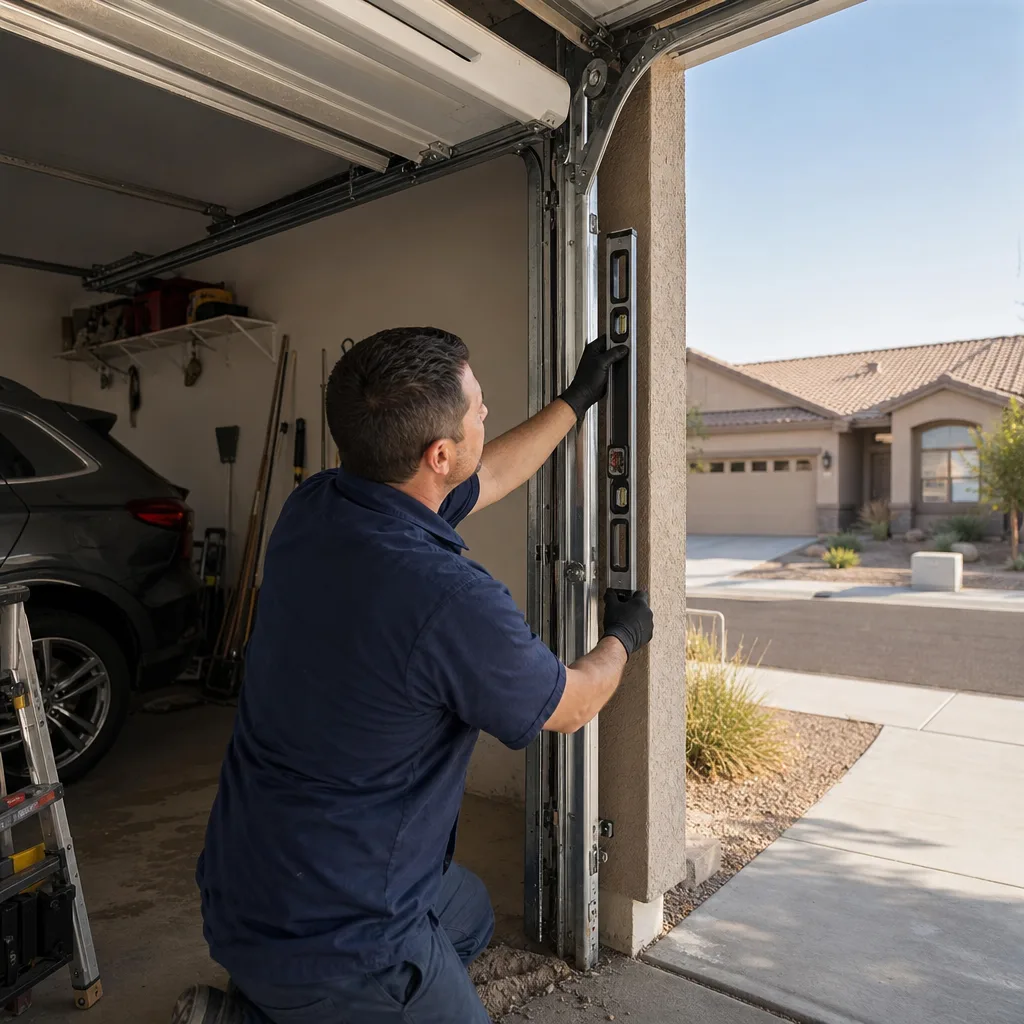
- The door looks slightly tilted in the opening. When one side has a seized or broken roller, that side can’t travel cleanly, and the door will sit a quarter-inch to a half-inch lower on that side. A level across the bottom of a closed door should read flat, not off by a visible margin.
- The door gets harder to lift by hand than it used to be. Disconnect the opener with the red emergency release and lift the door manually. If it’s significantly harder on one side or you feel it catch every few inches, a roller is binding. A door in good shape lifts with moderate, even resistance.
None of these symptoms fixes itself. Rollers don’t heal, and in Tempe heat, a nylon wheel that’s starting to crack will be in pieces by August. The earlier you catch it, the more likely you’re paying $110 for a pair instead of $180-$340 for spring repair on top of the roller work once the extra strain snaps the torsion spring.
BeforeAfterReplacement Cost & What’s Included
For Genie-compatible roller replacement in Tempe, plan on $110-$220 installed. The range breaks down like this:
- Standard nylon rollers with sealed bearings, single or pair: $110-$160 installed
- Heavy-duty nylon rollers for insulated or double-wide doors: $150-$220 installed
- All-roller replacement (10 rollers on a standard 7-foot door): $180-$220 installed
What drives the range is how many rollers need replacing and whether the door was built with 7/16 or 5/8 stems, which changes the parts cost modestly. You’re not paying a mystery surcharge for the Genie name – the roller is a roller, and we price it as such. We replace rollers in pairs on the same side as standard practice: a new roller next to a worn one wears out faster, and pairing them evens out the load.
Every quote includes the parts, the labor, the service call, and the written scope – Clause 1 of The Haven Standard means you get a flat written price before any work begins, and that price is the price. No job-site add-ons. No “while we’re here” upsells. If the technician finds something else that needs attention, they photograph it, explain it, and quote it separately in writing. You decide. The work itself carries a 365-Day Done Right Promise: if it’s not right, we make it right, and that promise is on our terms page, not on a handshake. Every visit closes with a documented photo record of what was found and what was installed.
DIY or Call Us?
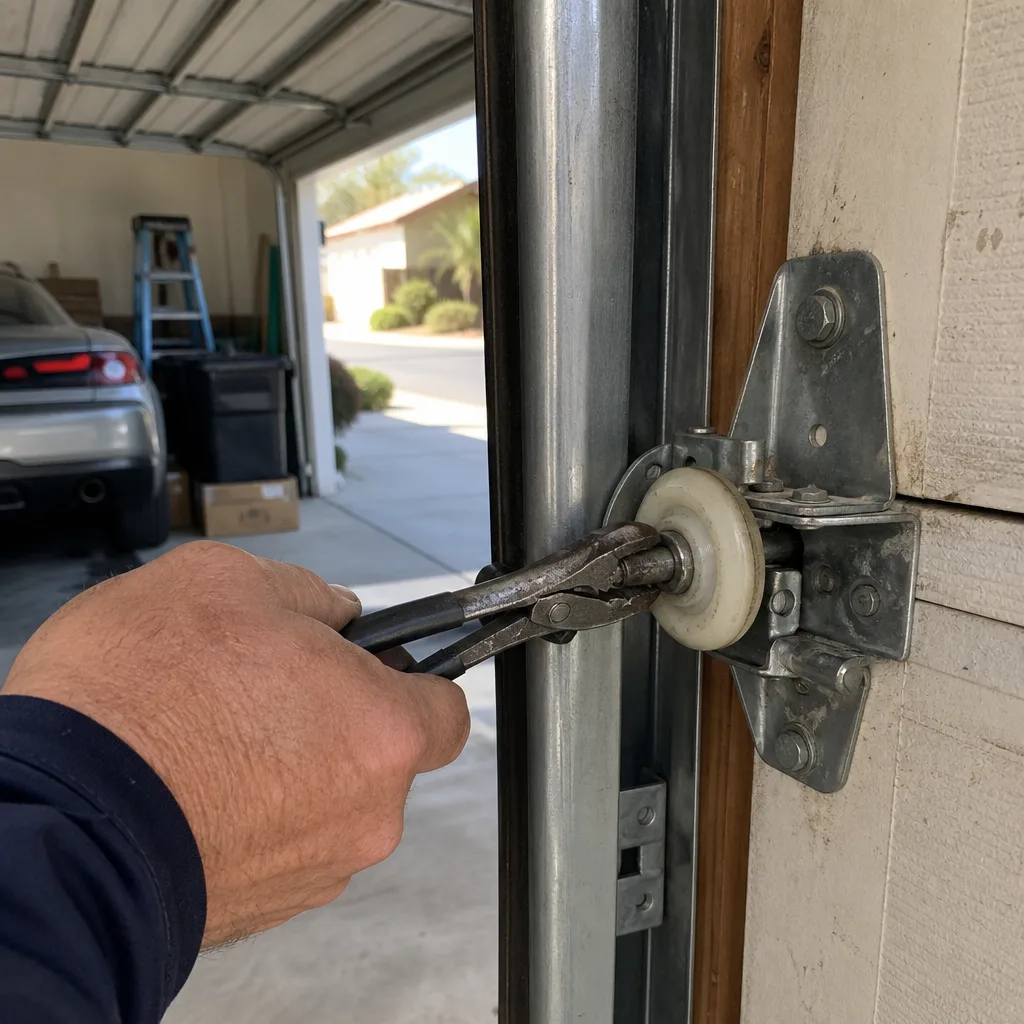
Roller replacement on a Genie-paired door sits in the middle of the DIY risk scale. It’s not the same hazard as torsion springs – those are under enough tension to break bone, and we’ll never suggest an owner touch them – but roller swaps on the bottom brackets require detaching the cable from the bottom bracket, and if that cable is not handled correctly, the door can drop or the cable can snap loose under load. The cables are connected to springs that never fully relax. That’s the sentence that matters.
What you can safely do: visually inspect the rollers, photograph the stems and wheels, and identify which roller is failing. You can clean debris out of the tracks and tighten any visibly loose hinge bolts with a socket wrench. What you should not do yourself is remove a bottom roller or any hinge on a door that’s under spring tension. The tools are cheap. The emergency room bill is not, and in Tempe, that’s a real calendar line, not a hypothetical.
If the door is making noise and you’re not sure which roller is the problem, call us at (602) 962-8352. We’ll send a background-checked, uniformed technician with the parts on the truck, a written price before the wrench comes out, and a photo record when the work is done. You’ll see the failed part before we quote it – that’s Clause 4, and it’s been the rule since Marcus founded this business in 2015.
FAQs
In Tempe’s climate, a quality nylon roller with sealed bearings lasts 7 to 10 years, while OEM steel or basic nylon rollers typically fail in 4 to 6. The heat accelerates plastic and rubber breakdown, and the fine desert dust that gets into the bearing races adds friction that snow-belt doors never experience. Mill Avenue corridor homes, with their older garage builds and decades of heat cycling, are where we most often replace OEM rollers that were installed when the door went in.
No. A roller with a failed bearing, a cracked wheel, or a bent stem is a replacement item, not a repair item. The bearing is pressed and sealed inside the wheel, and there’s no practical way to re-lubricate it or rebuild it in the field. The only “repair” is swapping the part – which is exactly what we do, with the flat price quoted before the work starts. Call us at (602) 962-8352 for an exact quote.
A standard two-roller replacement takes 30 to 45 minutes from the time the technician starts to the time the door runs smooth and the photo record is in your hand. A full set of all 10 rollers takes about 90 minutes. We carry both stem sizes and standard wheel diameters on the truck, so there’s no second visit for parts.
We stock Genie-compatible rollers in 7/16-inch and 5/8-inch stems, with nylon wheels and sealed bearings, on every service truck in Tempe. We also carry equivalents for LiftMaster and Chamberlain doors, and we service all major brands. You don’t order parts. We show up with them, and you approve the written price before anything is installed.
Call for a Free Estimate
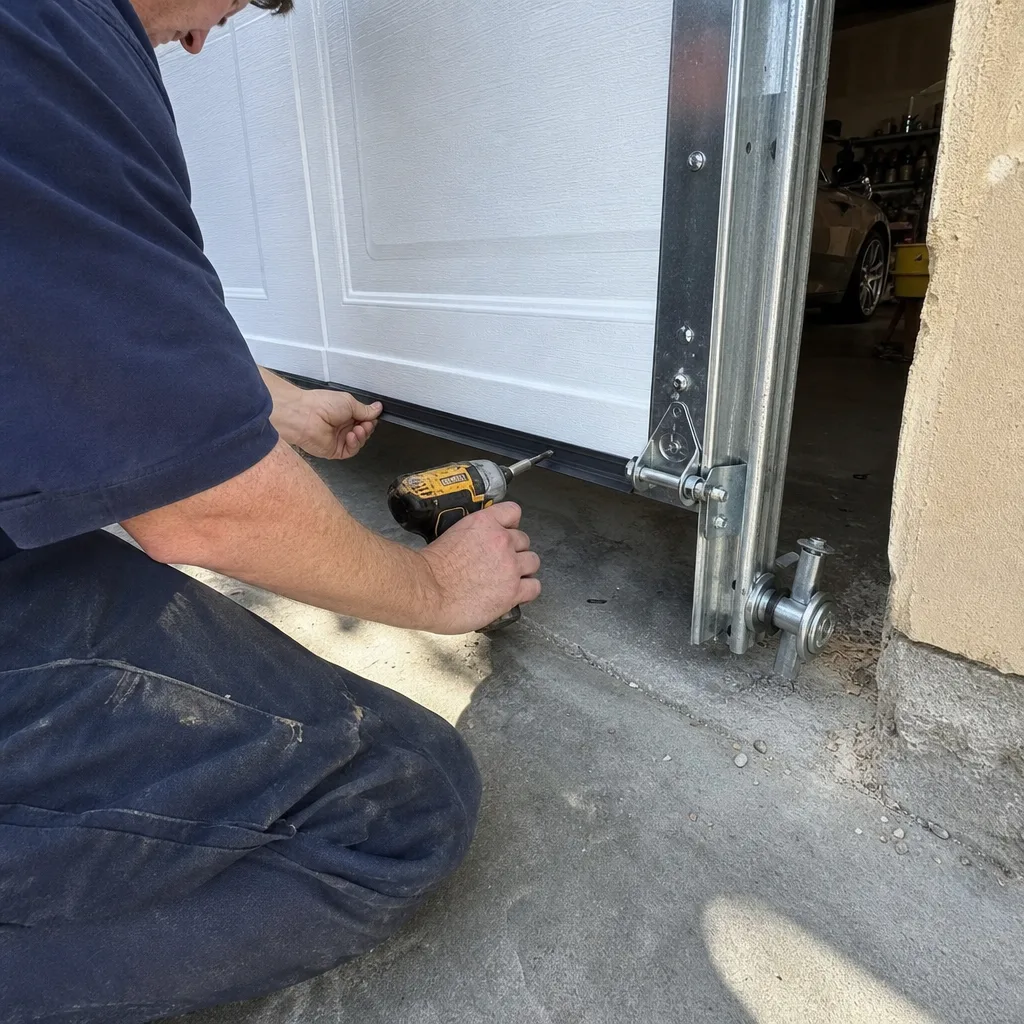
If your Genie opener is doing its job but the door itself is grinding, jerking, or leaning, the odds are a roller is done. Name the part. Quote the range. Do the work. That’s how Marcus runs every job in Tempe. Call (602) 962-8352 and a live person answers – 24/7, including holidays – with a named technician and an on-the-way text, not a four-hour callback window. You’ll get a written price before the first bolt turns, and a photo record when the door runs quiet again.
Written by Marcus Deller, Owner, Servo Garage Doors Tempe at Servo Garage Doors Tempe, serving Tempe and nearby areas.