
Last updated September 20, 2026
Full 25-point door and opener safety check with every visit - springs, cables, rollers, tracks, and your LiftMaster or Chamberlain opener included
You get a price before we start. It does not change when the truck arrives.
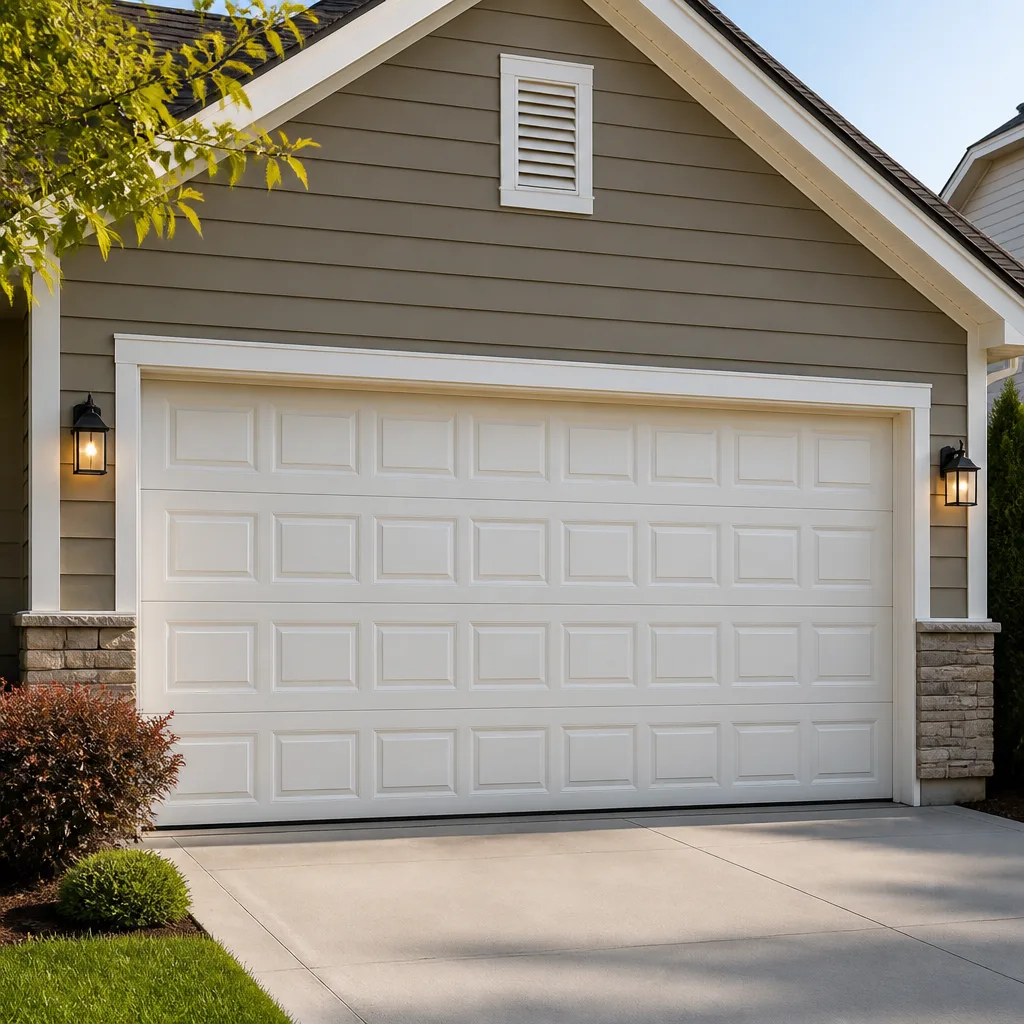
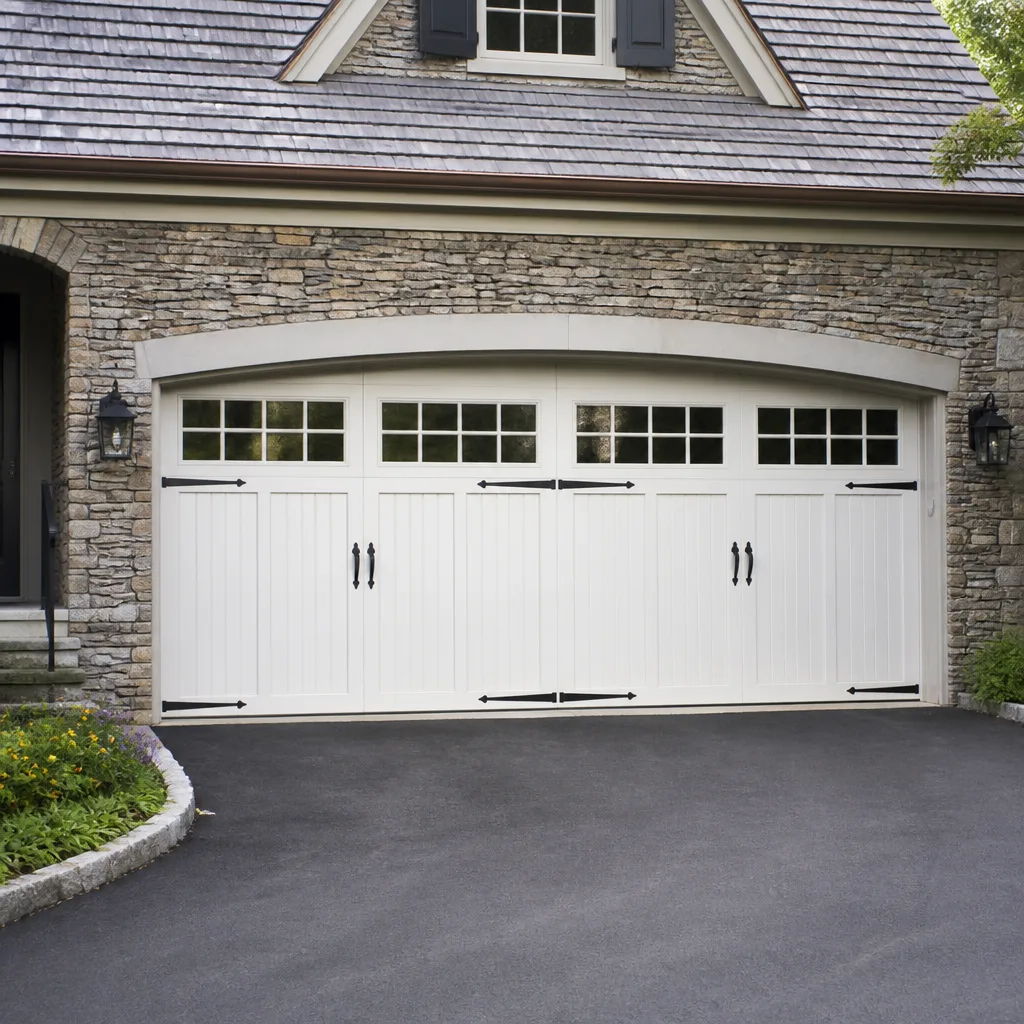
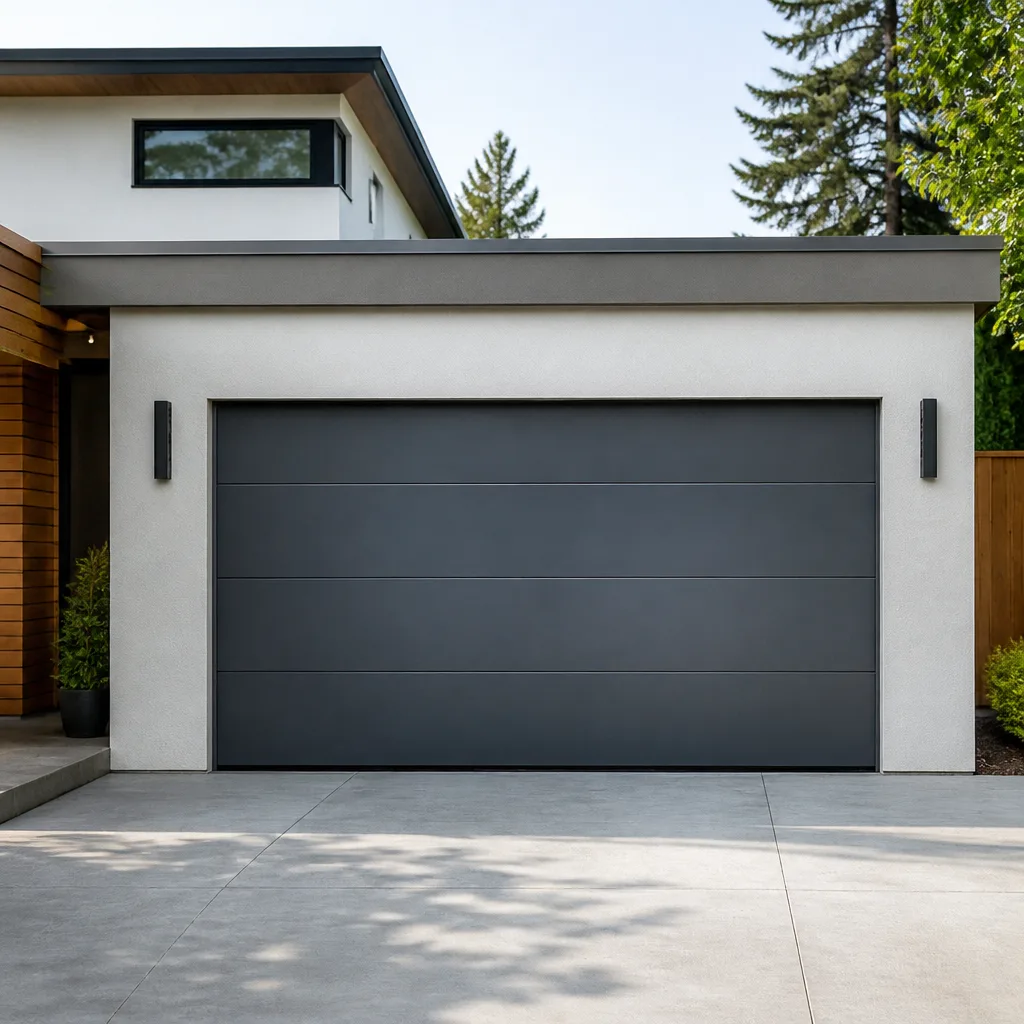
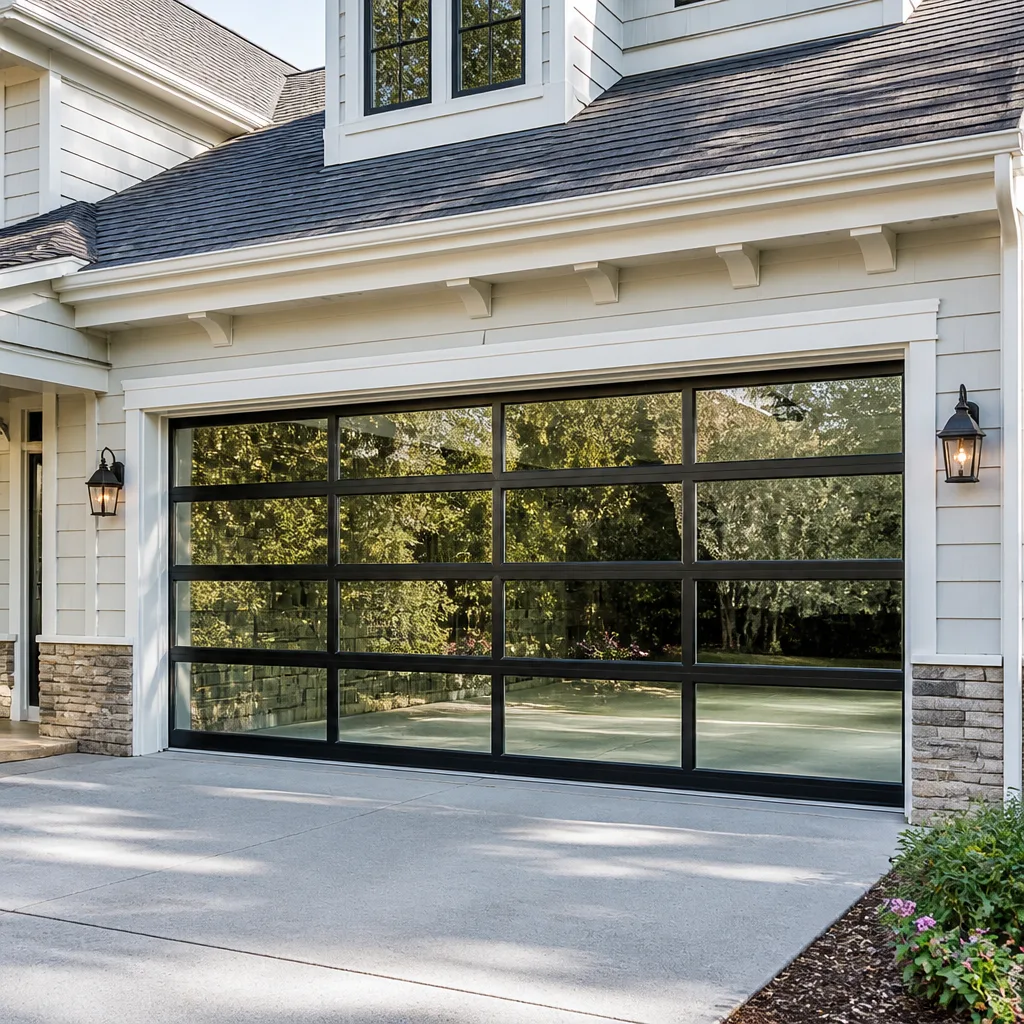
 Before
 After
After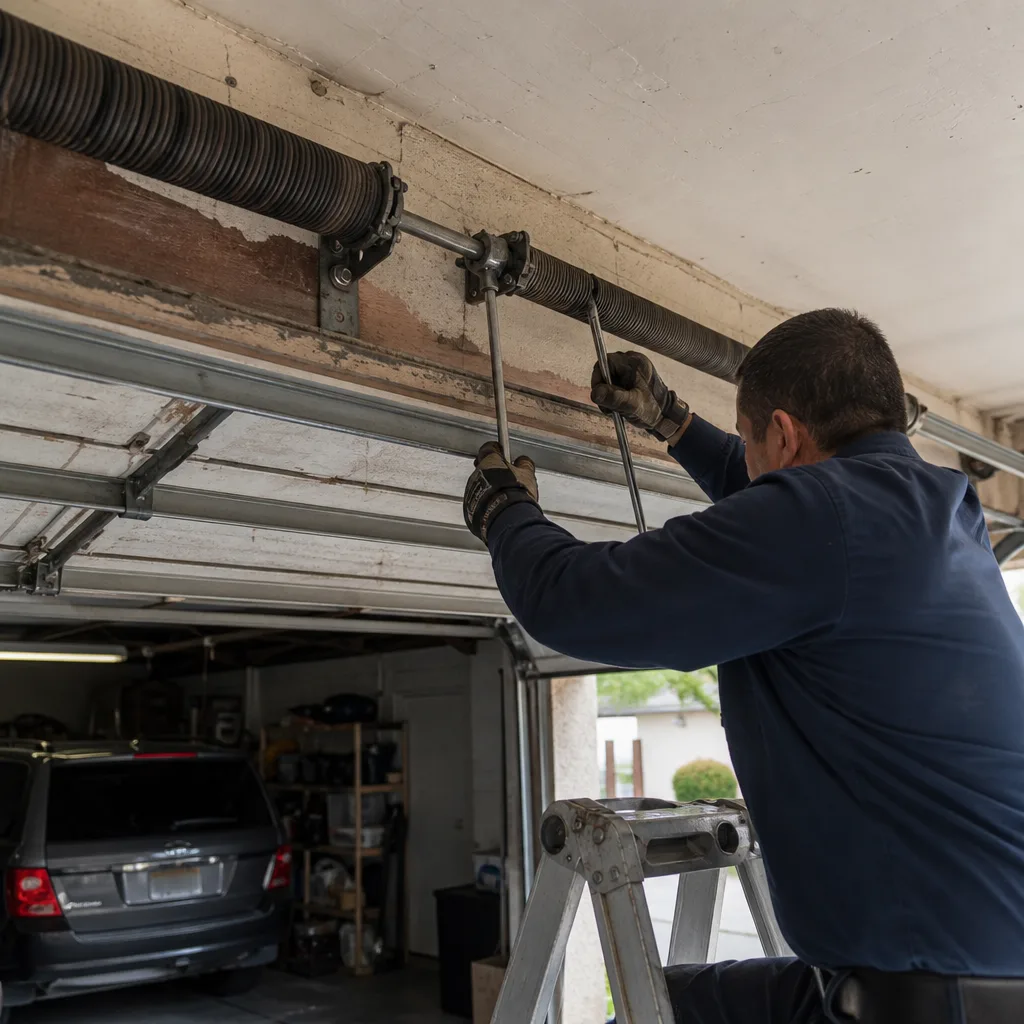 Before
 After
After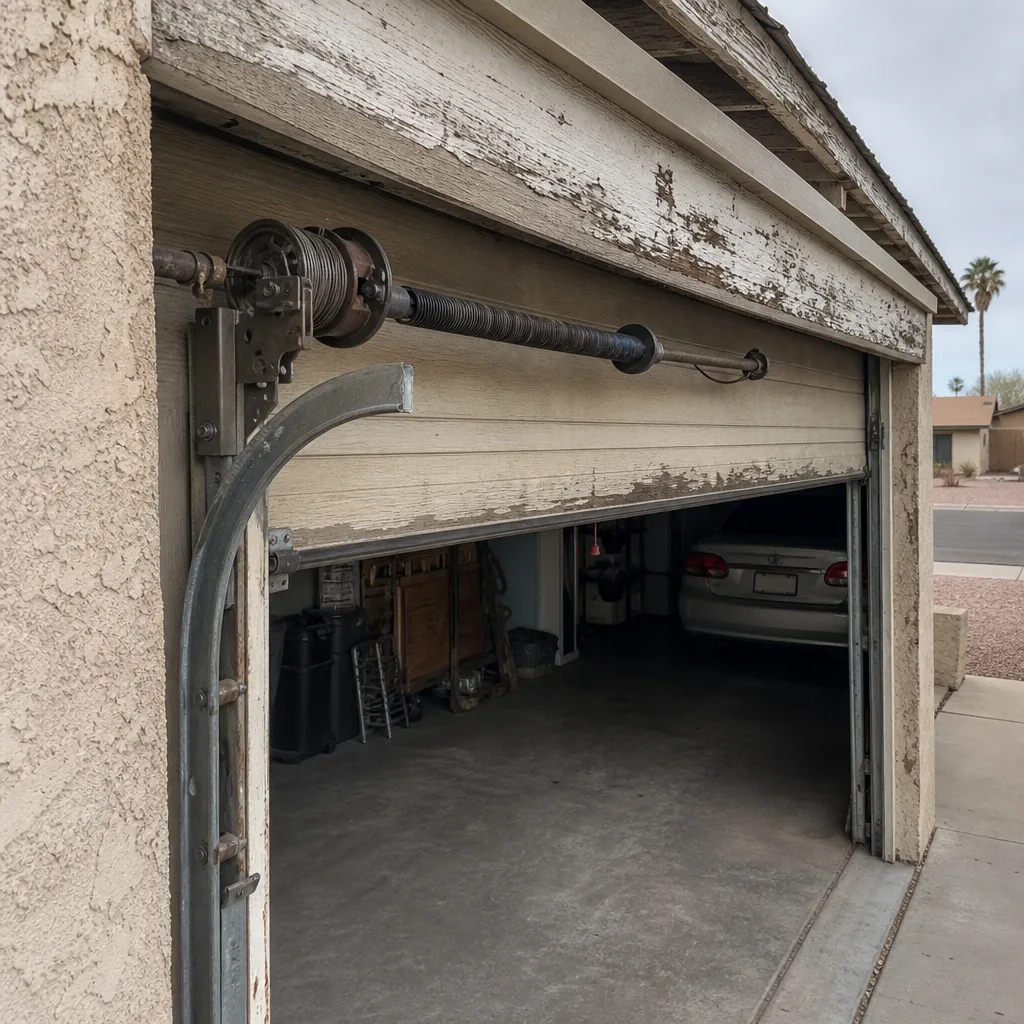 Before
 After
AfterThe Complete Guide to Garage Door in Tempe
Most garage door buying guides were written for a climate that does not crack torsion spring grease at 115°F. Tempe does. That single variable changes the spring type, the lubricant spec, the panel material, and the opener duty cycle you should be shopping for. This guide walks through every decision a Tempe homeowner actually faces when repairing or replacing a garage door, and maps each one against the desert conditions that determine whether the hardware lasts eight years or twenty. For a deeper look at whether to tackle repairs yourself or hire out, see our DIY vs Professional Garage Door: The Tempe Homeowner’s Decision Guide. You will learn what fails first in this climate, what it costs to fix, and which specifications matter more than the brochure suggests.
Quick Answer
A garage door in Tempe should be specified for extreme UV exposure, sustained 110°F-plus summer heat, and caliche soil movement. Expect to pay $280 to $540 for a typical spring replacement, $1,400 to $3,800 for a full door replacement depending on panel material, and $350 to $700 for an opener rated for thermal protection in high heat. For a detailed breakdown of these numbers, see our Garage Door Cost Breakdown: The Tempe Homeowner’s Reference for 2026. The most important document you can leave an installation with is a written component manifest listing part numbers, warranty terms, and as-installed spring tension.
Table of Contents
- How Tempe’s Climate Changes Garage Door Specs
- Torsion Springs vs. Extension Springs: What Tempe Heat Dictates
- Panel Materials Under Desert Sun: Steel, Aluminum, and Composite Compared
- Caliche Soil and Slab Movement: Why Your Rough Opening Shifts
- Opener Duty Cycles and Thermal Cutoff: Sizing for Tempe Heat
- The Document to Request Before Any Installer Leaves
- What Garage Door Work Costs in Tempe: A Line-Item Breakdown
- Maintenance That Actually Matters in a Desert Climate
BeforeAfterHow Tempe’s Climate Changes Garage Door Specs
Tempe regularly records 100 days per year above 100°F, with sustained stretches at 110°F or higher from June through August. That heat is not an abstract weather statistic. It is a load condition that degrades lubricants, oxidizes steel, embrittles nylon components, and triggers thermal protection circuits in openers that were never sized for it. When we inspect garage doors in Tempe, the failure pattern is consistent: the spring grease has turned to a varnish-like film, the opener logic board sits in a housing that reached 140°F inside, and the nylon rollers have flattened on one side from heat cycling.
The practical implication is that “standard residential spec” means something different here than it does in Phoenix’s northern suburbs or in Flagstaff. A torsion spring rated for 10,000 cycles at 70°F will deliver fewer cycles at 110°F because the lubricant degrades and the coil friction increases. An opener rated for 12 cycles per day in a temperate garage will hit thermal cutoff earlier when the ambient garage temperature is already 105°F before the motor starts. And a steel panel with a standard polyester topcoat will chalk and fade measurably within three Tempe summers.
Our recommendation, based on what we see across garage door repair in Tempe, is to treat every specification with a heat derating. Buy springs with a cycle rating one tier above what you think you need. Buy openers with a thermal protection rating designed for unconditioned Southwest garages. Choose panel coatings rated for UV exposure, not just the standard factory finish. The upfront cost difference is modest compared to replacing hardware that failed early.
Torsion Springs vs. Extension Springs: What Tempe Heat Dictates
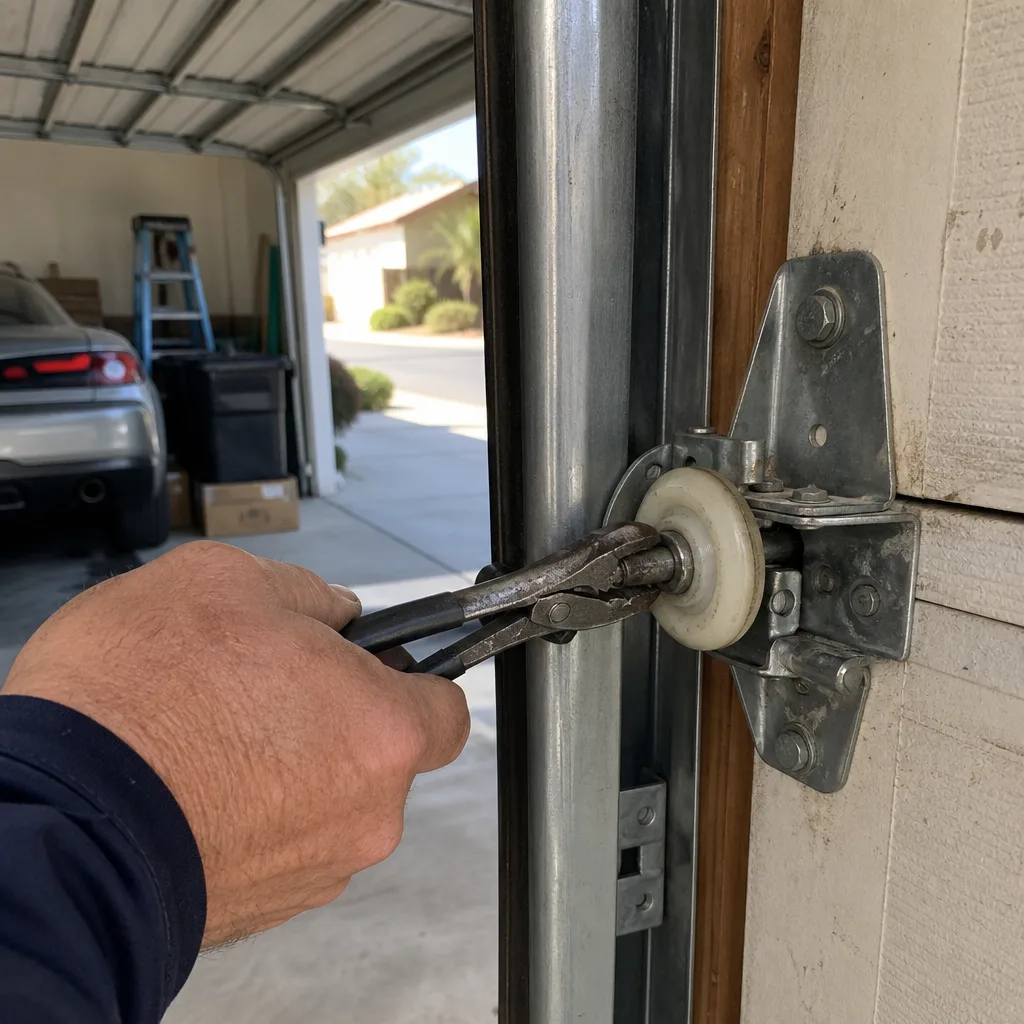
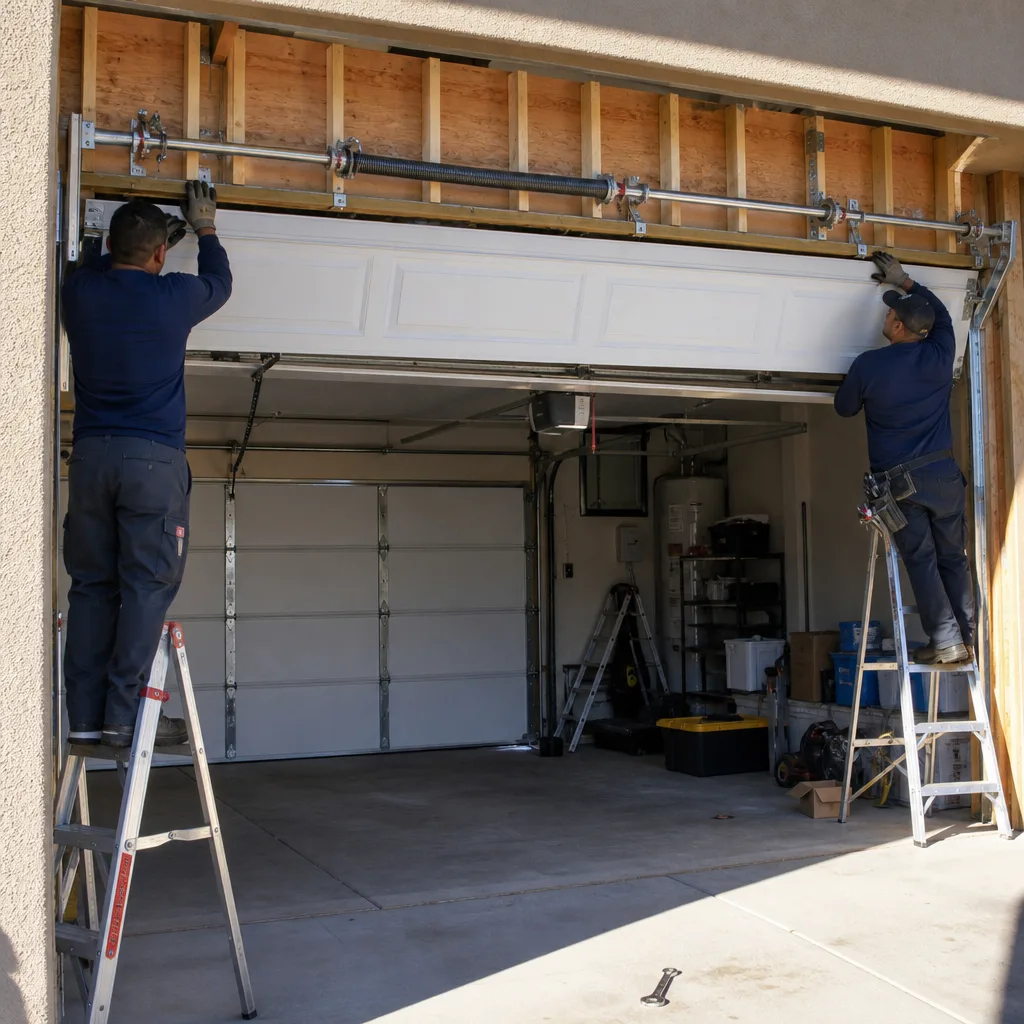
Most modern garage doors in Tempe use torsion springs, mounted on a shaft above the door opening. Torsion springs store mechanical energy by twisting, and they are safer, quieter, and longer-lasting than the older extension spring design that stretches along the horizontal tracks. If your home was built before roughly 1995 and still has its original door, you may have extension springs. If it was built after 2000, you almost certainly have torsion springs.
Here is what the Tempe climate does to each type.
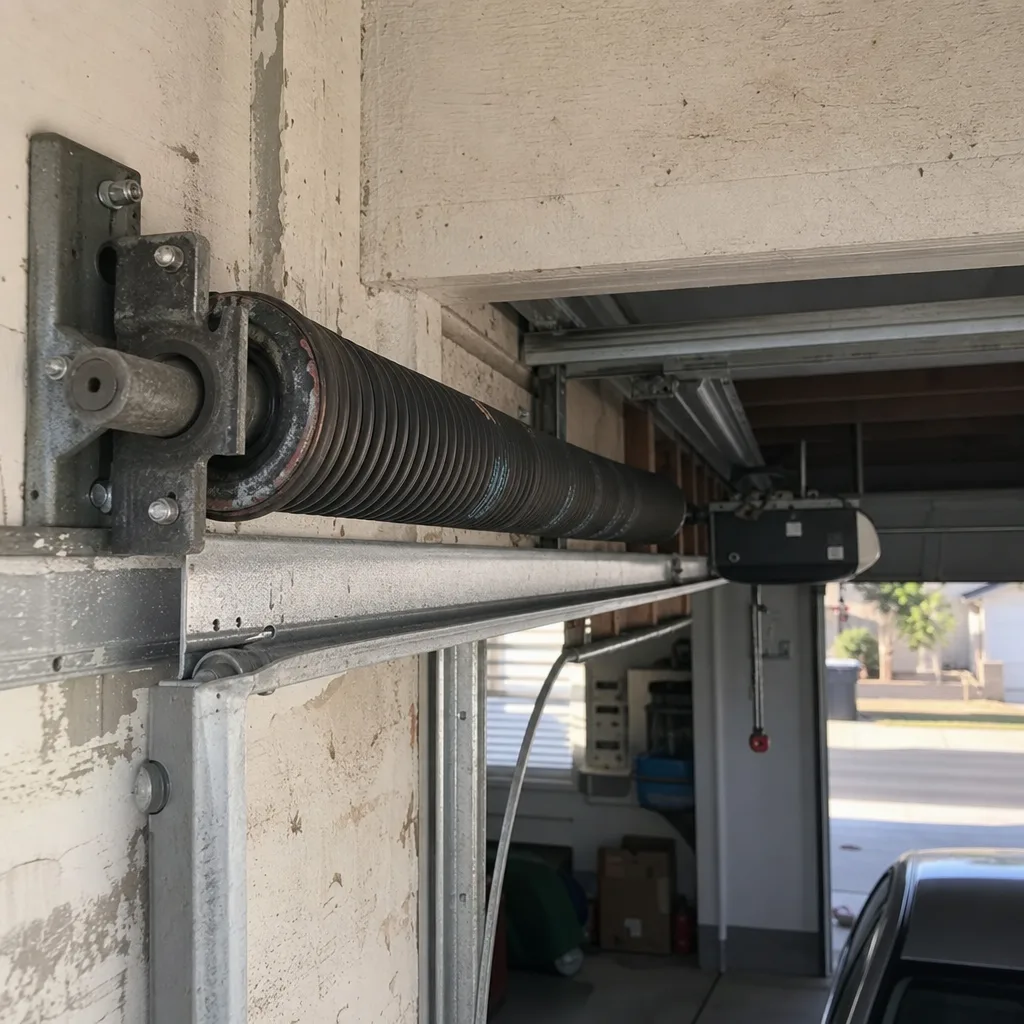
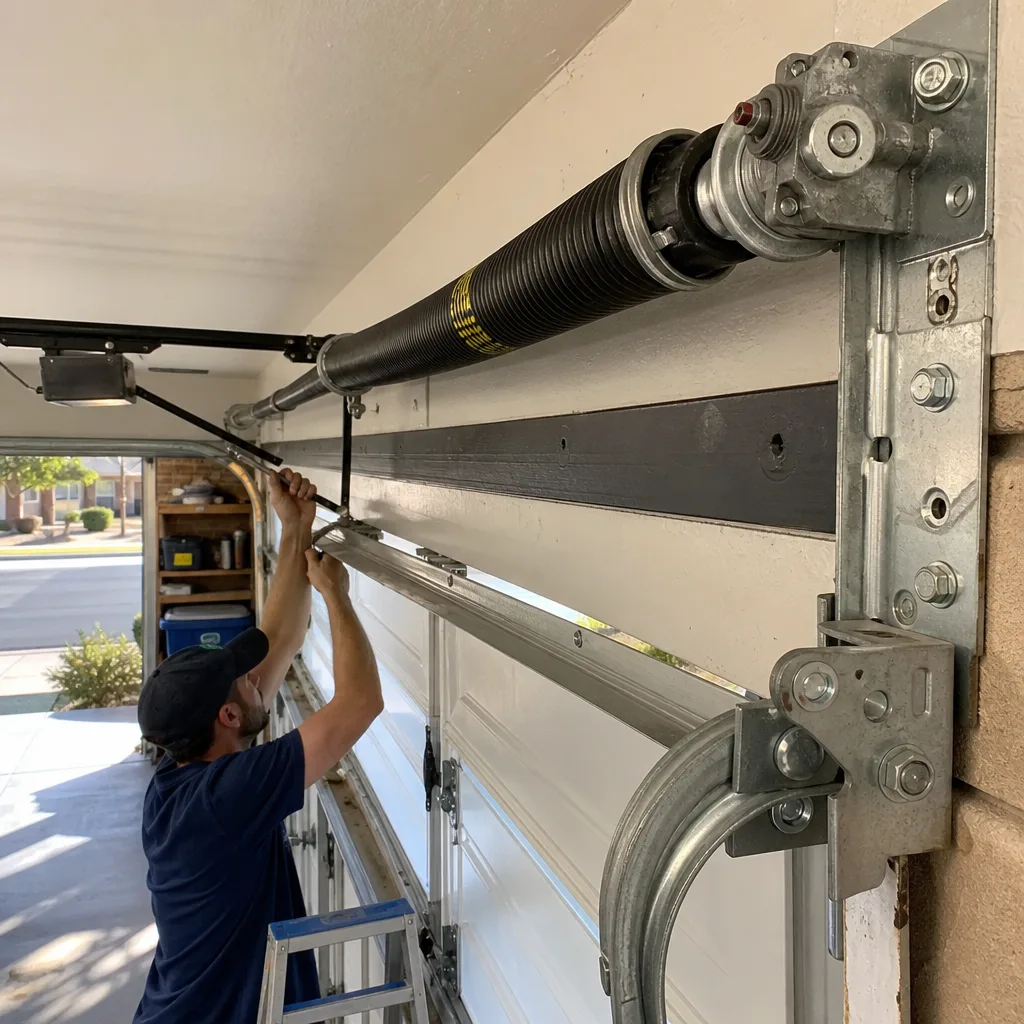
Torsion springs are lubricated at installation and require periodic re-lubrication. The factory grease used on many springs is a general-purpose lithium grease that begins to break down at sustained temperatures above 105°F. What we see in Tempe garages is a spring that looks fine from a distance but has a dry, cracked grease film that no longer reduces friction between coils. The spring still works, but each cycle generates more heat and wear. A spring that would reach 15,000 cycles in a mild climate may fail at 8,000 to 10,000 cycles in Tempe if the lubricant is never refreshed with a high-temperature product.
The correct specification for Tempe is a high-temp lithium-based lubricant rated for 300°F or higher. This is not the same as the general-purpose spray sold at big-box stores, which is often a silicone or basic lithium formulation rated for maybe 200°F. The high-temp product costs a few dollars more and extends spring life measurably. When we rebuild a spring stack in Tempe, we lubricate with a high-temp lithium formula and document it in the photo record we deliver to the customer.
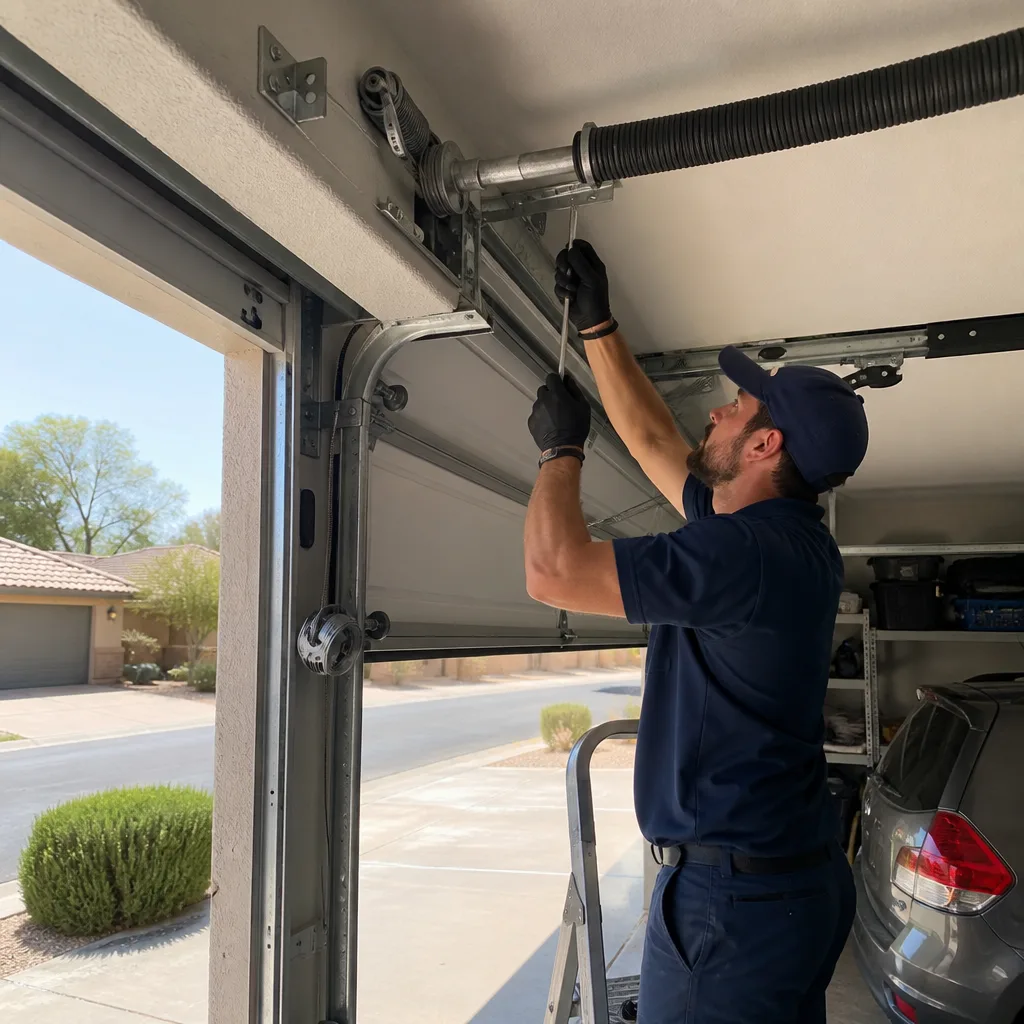
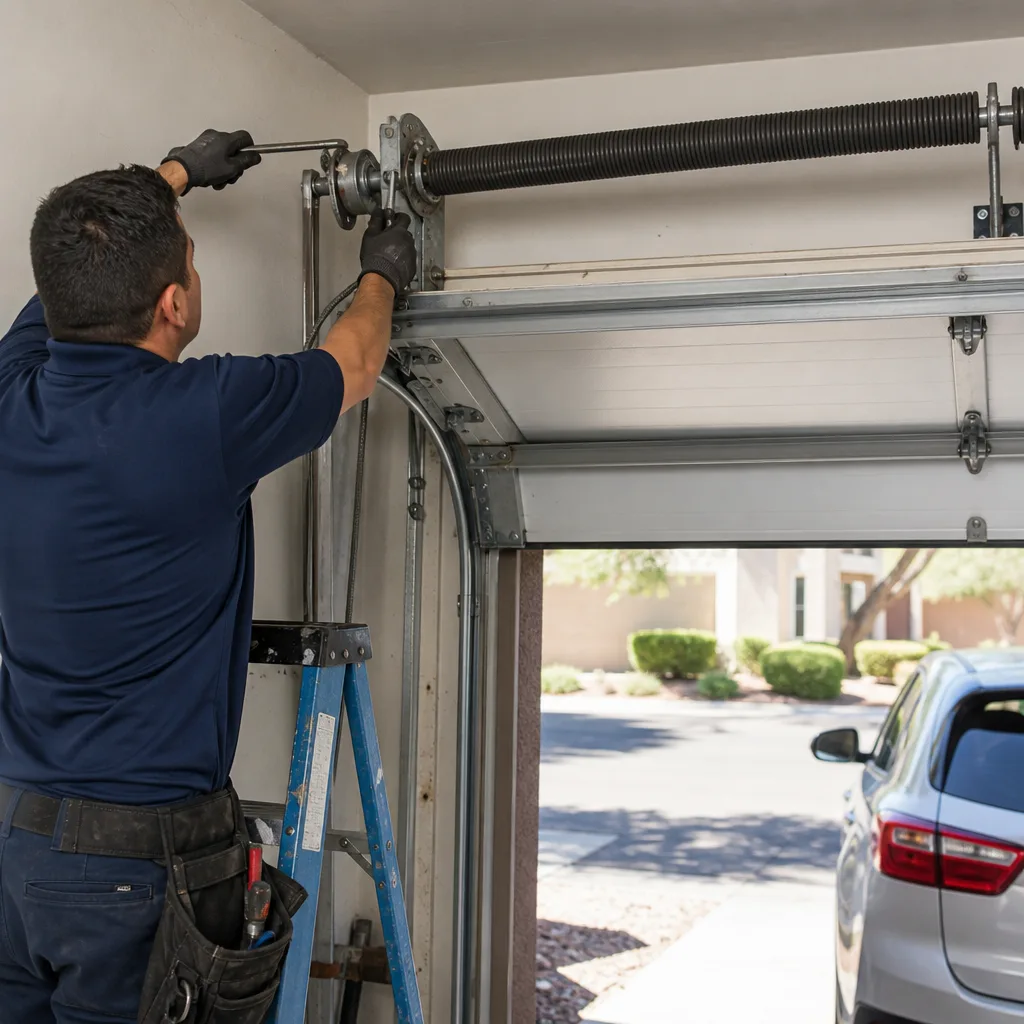
Safety note: Torsion springs are under enormous tension. The winding and unwinding procedure can cause serious injury if done incorrectly. We do not recommend DIY spring replacement or adjustment. This is one area where a trained technician is the correct call, every time.
Which Spring Type Should You Have?
- Torsion springs (recommended for all Tempe homes): mounted on the header above the door, require a high-temp lithium lubricant, rated by cycle count (10k, 15k, 20k+), safer when they fail, quieter operation.
- Extension springs (legacy systems only): mounted along the horizontal tracks, less expensive to install originally, fail with more risk of flying parts without a safety cable, and have largely been replaced by torsion designs in modern doors.
If you are deciding whether to convert from extension springs to torsion, the answer in Tempe is almost always yes. The conversion costs $180 to $380 including parts and labor, and it improves both safety and spring life. Every garage door installation in Tempe we perform uses a torsion system unless there is a structural reason not to.
Panel Materials Under Desert Sun: Steel, Aluminum, and Composite Compared
Tempe receives about 300 days of direct sun per year, with UV index readings in the extreme range from April through October. Panel material choice is the single biggest determinant of how your door looks in year seven and how long it lasts before replacement. Here is what the data from our service area shows.
Steel Panels
Steel is the most common garage door material in Tempe, and for good reason: it is strong, relatively inexpensive, and available in a wide range of styles. The critical variable is gauge. A 27-gauge steel panel is common on entry-level doors and will dent from a misplaced basketball or a strong monsoon wind gust. A 24-gauge panel is measurably more resistant. Most Tempe homes we service have 25-gauge or 26-gauge steel on the original door, installed by the builder.
The UV issue with steel is the topcoat. Standard factory finishes on entry-level steel doors begin to chalk and fade within three to five years in Tempe’s sun. The color holds faintly, but the surface develops a dull, oxidized appearance. Premium finishes with UV-stabilized polyester or PVDF (polyvinylidene fluoride) topcoats hold color significantly longer. Expect a steel panel door with a standard finish to look visibly weathered by year six, and one with a premium finish to look acceptable at year ten.
Steel panel replacement cost in Tempe: $1,400 to $2,800 for a standard 16×7 door, depending on gauge, insulation, and finish quality.
Aluminum Panels
Aluminum does not rust, which matters in a climate with monsoon humidity spikes. It is lighter than steel, which reduces load on springs and openers. The tradeoff is dent resistance: aluminum panels dent more easily than even 27-gauge steel, and the dents cannot be repaired invisibly. Aluminum doors in Tempe are best suited to contemporary or modern home styles where the material matches the architecture, and where the homeowner accepts some dent vulnerability as the cost of a corrosion-free, lighter door.
Aluminum panel replacement cost in Tempe: $2,800 to $5,500 for a full-view aluminum and glass door, or $1,800 to $3,200 for a solid aluminum panel door.
Composite and Vinyl Panels
Composite garage doors, typically a wood-fiber and resin blend, hold up well to UV exposure and do not dent like steel or aluminum. They are heavier than steel, which means the spring system must be correctly sized for the additional panel weight. Composite doors are the closest thing to a low-maintenance option for Tempe’s climate, but they cost more upfront. Vinyl panels share some UV resistance benefits but are less common in Tempe’s newer construction and tend to appear on older homes as a budget replacement option.
Composite panel replacement cost in Tempe: $2,500 to $5,000 for a standard 16×7 door.
What We Recommend
For most Tempe homes, the pragmatic choice is a 24-gauge or 25-gauge steel door with a UV-stabilized premium topcoat and an insulated core. It balances cost, durability, and appearance. If the door faces south or west with no shade structure, step up to the premium finish without question. That single upgrade is the difference between a door that looks tired at year five and one that still looks clean at year ten.
Caliche Soil and Slab Movement: Why Your Rough Opening Shifts
Caliche is a hardened layer of calcium carbonate that forms beneath the surface soil in much of the Phoenix metro area, including large parts of Tempe. It is dense, alkaline, and does not drain well. When it is present near the surface, builders sometimes excavate through it for footings and slabs. When it is deeper, it creates a hard substrate that interacts with expansive clay soils above it.
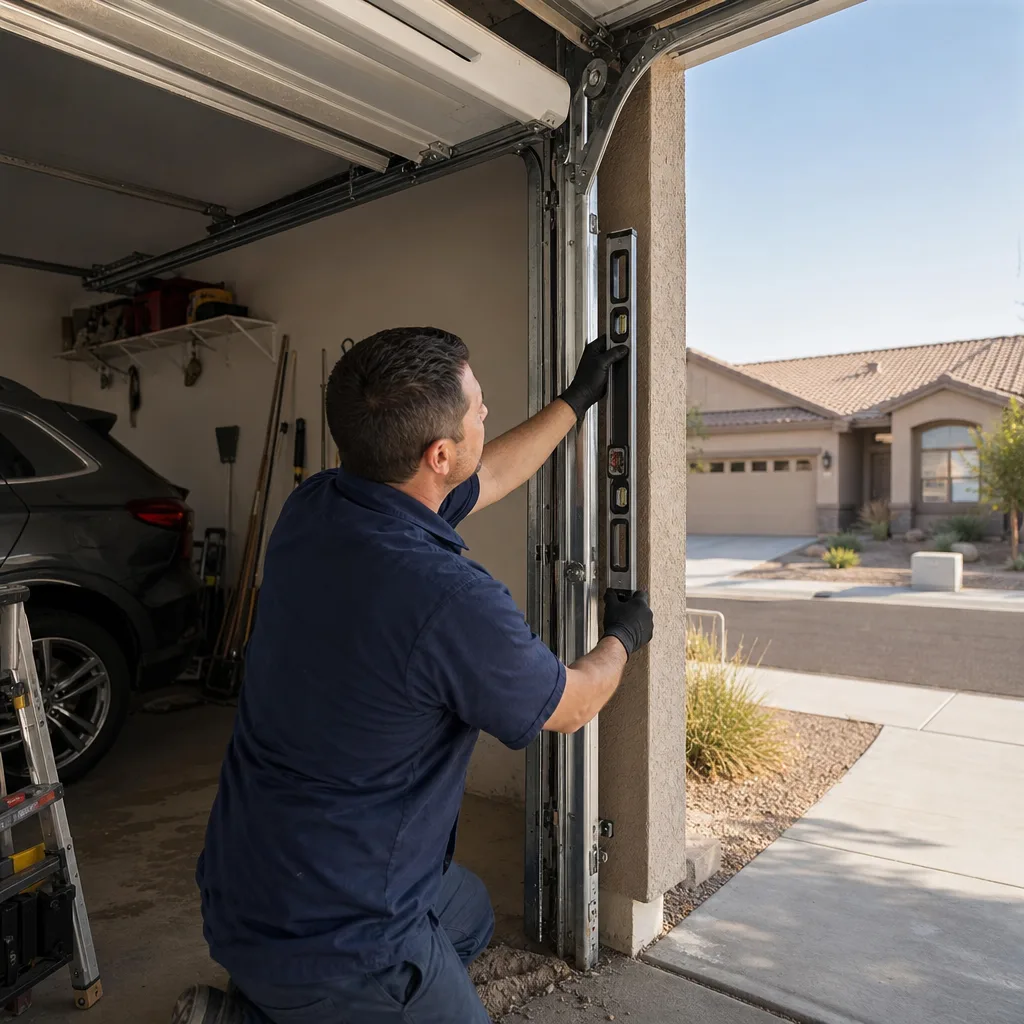
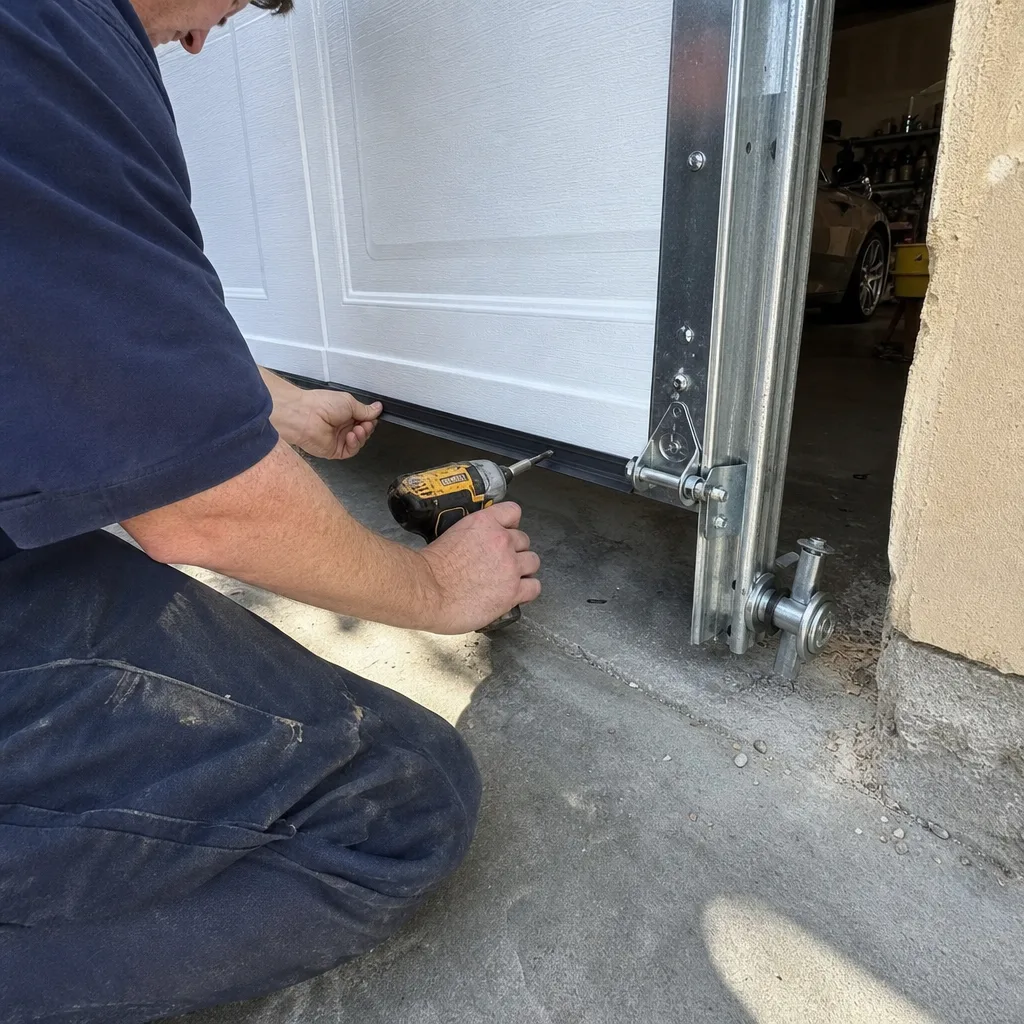
The practical effect for garage doors is differential settling. The slab under your garage and the stem wall around the rough opening can move at slightly different rates over time, especially after monsoon seasons when soil moisture changes rapidly. When the rough opening shifts even a quarter inch, the door tracks - which are anchored to the framing - move out of alignment relative to the door, which sits on the slab. The door begins to bind, rub, or hang slightly crooked.
We see this pattern regularly in older Tempe neighborhoods like Mitchell Park, Maple-Ash, and the areas around Tempe High School, where slabs date from the 1950s through 1980s. The door worked fine for years, then began sticking or squealing after a particularly wet monsoon. The homeowner assumes the door or opener is failing, when the actual issue is that the rough opening has shifted and the track brackets need adjustment.
What Installation Tolerance Should You Maintain?
At installation, the gap between the door edges and the track brackets should allow for some movement. The specific tolerance depends on the door width and the track design, but as a rule of thumb for Tempe’s soil conditions, we leave enough lateral clearance that a quarter-inch of slab movement does not cause binding. That may sound trivial, but it is the difference between a door that still operates after two heavy monsoon seasons and one that requires a service call.
If your existing door has started binding, do not force it. Forcing a binding door puts excess strain on the opener, the hinges, and the spring system. The adjustment is typically a matter of re-shimming the track brackets and re-setting the spring tension, which is a standard service call. In our experience across Tempe, the majority of binding doors are fixed with bracket adjustment and do not require door replacement.
Opener Duty Cycles and Thermal Cutoff: Sizing for Tempe Heat
Garage door openers are rated by cycles per day, where one cycle equals one open and one close. A standard residential opener is rated for 10 to 12 cycles per day. That rating assumes a certain average load and a temperate ambient temperature. In Tempe, two things push that rating down.
First, the garage itself is often 105°F to 115°F during summer afternoons, before the opener motor even runs. The opener’s thermal protection circuit is designed to shut the motor off when internal temperatures exceed a safe threshold. In a 110°F garage, the motor starts hot and reaches the cutoff threshold after fewer cycles than it would at 80°F. A homeowner with a home-based business, a workshop, or teenagers who cycle the door frequently may hit thermal cutoff on a standard opener during a Tempe summer.
Second, many Tempe homes use the garage as the primary entry and exit point. The front door sits unused while the garage door cycles four, six, eight times a day between work commutes, school runs, gym trips, and errands. That usage pattern is within the rated range of most openers, but barely, and the heat derating pushes it closer to the edge.
What to Look For
- Duty cycle rating: Look for openers rated at 15+ cycles per day if your household is high-traffic or you run any kind of business from the garage.
- Thermal protection design: Some opener lines, including certain LiftMaster and Chamberlain models, are designed with better heat dissipation and are less prone to thermal cutoff in unconditioned Southwest garages.
- DC motor vs. AC motor: DC motors run cooler and quieter, and they are increasingly standard on higher-end openers from LiftMaster, Chamberlain, and Genie. The cooler running temperature matters in Tempe.
If your opener stops working in the afternoon but works again an hour later, that is thermal cutoff, not a dead motor. The fix may be as simple as improving garage ventilation or adjusting the force settings. If the opener is undersized for your usage, replacement is the correct call. For garage door opener repair and installation in Tempe, we size the opener to the door, the spring system, and the actual usage pattern - not just what fits in the same bracket holes.
The Document to Request Before Any Installer Leaves
Here is the single most useful piece of paper you can walk away with after any garage door repair or installation in Tempe: a written component manifest. Before any project starts, make sure you understand Garage Door Permits, Codes & Inspections in AZ: What You Need to Know. This is not a receipt. A receipt tells you what you paid. A component manifest tells you what was actually installed.
At a minimum, the manifest should list:
- Spring part number and specifications - wire diameter, inside diameter, length, and cycle rating. This is the as-installed spring tension spec, and it matters if the spring later needs replacement under warranty.
- Panel part numbers and finish code - so a future panel replacement matches the original color and finish.
- Opener model number and rail type - with the manufacturer warranty terms stated in writing.
- Track and hardware specifications - gauge, roller type, and bracket configuration.
- Lubricant specification - what product was applied to the springs and rollers, so the maintenance schedule is clear.
- Warranty terms - what is covered, for how long, and what voids the warranty.
Most installers do not provide this document voluntarily. We do because it is the entire point of how Servo Garage Doors Tempe operates: the customer sees the failed part before anyone quotes a replacement, and the customer leaves with a written record of what was found and what was done. Clause 4 of The Haven Standard is why the technician photographs the failed component before quoting a replacement. The component manifest is the written version of the same principle. If an installer will not put part numbers and warranty terms on paper before leaving your driveway, that is information in itself.
What Garage Door Work Costs in Tempe: A Line-Item Breakdown
Here are the price ranges we quote across Tempe for the most common garage door repairs and replacements. These are flat, written prices delivered before any work begins, per Clause 1 of The Haven Standard. The final number depends on door size, equipment type, and condition, but these ranges reflect what Tempe homeowners should expect to see on a written estimate.
| Service | Typical Tempe Price Range | Notes |
|---|---|---|
| Torsion spring replacement (single spring) | $280 - $420 | Price varies by cycle rating; high-cycle springs cost more |
| Torsion spring replacement (pair) | $380 - $540 | Recommended when door has two springs and one fails |
| Extension spring conversion to torsion | $180 - $380 | Includes spring, shaft, and labor |
| Garage door opener replacement (motor only) | $350 - $700 | DC motor models at the higher end; includes thermal-rated options |
| Full door replacement (steel, 16×7) | $1,400 - $2,800 | Depends on gauge, insulation, and finish quality |
| Full door replacement (aluminum or composite) | $2,500 - $5,500 | Architectural styles and glass panels at the upper end |
| Cable replacement (per side) | $120 - $200 | Often done alongside spring work |
| Roller replacement (full set) | $100 - $180 | Nylon rollers with sealed bearings last longer in heat |
| Track adjustment / re-alignment | $120 - $260 | Common fix for caliche-related slab movement |
| Logic board replacement | $180 - $320 | Heat-related failure on older opener models |
Every price above is quoted and agreed before any work starts. Not estimated after the fact, not adjusted when the technician sees the door. The written price and written scope are delivered up front, and the final invoice matches the quote. If a Tempe homeowner brings us a written estimate from another company, we will provide a Free Second Opinion on it. Bring the paperwork; we will tell you what is accurate, what is inflated, and what is missing.
Maintenance That Actually Matters in a Desert Climate
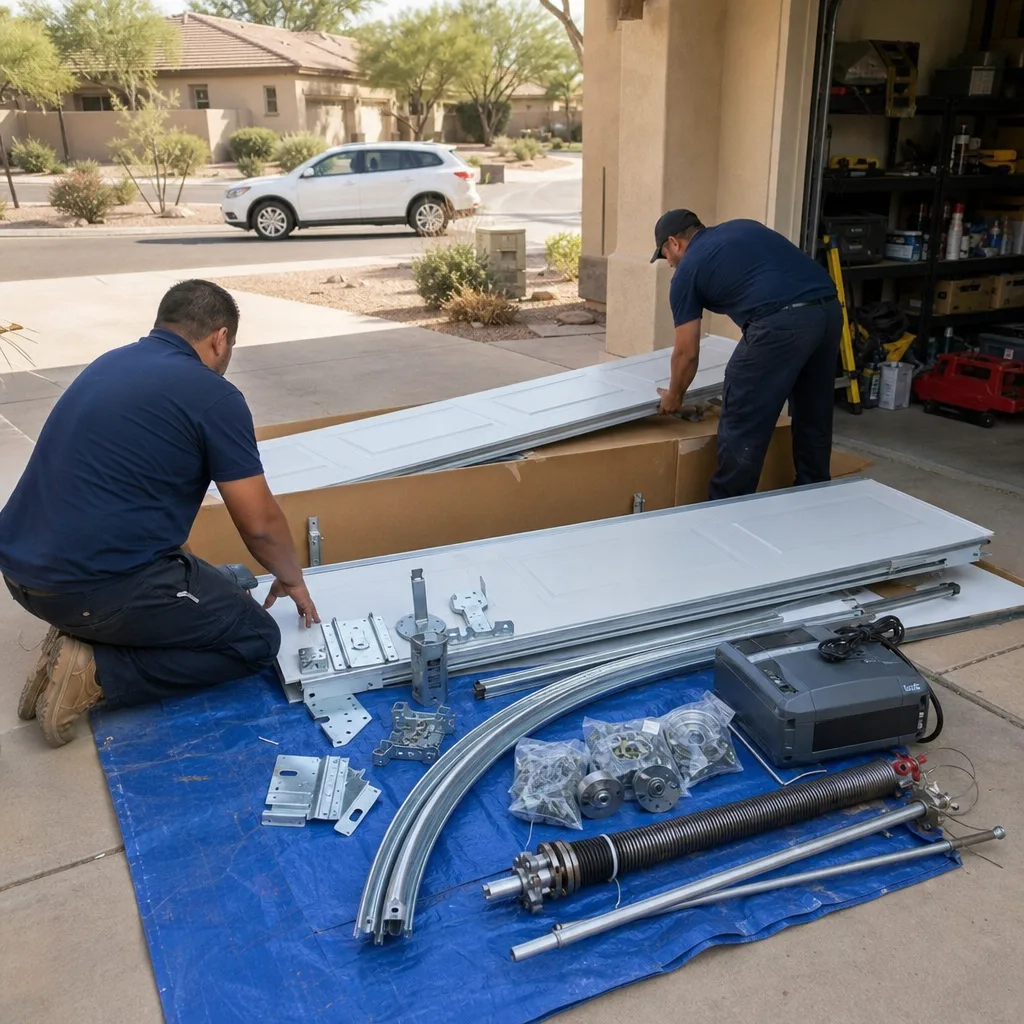
Garage door maintenance advice in generic guides tends to focus on tightening bolts and looking at the door. In Tempe, the maintenance that extends hardware life is specific to the climate.
Step 1: Lubricate Springs and Rollers with a High-Temp Lithium Product
Twice per year, before summer and after monsoon season. Use a high-temp lithium-based lubricant rated for 300°F or higher. Apply to the torsion spring coils, the roller bearings, and the hinge points. Do not use WD-40. It is a solvent, not a lubricant, and it strips existing grease.
Step 2: Inspect the Weather Seal for UV Cracking
The rubber bottom seal on a garage door takes direct sun reflection off the driveway in Tempe. It cracks and stiffens within two to three summers. A cracked seal lets dust in during haboobs, lets conditioned air out, and gives scorpions and other pests a wider entry point. Replacement seals cost $80 to $160 installed.
Step 3: Check the Track Alignment at the End of Monsoon Season
After the last big storm of September, watch the door as it travels. If it hesitates, squeals, or rubs on one side, the track brackets have likely shifted from slab movement. Do not ignore it. The binding will get worse, and the strain transfers to the opener and springs.
Step 4: Listen for Changes
A garage door that suddenly sounds different is telling you something. A sharper metallic note on the springs often indicates early fatigue. A grinding sound from the opener rail usually means the trolley carriage needs lubrication or replacement. A popping sound from the panel seams in extreme heat is normal thermal expansion, but a persistent creak is not.
Step 5: Keep the Photo Record
Every time Servo Garage Doors Tempe completes a visit, the customer receives a documented photo record of what was found and what was done. If something changes later, our customers have a baseline to compare against. That record is the difference between guessing what a door looked like last year and knowing.
Common Mistakes to Avoid
- Using generic lubricant on torsion springs. The standard spray at the hardware store is not rated for Tempe heat and breaks down into a sticky film. Use a high-temp lithium formulation rated for 300°F or higher.
- Buying the cheapest steel door with a standard topcoat. A south-facing or west-facing door with no shade will look chalked and faded within five years. Spend the extra for a UV-stabilized finish on any door with direct sun exposure.
- Ignoring a binding door after monsoon season. Slab movement in Tempe’s caliche and clay soils shifts track brackets. The binding will not self-correct, and the strain reduces the life of the opener and springs.
- Replacing one spring on a two-spring door. When one torsion spring fails, the other has the same cycle count and is likely close behind. Replace the pair and avoid a second service call within months.
- Sizing an opener for the door but not the usage pattern. A home-based business, a workshop, or a high-traffic family home may exceed the thermal limits of a standard residential opener in a 110°F Tempe garage.
- Accepting a verbal quote with no written scope. If the price and the work to be performed are not on paper before work starts, you have no recourse when the invoice arrives. A flat, written price and written scope should be the baseline, not a request.
- Driving away without documentation. If the installer will not put part numbers, warranty terms, and the spring tension spec on paper, you cannot verify a future warranty claim or match a future panel replacement. Ask for the component manifest.
When to Call a Professional
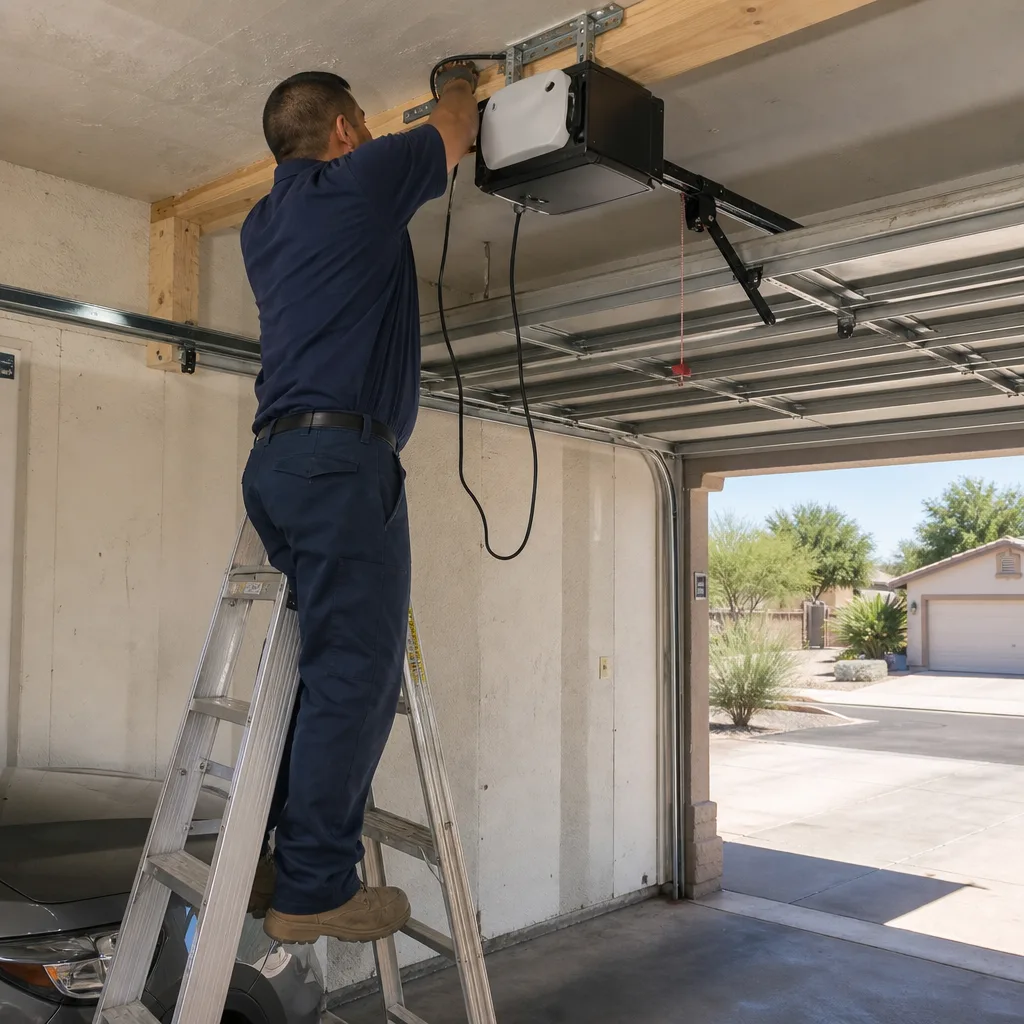
Call a professional when a torsion spring breaks, when a cable frays or snaps, when the door binds and will not travel smoothly, when the opener hits thermal cutoff repeatedly, or when the door has visible panel damage from a monsoon storm or a vehicle impact. Torsion springs and cables are under extreme tension and are genuinely dangerous to work on without training and the correct winding tools. An opener replacement involves electrical wiring and force-safety adjustments that affect how the door responds to obstructions. If the door works but you want an expert assessment of remaining hardware life before summer, that is also a legitimate service call. Browse our more guides & resources for additional Tempe-specific maintenance advice. Servo Garage Doors Tempe offers free estimates in Tempe - call (602) 962-8352 for a written price and a written scope, delivered before any work begins.
Frequently Asked Questions
Expect to pay $280 to $540 for torsion spring replacement in Tempe, depending on whether you replace one spring or a pair and what cycle rating you choose. The higher the cycle rating, the longer the spring lasts and the more it costs upfront. We quote a flat, written price before any work begins, and the invoice matches the quote. Call (602) 962-8352 for an exact price on your door - estimates are free.
Standard 10,000-cycle torsion springs typically last 8 to 12 years in Tempe, assuming the door is used five to six cycles per day and the springs are lubricated with a high-temp lithium product twice per year. Without proper lubrication, that lifespan drops to 6 to 8 years. High-cycle springs rated for 20,000 or more cycles can last 15 to 20 years.
In most cases, yes. We carry the common spring sizes, rollers, cables, and opener parts on the truck for same-day repair across Tempe. Same-day availability is a repair function, not an installation function. New door installations require measurement and ordering, which we schedule after the written estimate is approved. Call (602) 962-8352 and describe what you are seeing - we will tell you what parts are likely involved and whether we can get it done today.
We service all eight major brands including LiftMaster, Chamberlain, Genie, Clopay, Amarr, Wayne Dalton, Craftsman, and Raynor. For Tempe specifically, we recommend a DC motor opener with a thermal protection design sized for unconditioned Southwest garages. LiftMaster and Chamberlain both make models in this category. The specific model depends on your door weight, spring system, and usage pattern.
No. At Servo Garage Doors Tempe, the price is quoted and agreed before any work starts, per Clause 1 of The Haven Standard. The written price and written scope are delivered up front. If the technician finds something unexpected during the job, the additional work is quoted separately in writing before it is performed. The final invoice matches the agreed price, every time.
For repair work, yes. Our Tempe service vehicles carry the common torsion spring sizes, rollers, cables, hinges, weather seals, and opener components. If the job requires an uncommon part, we identify it during the initial visit and return with the correct component, with pricing agreed before the second visit. Call (602) 962-8352 with your door’s symptoms - we will tell you what is likely needed and whether it is on the truck today.
The Bottom Line
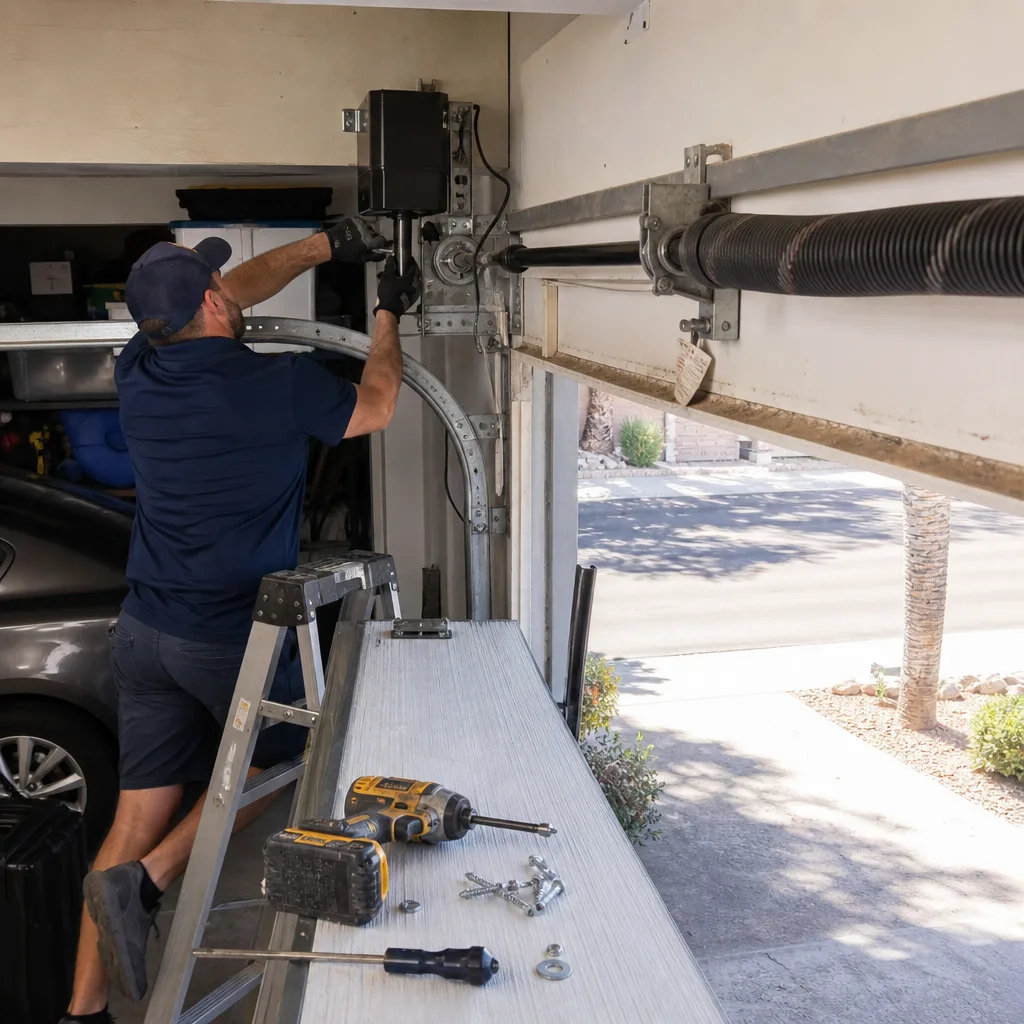
A garage door that works in Tempe is not the same as a garage door that works anywhere else. The heat degrades spring grease, the UV oxidizes panel finishes, the soil shifts the rough opening, and the opener pushes against thermal limits every July afternoon. You cannot change the climate, but you can specify for it: high-temp lithium lubricant, UV-stabilized panel finishes, torsion springs with a higher cycle rating, and an opener sized for the heat and the usage pattern. And before any installer leaves your driveway, ask for the written component manifest. If the part numbers, warranty terms, and spring tension spec are on paper, you know exactly what you bought. That is the entire point.
Written by Marcus Deller, Owner at Servo Garage Doors Tempe, serving Tempe since 2015.