
Last updated September 20, 2026
Full 25-point door and opener safety check with every visit - springs, cables, rollers, tracks, and your LiftMaster or Chamberlain opener included
You get a price before we start. It does not change when the truck arrives.
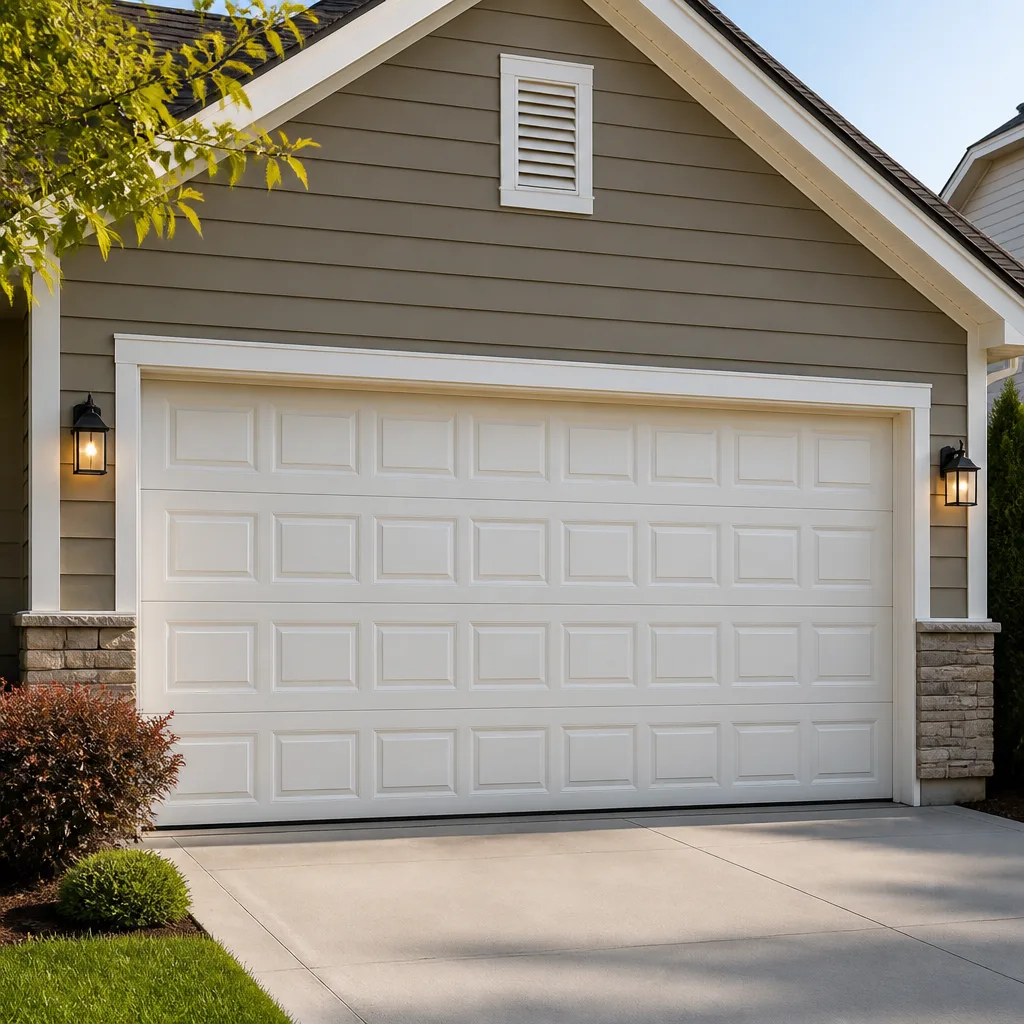
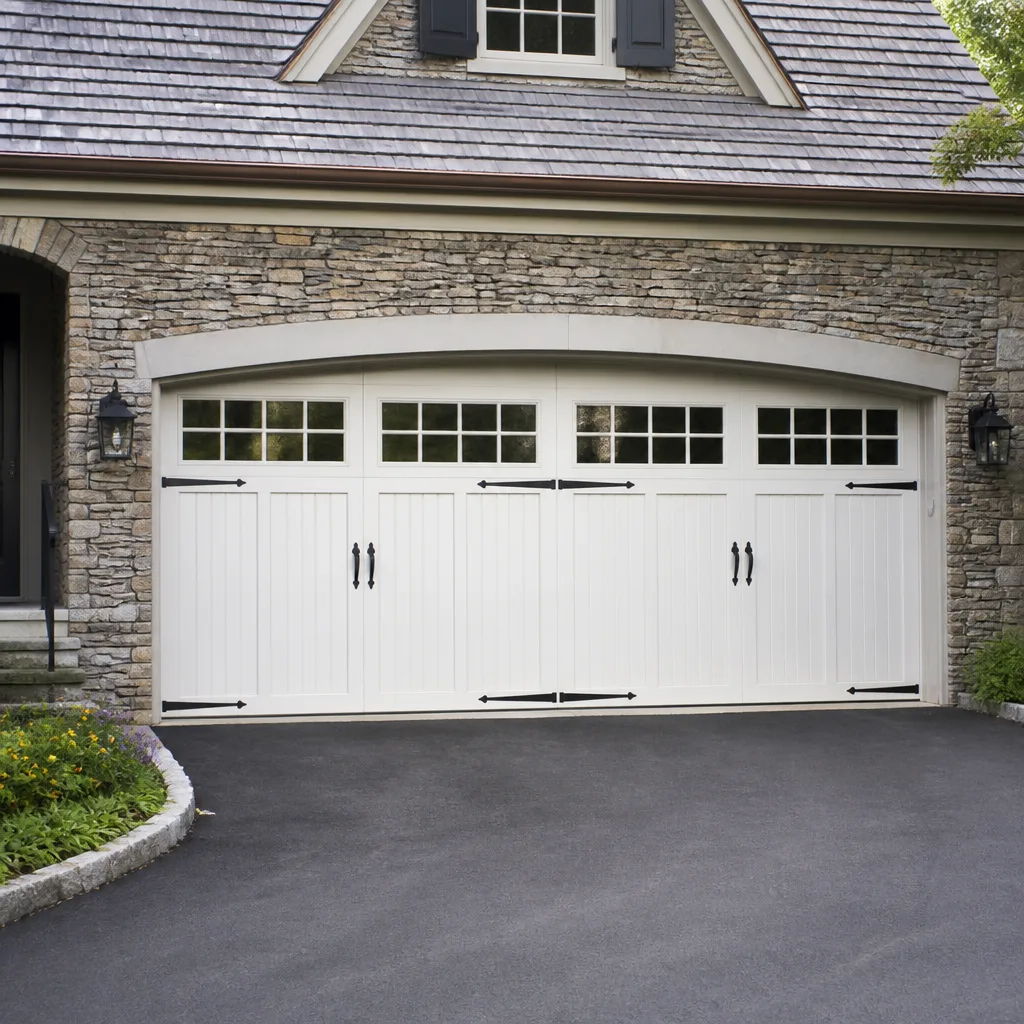
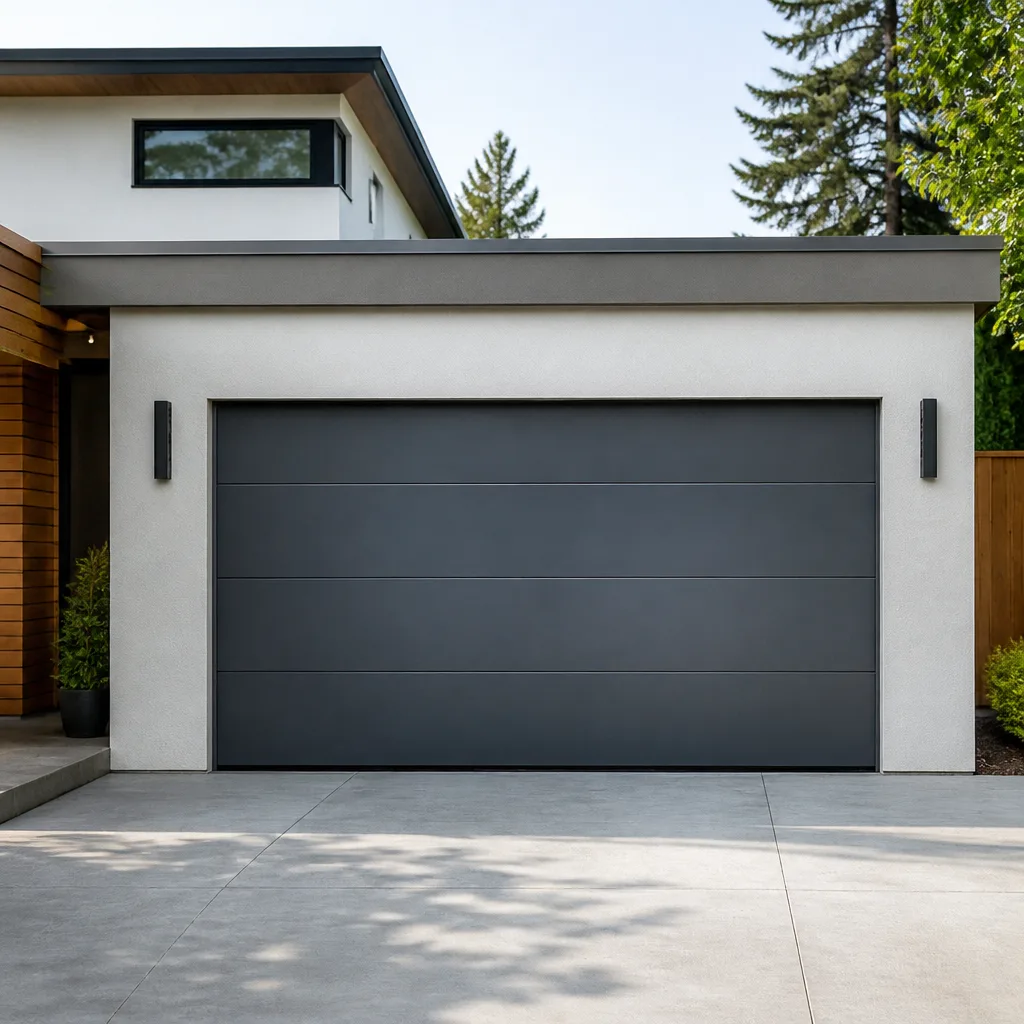
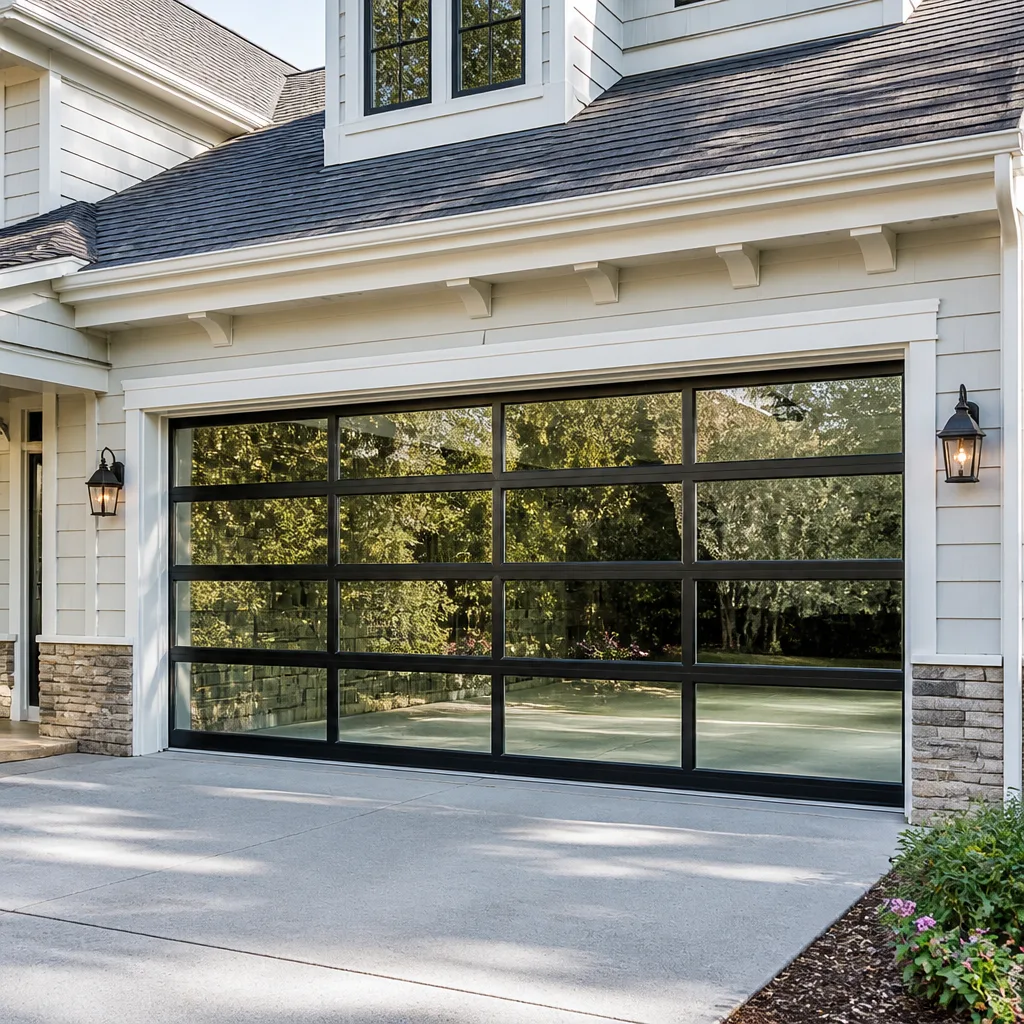
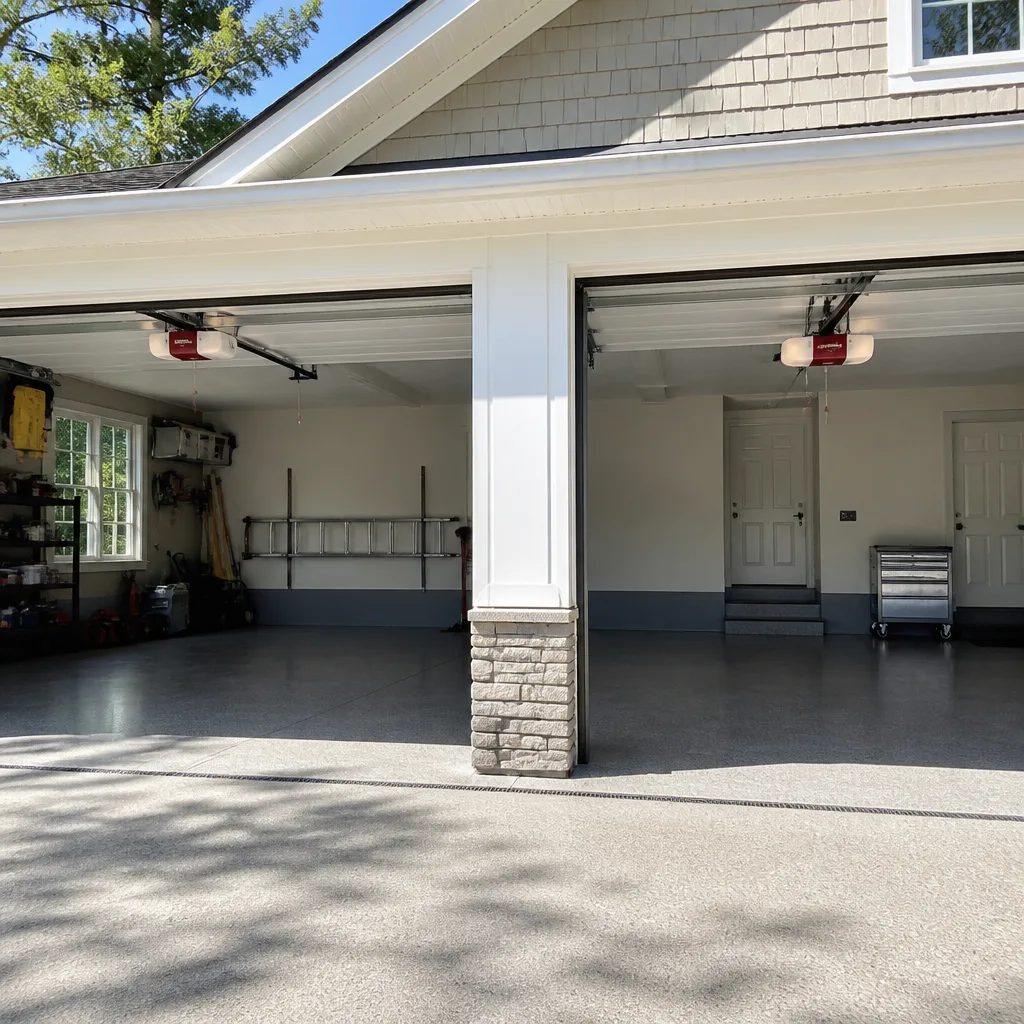
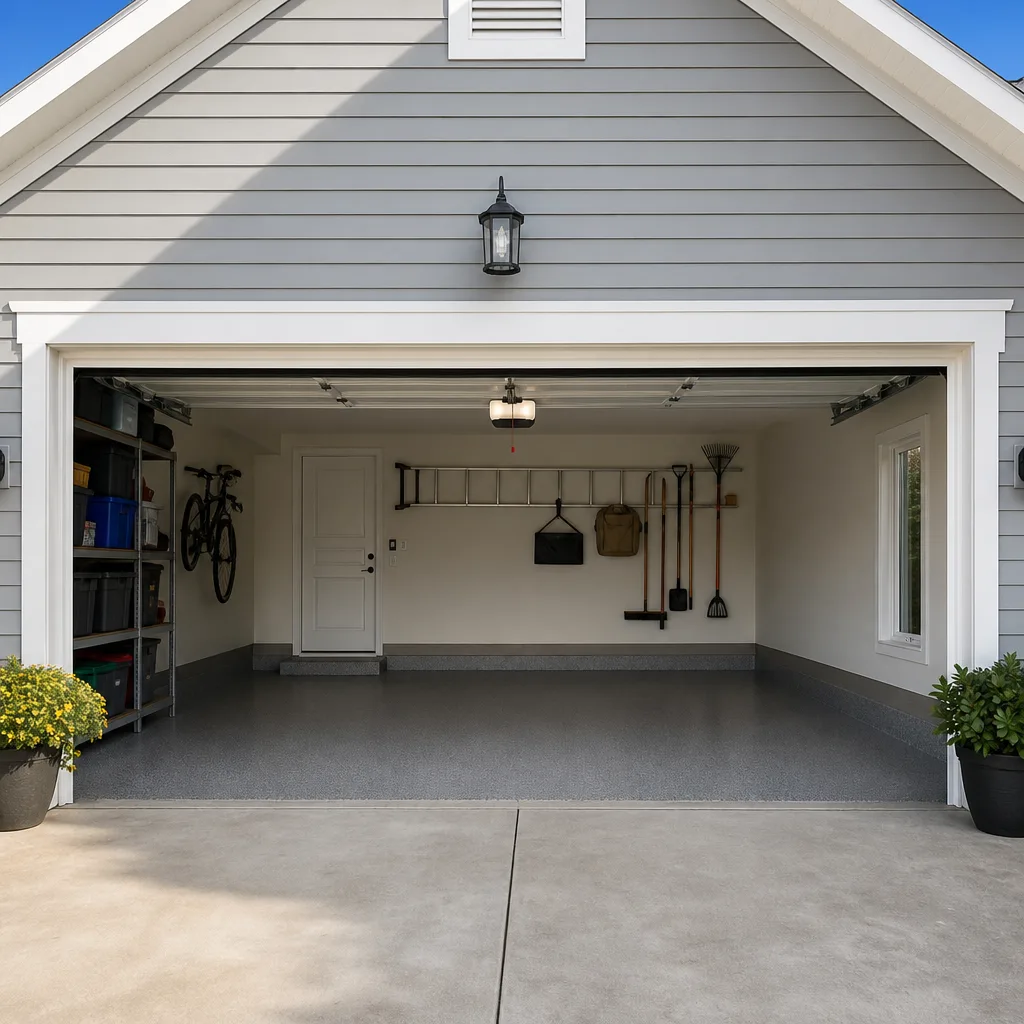
 Before
 After
After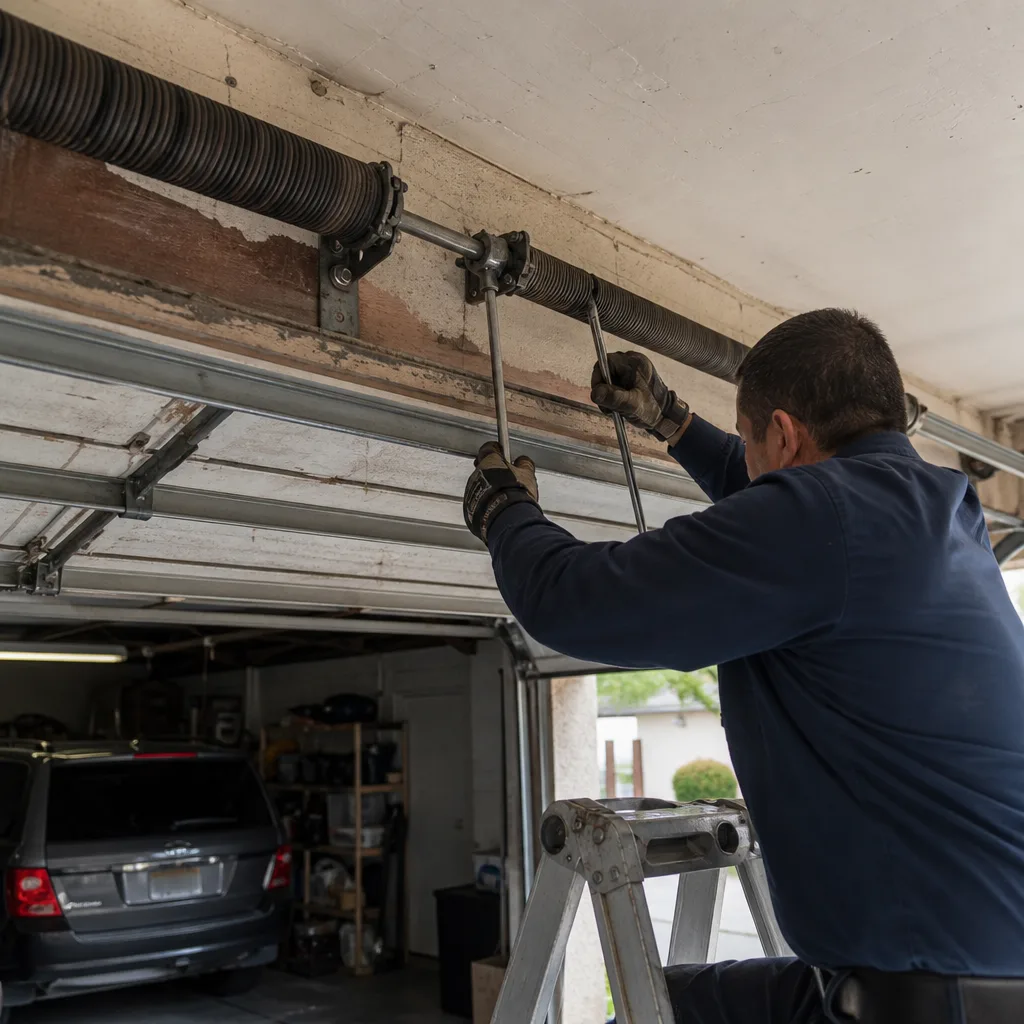 Before
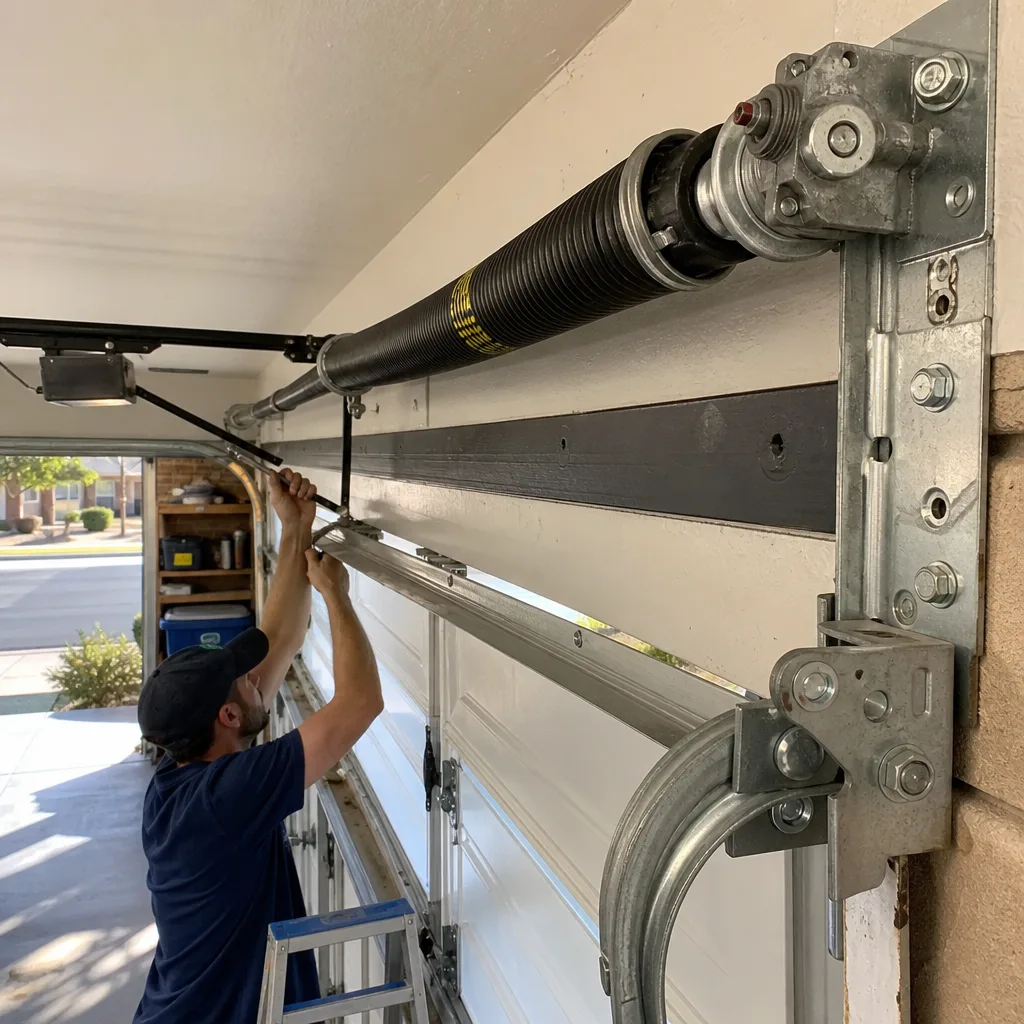 After
After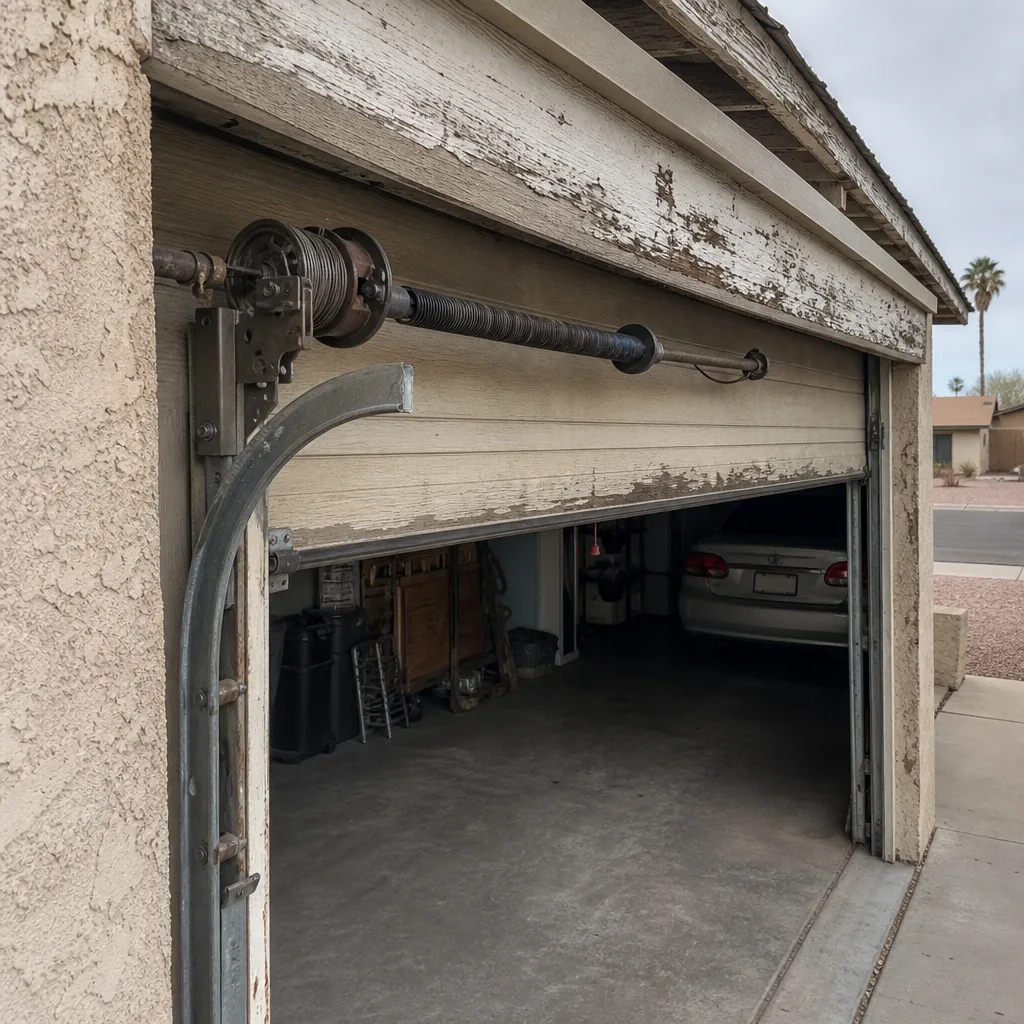 Before
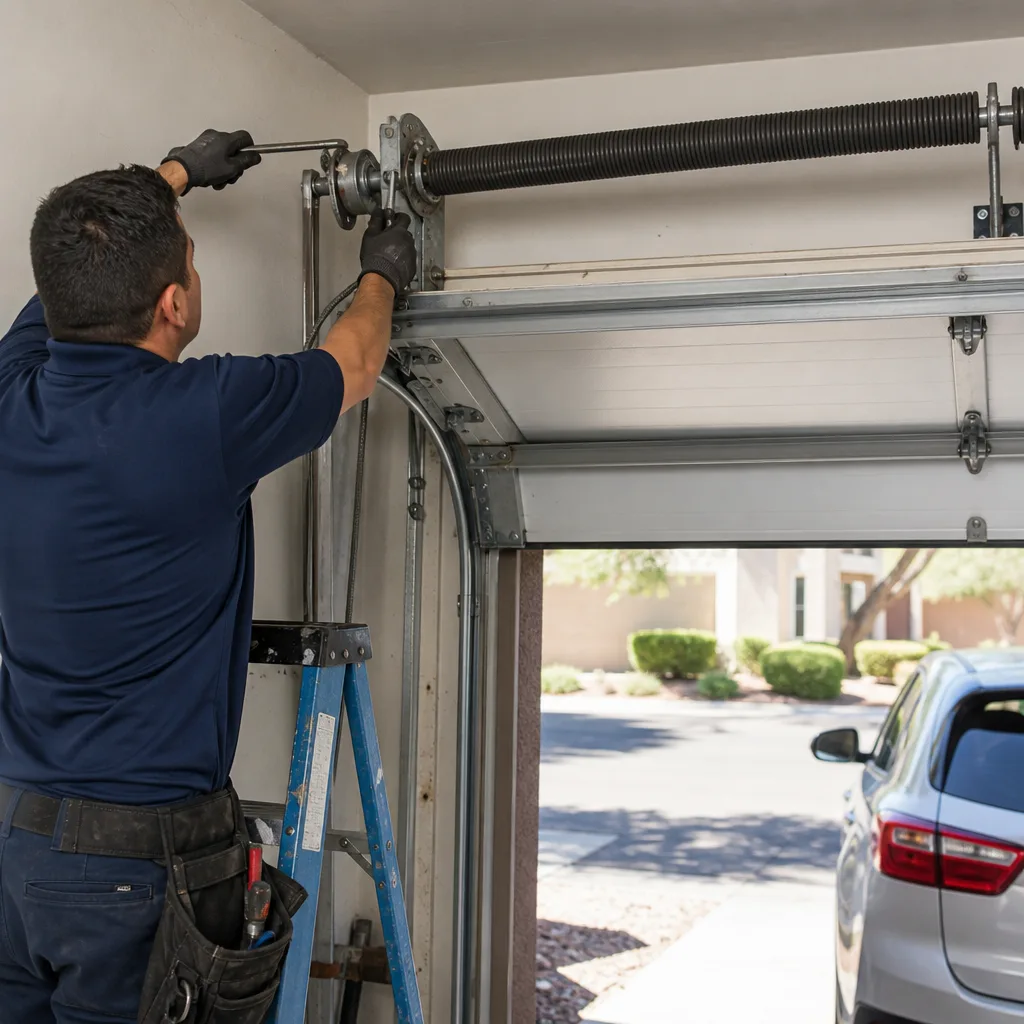 After
AfterGarage Door Permits, Codes & Inspections in AZ: What You Need to Know
The permit question isn’t bureaucratic caution. It’s a resale issue with a dollar figure attached. In Tempe, an unpermitted garage door modification that altered the rough opening or header can surface during escrow as a title defect, and the seller absorbs the cost of retroactive inspection, remediation, or both. This guide walks through exactly when a permit is required in Arizona, which code sections govern garage door fire ratings and opener compliance, how HOA approval interacts with city jurisdiction, and what a final inspection actually checks, including how to trace a prior owner’s work through Maricopa County records. For additional help, see our Garage Door Repair Maintenance Checklist for Tempe Homeowners.
Quick Answer
In Tempe, Arizona, replacing a garage door panel-for-panel in an existing opening typically requires no building permit. You trigger a permit when you modify the rough opening, alter or reinforce the header, install a new opener circuit that exceeds 120V, or change the door’s fire rating on an attached garage. An unpermitted structural modification can surface as a defect during a home sale in Maricopa County.
Table of Contents
- Tempe’s Permit Threshold: When Like-for-Like Ends
- Fire Ratings and the 20-Minute Door Rule
- HOA vs. City Jurisdiction: The Order of Operations
- Opener Codes: UL 325 and What Inspectors Check
- What a Final Inspection Actually Checks
- Title Disclosure: Tracing a Prior Owner’s Work
- Common Mistakes to Avoid
- When to Call a Professional
- Frequently Asked Questions
- The Bottom Line
BeforeAfterTempe’s Permit Threshold: When Like-for-Like Ends
Most garage door projects in Tempe fall into the no-permit category. If the existing door is being removed and a new door of the same nominal size is installed in the same rough opening, with no changes to the surrounding framing, the City of Tempe Development Services does not require a building permit. This covers the majority of residential replacements, including upgrading a steel pan door to an insulated Clopay or Amarr model. You are swapping components, not altering structure.
The line shifts when any of these four things happen:
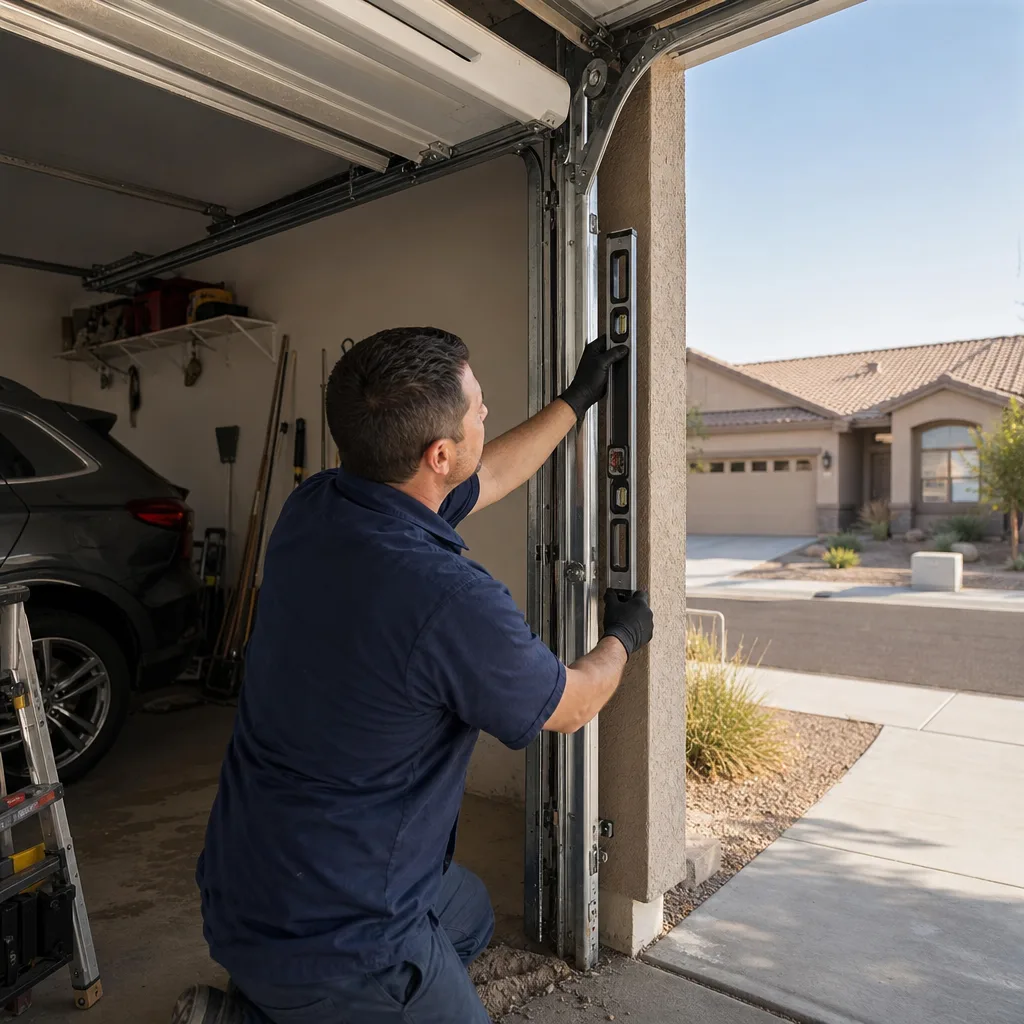
- Modifying the rough opening. Widening, heightening, or re-framing the opening changes the load path of the wall above. That’s structural work and requires a building permit application with stamped drawings in most cases.
- Altering or reinforcing the header. If a new door is heavier than the old one, or if the opening is being widened, the header above the opening may need upsizing. Tempe inspectors will want to see the calcs.
- Adding a new circuit for the opener. A standard 120V opener plugged into an existing garage outlet needs no electrical permit. Running a new dedicated circuit, adding a subpanel, or hardwiring a high-lift opener changes that.
- Changing the fire rating on an attached garage. If the old door was fire-rated and the new one isn’t, or vice versa, you’ve altered the separation between garage and living space. That’s a code compliance issue, not just a paperwork issue.
We’ve seen Tempe homeowners in the Broadmor and University Park neighborhoods get caught on the third and fourth items more than the first two. The fixed framing rarely changes. The electrical work and the fire rating do, because those are the quiet changes that don’t feel structural until an inspector or a home inspector flags them. Marcus Deller, owner at Servo Garage Doors Tempe, has reviewed hundreds of garage door replacement scopes in Tempe since 2015. The pattern is consistent: homeowners think permits apply to walls, not to doors.
For a straightforward replacement where the opening is untouched, our garage door installation in Tempe service includes verification that no permit trigger applies before we quote. We check the rough opening, the header condition, the opener circuit, and the fire rating during the free measure. If a permit is needed, we tell you in writing before any work starts, per Clause 1 of The Haven Standard.
Fire Ratings and the 20-Minute Door Rule
Here’s the code section most Tempe homeowners never hear about until something forces the issue. The International Residential Code (IRC), which Arizona has adopted with amendments, requires a 20-minute fire-rated door or a solid wood door not less than 1-3/8 inches thick between an attached garage and living space. This applies to the door between the house and the garage, but the garage vehicle door itself carries the fire separation question in specific circumstances.
For the vehicle door on an attached garage, the IRC does not mandate a fire rating on a standard replacement in most residential applications. The code’s fire separation provisions focus on the wall, ceiling, and pedestrian door. But the vehicle door matters for a different reason: air leakage, fume separation, and the door’s compatibility with the home’s overall fire separation system. If the garage is converted to living space, or if a detached garage becomes attached via a breezeway addition, the door’s rating enters the conversation.
What actually applies to most Tempe replacements is this: if your attached garage shares a wall with conditioned living space, the common wall must be 1/2-inch gypsum board minimum, and any door in that wall needs the 20-minute rating. The vehicle door on the opposite wall is a thermal and fume barrier, not a fire-rated assembly. But here’s the nuance: when a homeowner upgrades to a heavier, insulated door, the perimeter sealing and the opener force settings become the compliance points. A heavy Clopay or Wayne Dalton door with a weak opener configured for force rather than travel creates a safety issue the inspector will catch if a permit was pulled.
In Tempe’s climate, the fire separation gets tested differently than in Phoenix’s newer fringe suburbs. Homes built in the 1960s and 1970s in neighborhoods like Tempe Gardens and Shalimar often have undersized headers and original framing that never anticipated a modern insulated steel door. The weight difference between a hollow steel pan door and a polyurethane-insulated Amarr model can exceed 40 pounds. That weight transfers through the track system into the header. If the header is undersized, the door sags, the springs wear unevenly, and an inspector walking a permitted project will note the deflection.
This is one place where a no-permit replacement can quietly become a structural issue. Our garage door repair in Tempe technicians measure header deflection on every visit that involves a door replacement or spring failure, because a sagging header is the early warning sign that the previous work ignored the load calculation.
HOA vs. City Jurisdiction: The Order of Operations
Tempe has HOA-heavy neighborhoods. The Lakes, Warner Ranch, South Tempe master-planned communities, and pockets of older Tempe all have architectural review committees with garage door standards. The approval chain matters, and skipping the HOA before pulling a city permit creates a two-problem scenario.
The correct order is:
- HOA architectural review first. The committee approves or denies the door style, material, color, and sometimes manufacturer. Many Tempe HOAs restrict garage door styles to specific panel profiles and colors. A permit-valid door can still violate the CC&Rs.
- City permit application second. If the HOA-approved door triggers a city permit (structural change, electrical work), the application references the approved door specifications.
- Installation third. The work happens after both approvals exist in writing.
- City inspection fourth. If a permit was required, Tempe Development Services inspects the work.
- HOA final sign-off last. Some HOAs require photographic evidence of the completed installation to close their file.
The two-problem scenario happens when a homeowner pulls a city permit first, or installs first and seeks HOA approval after. If the HOA denies the door style, the city permit is now for a door that can’t be installed per the CC&Rs. The homeowner either installs a non-compliant door and faces HOA enforcement, or re-applies to the HOA and waits while the permit clock runs. Permits expire in Tempe if work doesn’t begin within 180 days or isn’t completed within the permit’s validity window. You can end up paying for a second permit application because the HOA process took too long.
We’ve handled replacements in Tempe where the HOA required a specific Clopay panel profile and the homeowner had already purchased a different door from a big-box store. The door sat in the garage for six weeks while the HOA appeal played out. The written scope from our team identified the HOA requirement during the measure, because we ask. It’s a standard question before we quote anything: is there an HOA, and what does the architectural committee require?
Opener Codes: UL 325 and What Inspectors Check
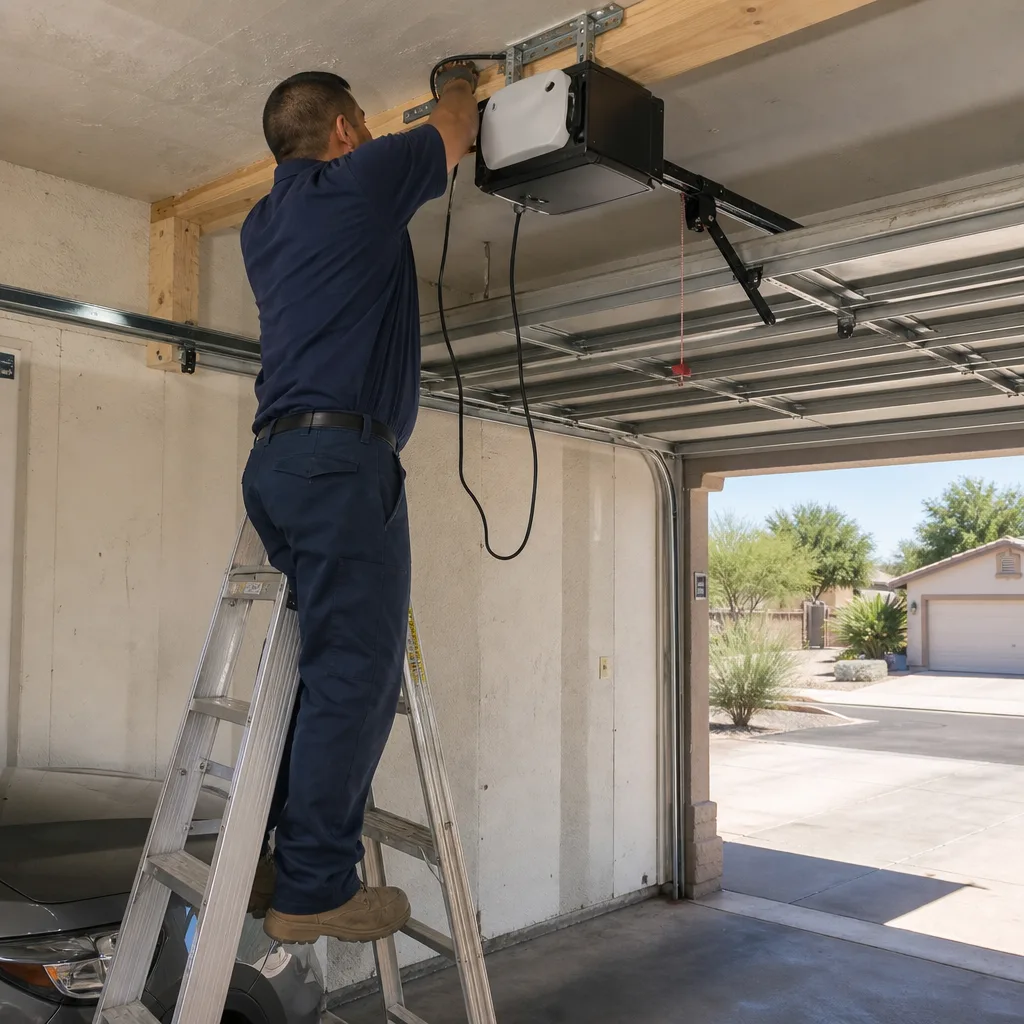
Garage door openers in Arizona operate under UL 325, the safety standard for automatic gate and door operators. Every opener manufactured since 1993 must include an auto-reverse mechanism that reverses the door when it contacts an obstruction. Since 2016, openers must also include a secondary entrapment protection device, typically photo-eye sensors mounted no higher than 6 inches above the floor on each side of the opening.
The code compliance on openers is specific. A permitted opener installation in Tempe triggers these inspection points:
- Photo-eye alignment. The two sensors must be aligned within the manufacturer’s tolerance. An inspector will block the beam and verify the opener reverses or refuses to close.
- Force settings. The opener’s force adjustment, how hard the motor pushes before reversing, must be set to the minimum that reliably operates the door. An inspector will test this with a 2×4 laid flat under the closing door. The door must reverse on contact.
- Manual release. The emergency release handle must be reachable from the floor without a ladder, and it must be red as required by code.
- Electrical connection. If the opener is plugged into a GFCI-protected outlet, the inspector verifies the outlet is properly grounded. Hardwired openers require a disconnect switch.
The newer smart openers from LiftMaster, Genie, and Chamberlain complicate the inspection slightly. Battery backup units, which are now common in Tempe because monsoon-season power outages leave doors stuck, add a battery to the inspection list. The inspector looks for proper battery mounting, no exposed terminals, and a functional manual release that works with the battery disconnected. All eight major brands our team services, including LiftMaster, Chamberlain, Genie, Clopay, Amarr, Wayne Dalton, Craftsman, and Raynor, follow the same UL 325 baseline, but the smart features add manufacturer-specific compliance details.
One item inspectors catch regularly in Tempe: the photo-eye sensors mounted above 6 inches because the door track or a sidewall obstruction prevented proper placement. That’s a code failure waiting for an inspection, and it’s also a safety risk, because a child or pet can cross under a high-mounted beam and the door won’t reverse. When we install openers as part of our garage door opener repair and installation in Tempe service, the sensor height is always set to code, and the force settings are tested with a calibrated obstruction before we leave. The photo record we deliver includes the sensor height and the tested force reversal.
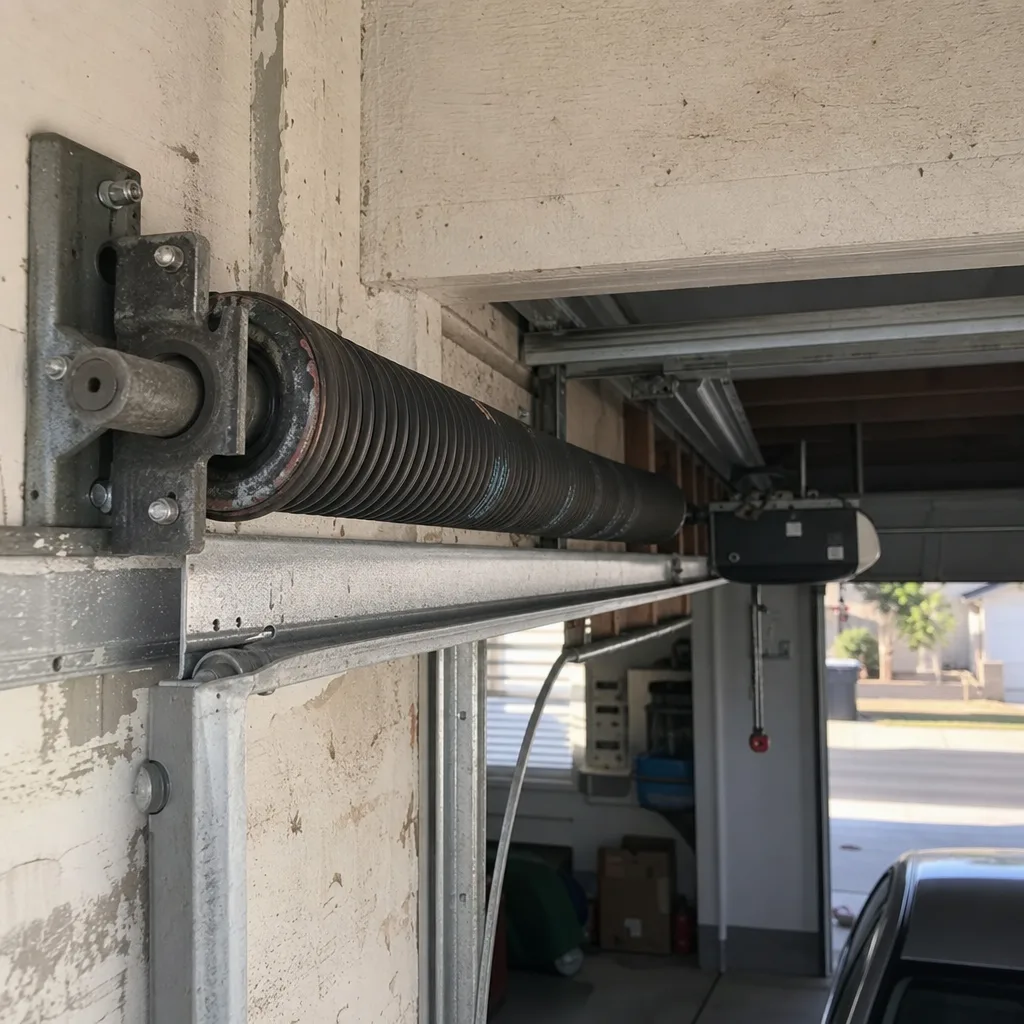
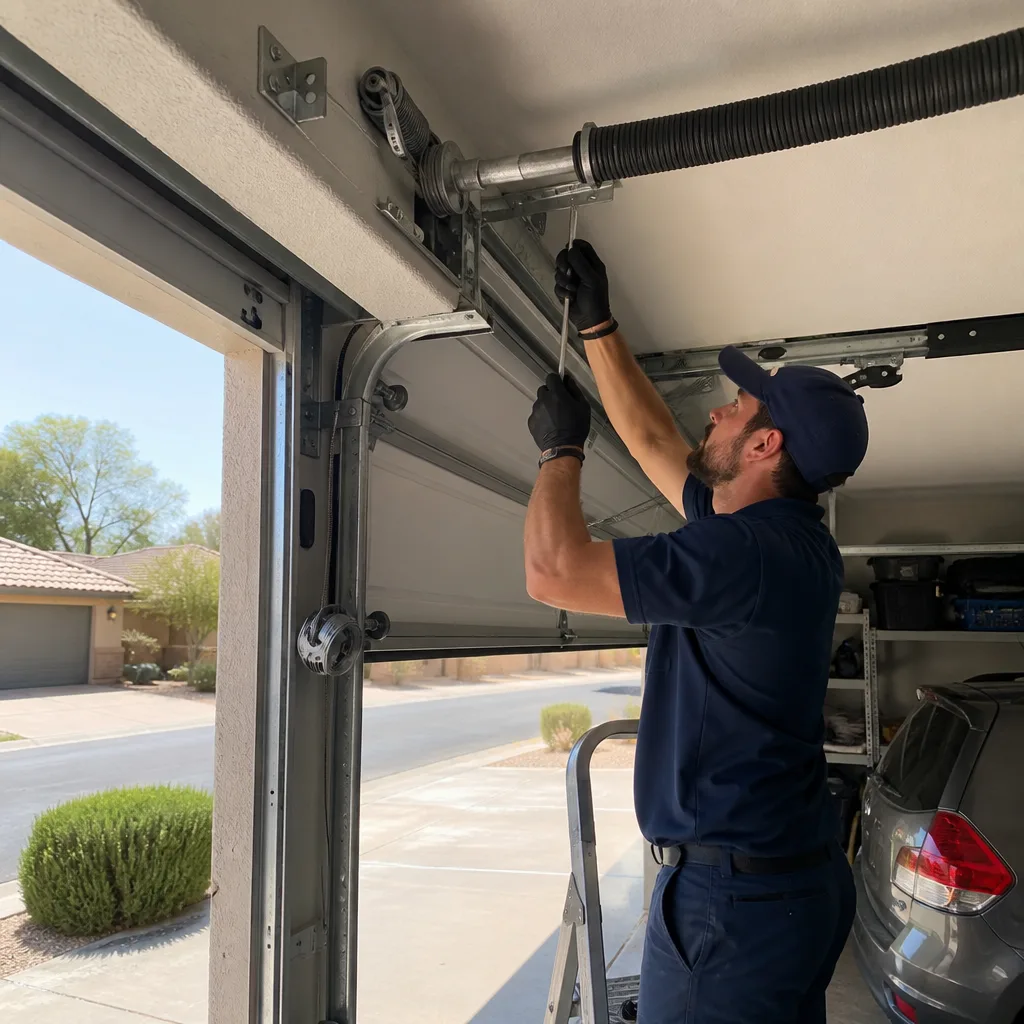
Safety caveat: garage door springs, particularly torsion springs mounted above the closed door, store enough energy to cause serious injury or death if they snap during adjustment or removal. Never attempt to adjust, repair, or replace a torsion spring yourself. The cone, the winding bar, and the spring itself are under tension at all times, even when the door is in the open or closed position. A trained garage door technician uses specific winding bars and follows a controlled sequence. If a spring failure is part of your door replacement scope, leave it to a professional.
What a Final Inspection Actually Checks
If your Tempe project required a permit, the final inspection is the step that converts the work from questionable to documented. Here’s what the Tempe inspector walks through, in order:
- Permit card and approved plans. The inspector verifies the permit is posted and the work matches the approved scope. Deviations from the approved drawings are a fail.
- Rough opening dimensions. If the opening was modified, the inspector checks the finished dimensions against the approved drawings. Tolerance is tight, typically within 1/4 inch.
- Header specifications. The inspector looks at the header size, material, and bearing points. If an engineer’s letter was required, it must be on site.
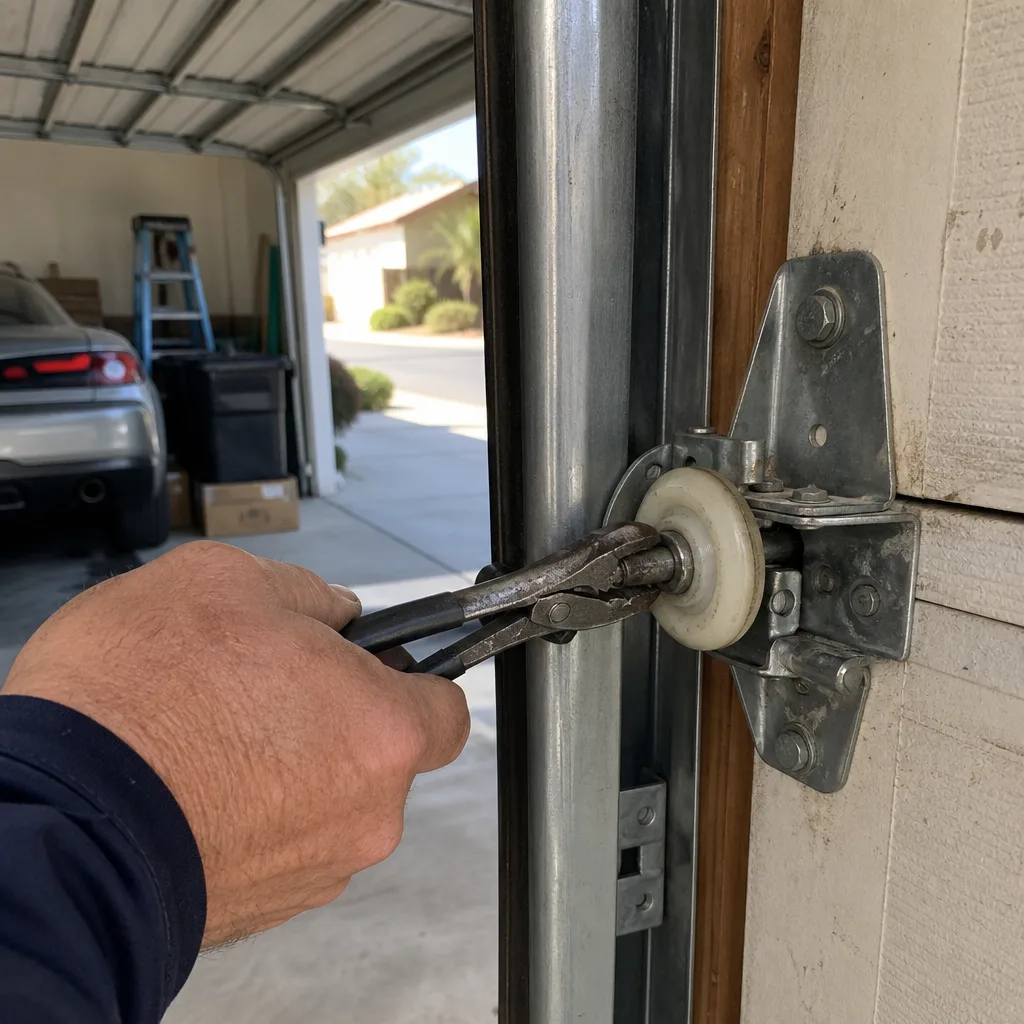
- Door installation quality. The door must open and close smoothly, the tracks must be plumb and aligned, and the rollers must seat properly. Visible gaps at the perimeter, excessive track deflection, or a door that binds mid-travel are red flags.
- Opener compliance. The UL 325 items listed above are tested: photo-eye function, auto-reverse with an obstruction, force settings, and manual release.
- Fire separation, if applicable. On attached garages where the fire rating was part of the scope, the inspector verifies the door’s rating and the perimeter sealing.
- Final sign-off. The inspector signs the permit card, the work is entered into Tempe’s permit database, and the homeowner receives a finaled permit that transfers with the property.
The documented photo record we deliver on every completed job becomes useful at inspection time. If the inspector questions a detail, the photos show what was installed and how. Marcus Deller built Servo Garage Doors Tempe on that founding rule in 2015: the customer sees the failed part before anyone quotes a replacement. Clause 4 of The Haven Standard codifies it. The same photo record that protects the customer from an unnecessary upsell also protects the permitted installation from an inspector’s legitimate question.
Title Disclosure: Tracing a Prior Owner’s Work
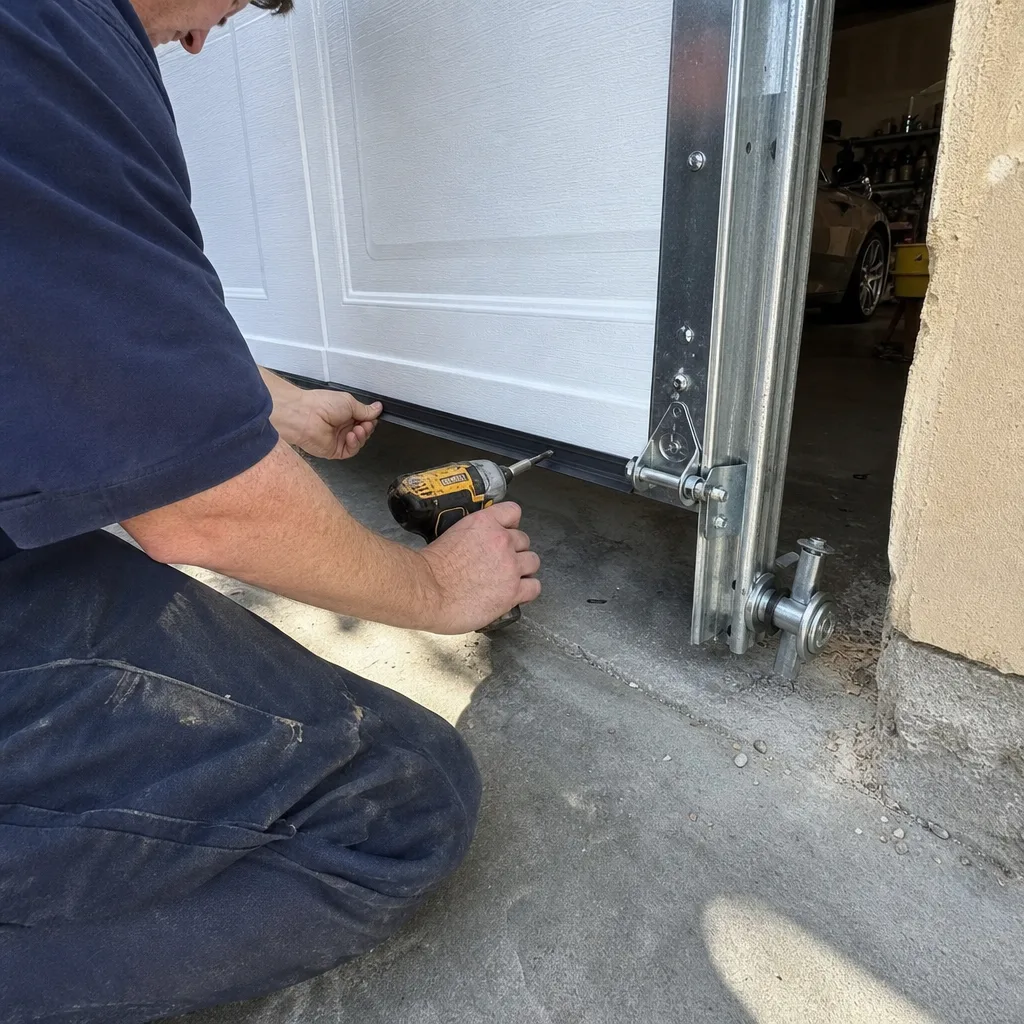
Here’s the scenario we hear most often from Tempe buyers who are under contract on a home. The home inspection flags a garage door modification that looks recent: a widened opening, a new header, or a newer door where the framing doesn’t match the original construction. The buyer wants to know if the work was permitted. The seller either doesn’t know or doesn’t say.
Maricopa County and the City of Tempe both maintain public records that answer this question:
- Tempe’s public permit portal. Search by address to find all permits pulled on the property going back decades. If the garage work was permitted by the City of Tempe, it appears here with the permit number, issue date, and final inspection status. An open permit with no final is a problem: the work may have been done without the final sign-off, and the permit expired.
- Maricopa County Assessor records. The assessor’s office maintains property record cards that document changes to the structure over time. If the garage footprint changed, the record card may show the modification. This is less detailed than the city permit record, but it’s a cross-check.
- Title company search. A title commitment from the escrow process sometimes includes a permit search. Ask for it. If the title company won’t provide it, request it through the seller’s disclosure or as a contingency item.
If the search reveals no permit and the work required one, the seller has options: apply for a retroactive permit (Tempe allows this in some cases, with an inspection and possible remediation before final sign-off), or credit the buyer for the cost of bringing the work into compliance. The credit amount is negotiable, but a garage opening with an unpermitted structural header modification typically runs into the thousands to inspect, engineer, and remediate.
We tell every Tempe buyer we work with to ask one question during the inspection period: is there a finaled permit for every garage modification visible on the property? The answer determines whether the garage door is an asset or a liability at closing.
Common Mistakes to Avoid
- Skipping the HOA before pulling the city permit. The two processes have different timelines and different approval criteria. A city-permitted door that the HOA rejects leaves you with a permit for work you can’t legally complete per the CC&Rs.
- Assuming every replacement needs a permit. A panel-for-panel swap in the existing opening is explicitly exempt in Tempe. Paying for a permit you don’t need adds cost and delays the work. Knowing the threshold saves money.
- Assuming no replacement ever needs a permit. The opposite error. Widening the opening, altering the header, or adding a dedicated circuit for the opener triggers the permit requirement. Guess wrong in this direction and the resale issue lands years later.
- Ignoring the fire rating on an attached garage. The separation between garage and living space is a code requirement, not a preference. Changing the door’s construction can change that rating. Confirm the replacement meets or exceeds the original.
- Setting the opener force too high. A heavy door with high force settings will close through an obstruction. That’s a UL 325 violation and a safety hazard that inspectors specifically test.
- Not retaining the finaled permit. The final inspection sign-off is the documentation that proves the work was done legally. Keep the physical copy. It’s a selling point when you list the house, and it’s a defense if a buyer’s inspector questions the work.
- Trusting a handyman with structural garage work. Modifying a rough opening or replacing a header is structural work. In Tempe, that requires a permit and often an engineer’s letter. A handyman who skips both saves you money today and costs you the full remediation at closing.
When to Call a Professional
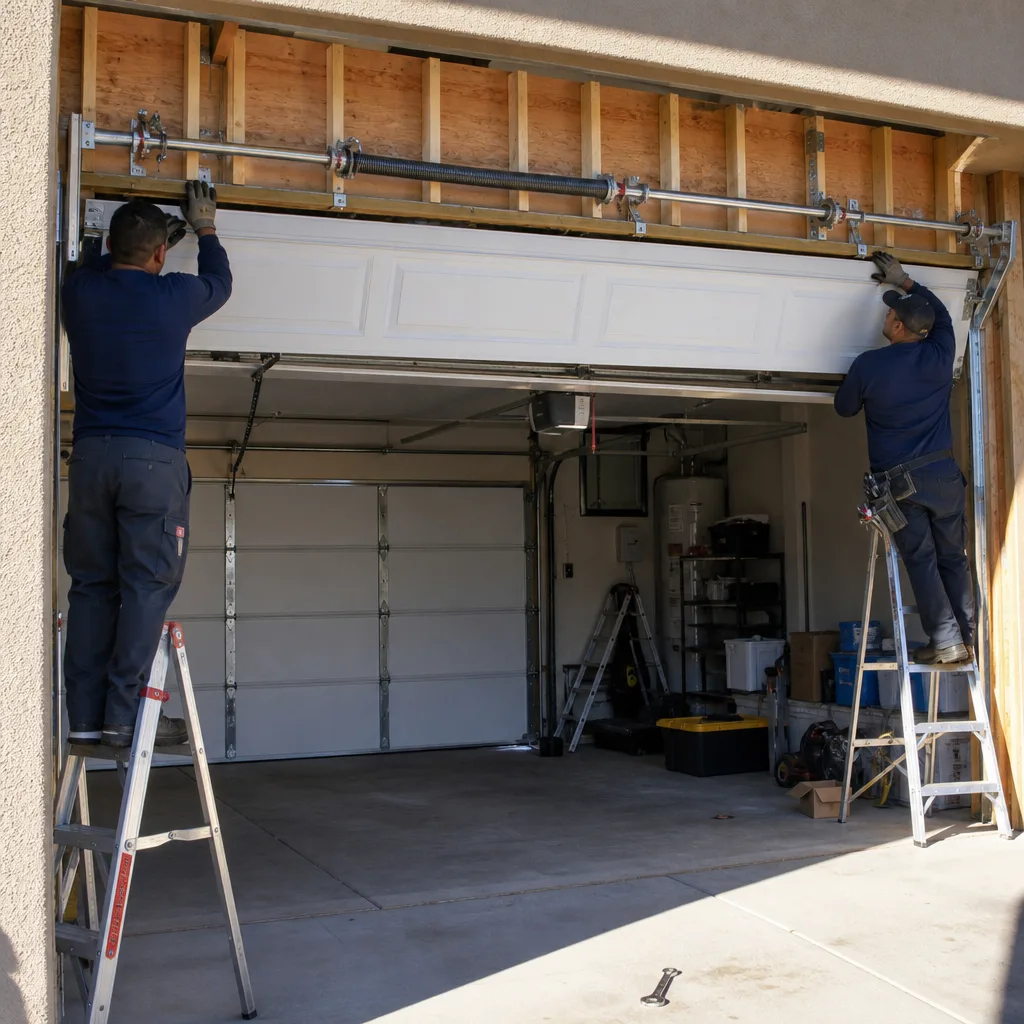
Call a professional when the work touches structure, springs, or the fire separation. Modifying a rough opening, reinforcing a header, or replacing a torsion spring are jobs where the failure mode is serious injury or a code violation that surfaces later. If you’re not certain whether your replacement triggers a Tempe permit, or if you’ve bought a home and discovered garage work with no permit history, get an expert to assess the scope before you act. Servo Garage Doors Tempe offers free estimates in Tempe. Call (602) 962-8352 and we’ll check the permit trigger, the HOA requirement, and the structural condition in one visit.
Frequently Asked Questions
A like-for-like replacement in the existing opening needs no permit in Tempe. You need a permit if you modify the rough opening, alter the header, add a new electrical circuit for the opener, or change the door’s fire rating on an attached garage. If you’re planning a bigger project, read How to Hire a Garage Door Contractor in Tempe: A Step-by-Step Guide. Call (602) 962-8352 if you’re not sure which category your project falls into.
Tempe permit fees for residential garage door work vary based on the valuation of the work and whether the permit covers only the door or includes structural or electrical scope. The fee schedule is published by Tempe Development Services and updates annually. The bigger cost variable is the time: permit review, HOA approval, and inspection scheduling can add weeks to the timeline. Our team includes permit coordination in the written scope when a permit applies.
Yes. A permitted opener installation in Tempe is inspected for UL 325 compliance: photo-eye function, auto-reverse with an obstruction test, force settings, and manual release access. The photo-eye sensors must be mounted no higher than 6 inches from the floor.
Yes. HOA architectural review comes first. The city permit process does not wait for HOA decisions, and a city-permitted door that the HOA rejects creates a conflict where the permit may expire while the HOA process resolves. Get HOA approval in writing before submitting the city application.
Search the address on Tempe’s public permit portal and cross-check with the Maricopa County Assessor property record. A finaled permit appears in both systems. No permit on record for work that required one means the title carries an undisclosed liability that should be resolved before you buy or sell.
The IRC requires a 20-minute fire-rated door or a solid wood door at least 1-3/8 inches thick between an attached garage and living space. The vehicle door on the opposite side of the garage is not typically fire-rated, but it must maintain the thermal and fume separation, and its weight and force settings are inspection points when a permit is pulled. Your replacement door should meet or exceed the original door’s construction.
The Bottom Line
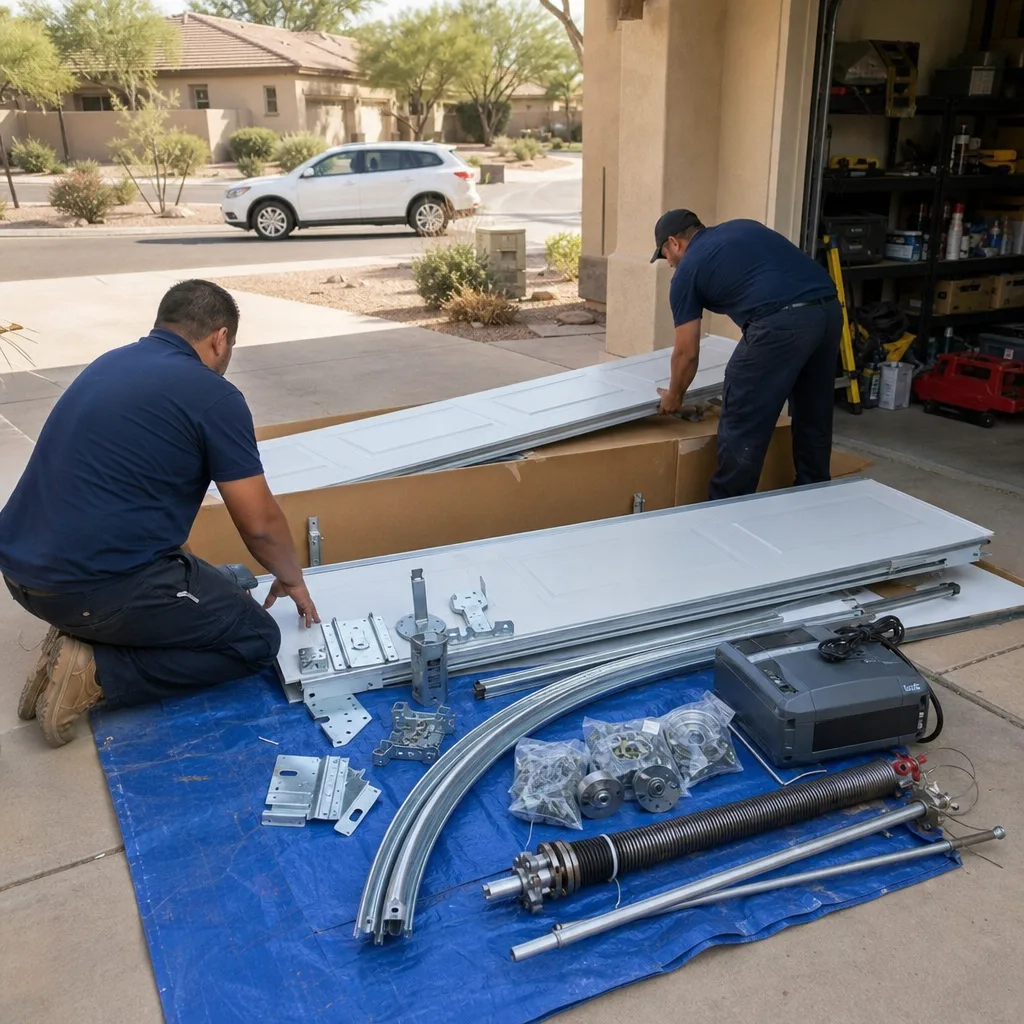
The permit question on a garage door in Tempe has a clear threshold: replace the door in the same opening with no structural or electrical changes, and no permit is required. Modify the opening, the header, the circuit, or the fire separation, and the permit becomes mandatory. The HOA approval chain runs first in HOA neighborhoods, and a skipped step costs time and money. An unpermitted garage modification follows the property through every future sale until it’s resolved. Confirm the scope, check the records, and document the work. Call (602) 962-8352 for a free estimate in Tempe, and we’ll tell you in writing whether your project requires a permit before any work begins.
Written by Marcus Deller, Owner at Servo Garage Doors Tempe, serving Tempe since 2015.