
Last updated September 20, 2026
Full 25-point door and opener safety check with every visit - springs, cables, rollers, tracks, and your LiftMaster or Chamberlain opener included
You get a price before we start. It does not change when the truck arrives.

 Before
 After
After Before
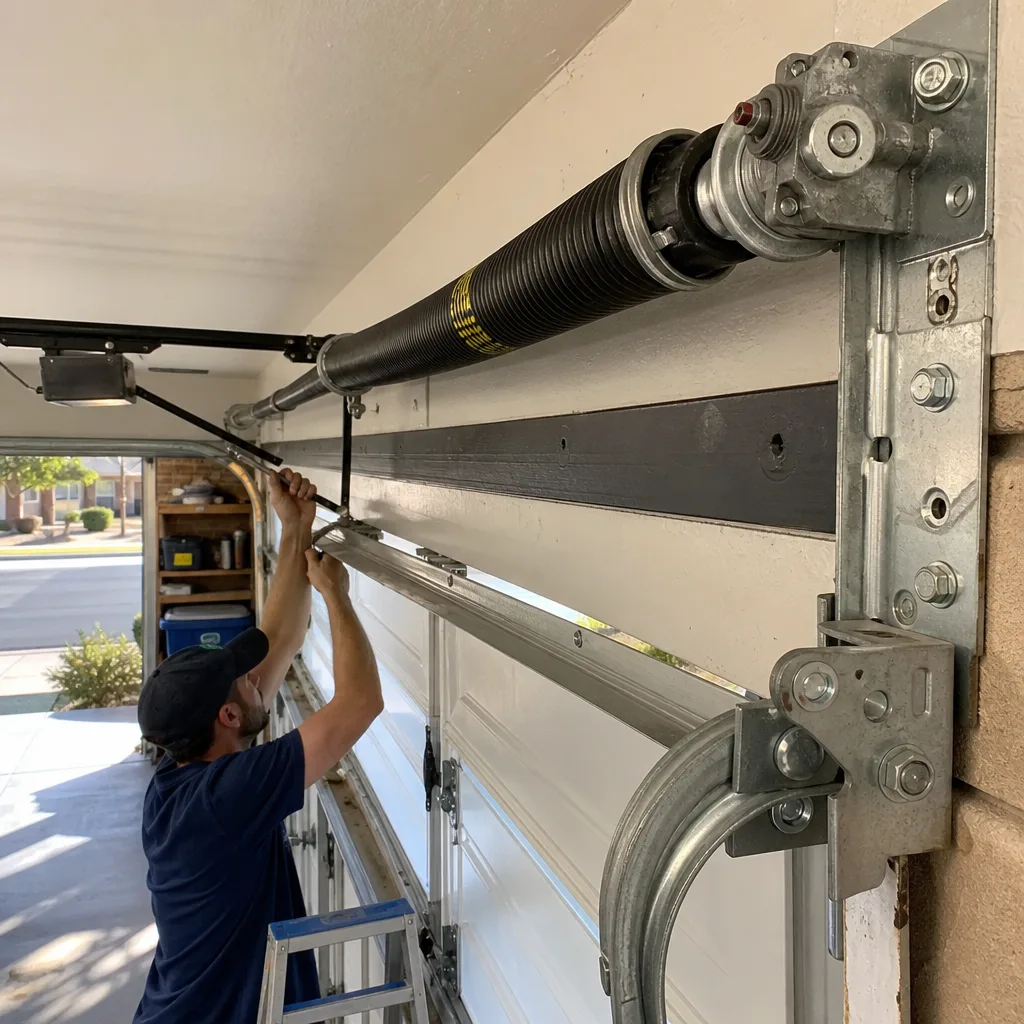 After
After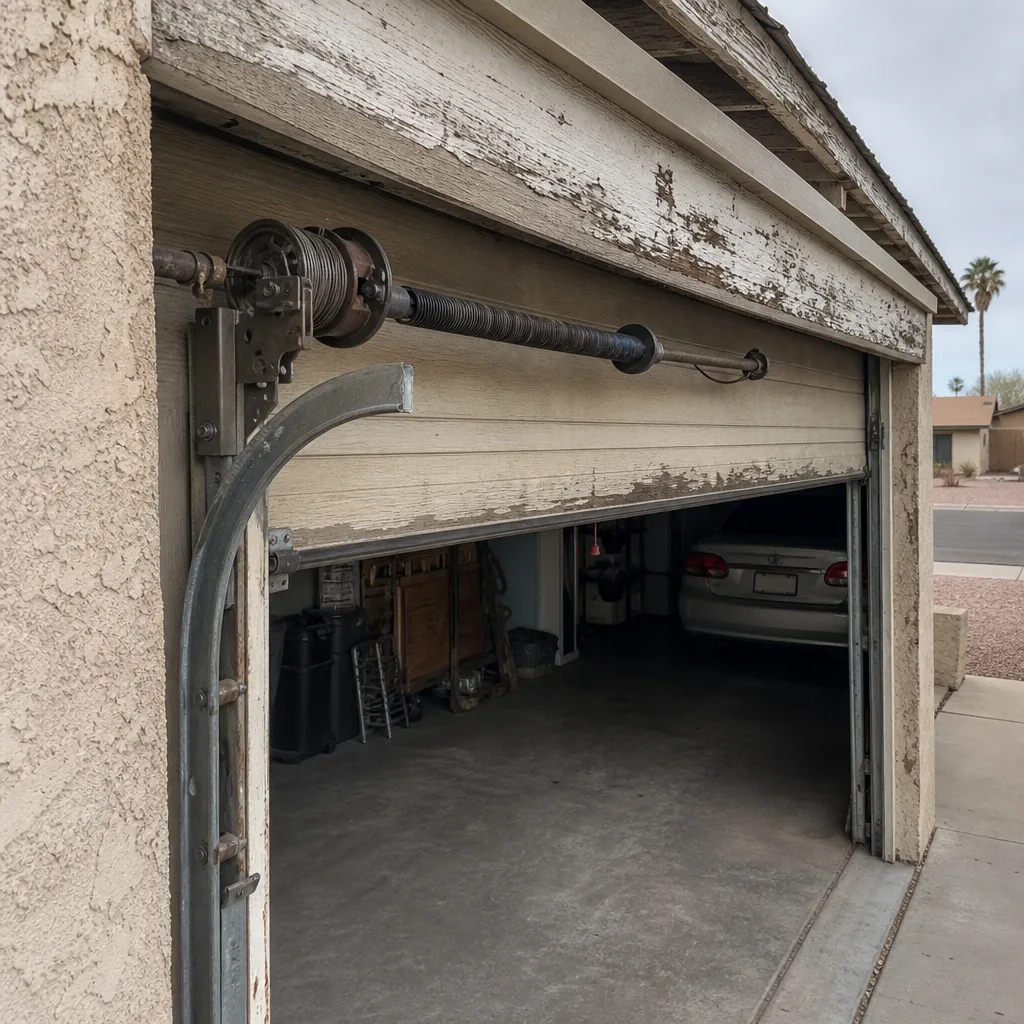 Before
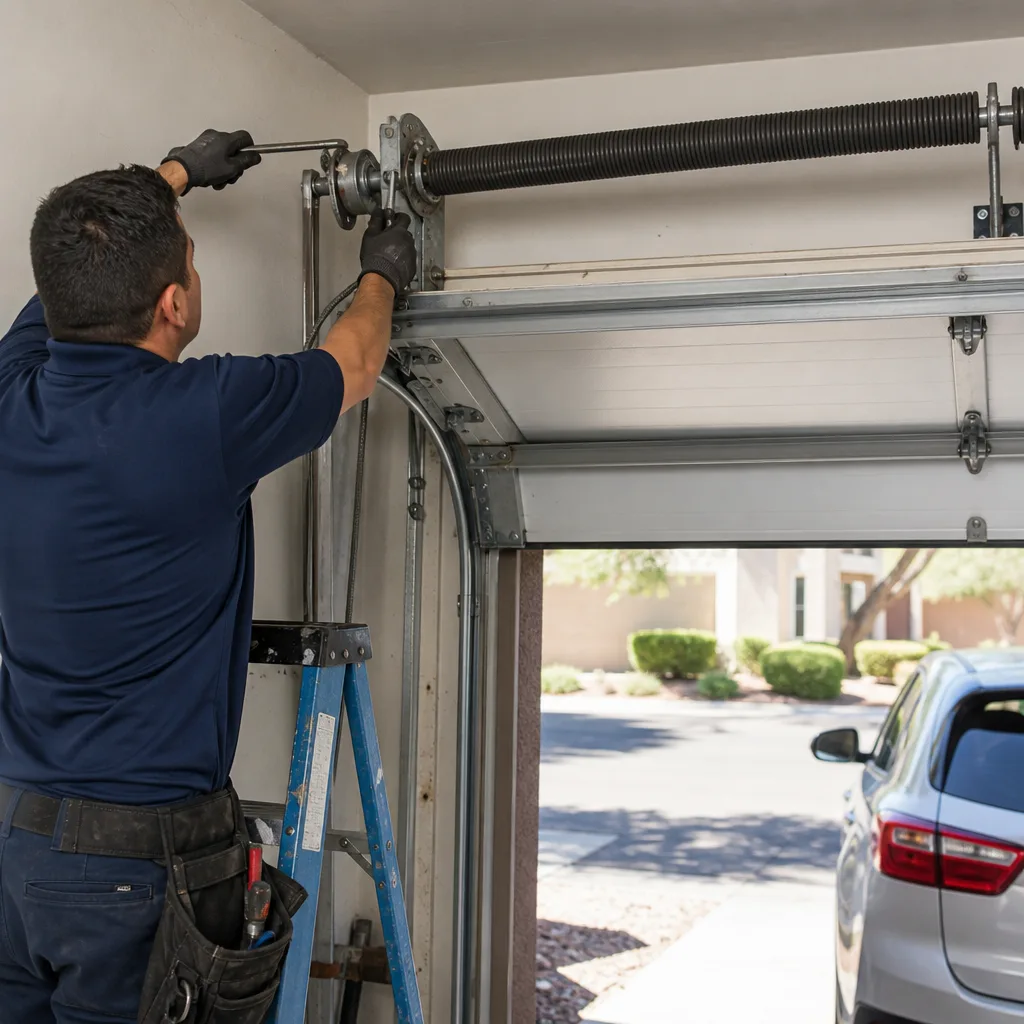 After
AfterHow to Hire a Garage Door Contractor in Tempe: A Step-by-Step Guide
Most homeowners in Tempe spend more time researching a $400 smartphone than they spend vetting the contractor who will hang a 300-pound door over their cars. It’s not carelessness. It’s that nobody hands you a checklist for hiring a garage door company until something fails at 7:40 a.m. on a Tuesday and you’re late for work. The data from Arizona’s Registrar of Contractors tells the story: garage door installation sits inside a licensing category that many operators work in without a trade-specific credential. That means the paper in front of you matters more than the logo on the truck. This guide walks through exactly how to examine that paper, step by step, so the contractor you hire in Tempe is one who can prove what they do. For more guides & resources on protecting your home, see our blog.
Quick Answer
To hire a garage door contractor in Tempe, verify their license on the Arizona Registrar of Contractors lookup tool, confirm they carry liability insurance naming you as an additional insured, and require a written itemized quote that separates labor, parts with part numbers, haul-away fees, and warranty terms before scheduling any work. A verbal quote is a social agreement, not a contract, and in a state without garage-door-specific trade licensing, the written document is the only consumer protection you actually hold.
Table of Contents
- Why Licensing in Arizona Works Differently Than You Expect
- Step 1: Run the ROC Lookup Before You Schedule Anything
- Step 2: Verify Insurance With the Right Certificate Language
- Step 3: Demand the Four-Line Itemized Quote
- Step 4: Distinguish a Diagnostic From a Sales Call
- Step 5: Ask About the Failed Component Before It Leaves Your Property
- Step 6: Compare Quotes Without Chasing the Cheapest Number
- What Tempe’s Climate and Housing Stock Mean for Your Door
- Red Flags to Watch for During the Estimate Visit
- Common Mistakes to Avoid
- When to Call a Professional
- Frequently Asked Questions
- The Bottom Line
BeforeAfterWhy Licensing in Arizona Works Differently Than You Expect
Arizona does not have a specific garage door contractor license. The state’s Registrar of Contractors (ROC) issues commercial and residential licenses across dozens of specialty categories, but “garage door installation” is not one of them. Most garage door companies in Tempe operate under a general residential contractor license (B-3), a specialty license (C-48 for doors, gates, and activating devices, or C-11 for electrical if they handle opener wiring), or in some cases no license at all when they classify themselves as handyman services under the $1,000 threshold. The practical consequence is that two contractors working in the same Tempe neighborhood can arrive with completely different legal authorizations, and neither one is breaking the rules.
For a homeowner, this means you cannot assume the word “licensed” on a website or a truck decal means what you think it means. The ROC’s license lookup tool is the only place where the actual credential is accessible to the public. In our experience at Servo Garage Doors Tempe home, fewer than one in ten homeowners who call us have checked the ROC database before picking up the phone. That is not a criticism of homeowners. It’s a criticism of an industry that counts on the gap between “licensed” and verified.
The absence of a garage-door-specific license also means the written quote carries more weight in Arizona than it does in states like California or Texas, where the license itself acts as a filtering mechanism. In Tempe, the contract document is the filter. When you demand an itemized written quote before work begins, you are doing the job the state licensing board does not.
Step 1: Run the ROC Lookup Before You Schedule Anything
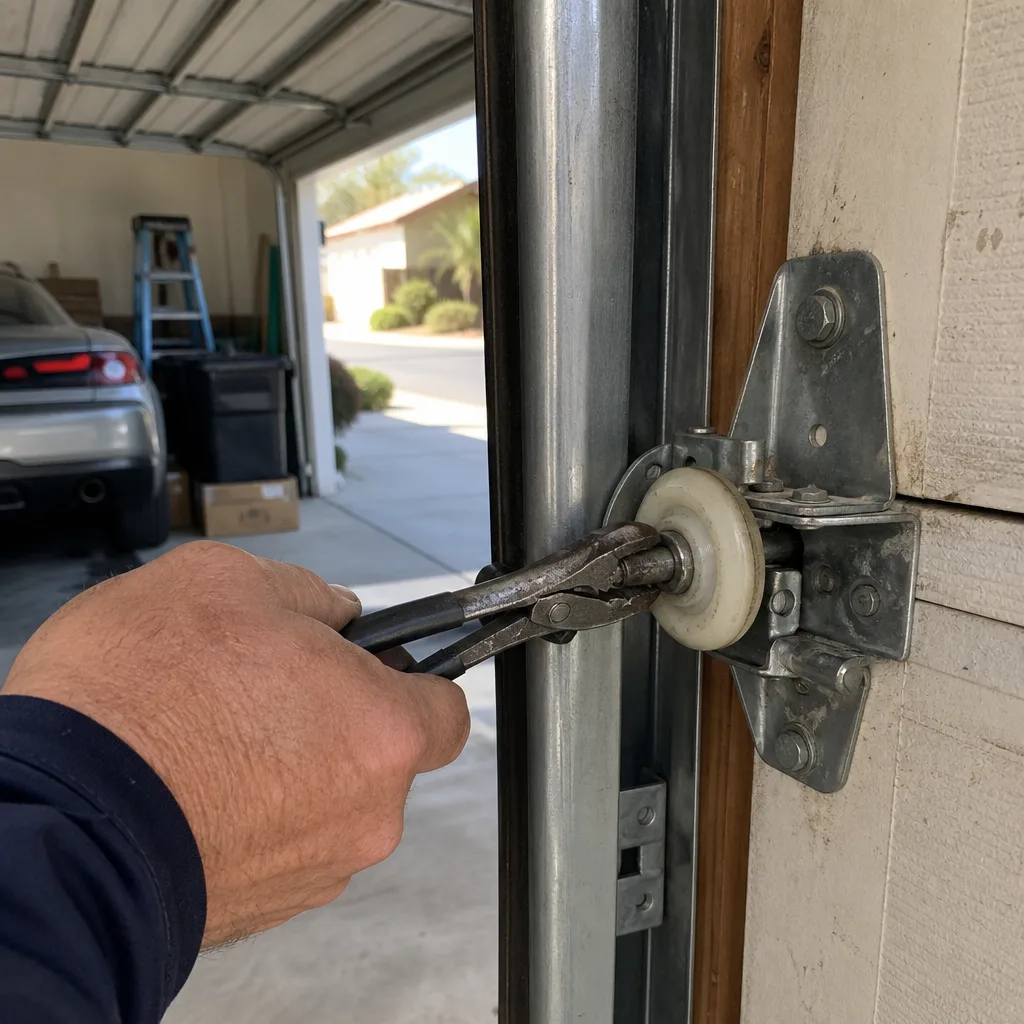
The Arizona Registrar of Contractors maintains a free public database at roc.az.gov. Every legitimate contractor operating in Tempe holds a license number that resolves in this system. Running the lookup takes about four minutes and tells you three things that matter more than any online review:
- License status - Is it active, suspended, or revoked? A suspended license is a non-starter, and you would be surprised how many homeowners never check.
- License classification - Does the company hold a B residential license, a C-48 specialty classification, or neither? A company that claims to do full door replacement under a handyman-level threshold is under-credentialed for the job.
- Bond and complaint history - The ROC records complaints filed against the license, and the resolution status of each one. A clean record does not guarantee a good experience, but a pattern of unresolved complaints is a clear signal to move on.
When you have the license number, write it down and keep it. The technician should arrive with the number printed on the estimate or the work order. In Tempe, any hesitation about providing a license number for a job over $1,000 in total value is a disqualifier. A state-licensed contractor has nothing to hide in a public database. The one who dodges the question is telling you something.
Step 2: Verify Insurance With the Right Certificate Language
Liability insurance is the second document, and the one most homeowners never see. The mistake is not asking for it. The deeper mistake is accepting the wrong kind of certificate. There are two phrases that determine whether your Tempe property is actually covered if a cable snaps during installation or a panel falls on a car in the driveway:
- Certificate holder - This is the weaker form. It means the company’s insurer has noted that you exist and that you will be notified if the policy is cancelled. It does not grant you any rights to file a claim directly against the policy.
- Additional insured - This is the stronger form. It extends the contractor’s policy to cover you, and it allows you to pursue a claim against the insurance if the contractor damages your property. If a torsion spring installation goes wrong and your car’s hood pays the price, additional insured status is what protects you.
Ask for a certificate of insurance that names you as an additional insured for the duration of the job. Any licensed contractor in Tempe can produce this in under a day, and any legitimate operation will not blink at the request. The companies that balk are self-insuring on your property, and that is not insurance, that is a handshake.
We hold our own license and insurance as an independently owned and operated business under The Haven Standard. The documentation is not something we pull out when asked; it is something we put in front of you.
Step 3: Demand the Four-Line Itemized Quote
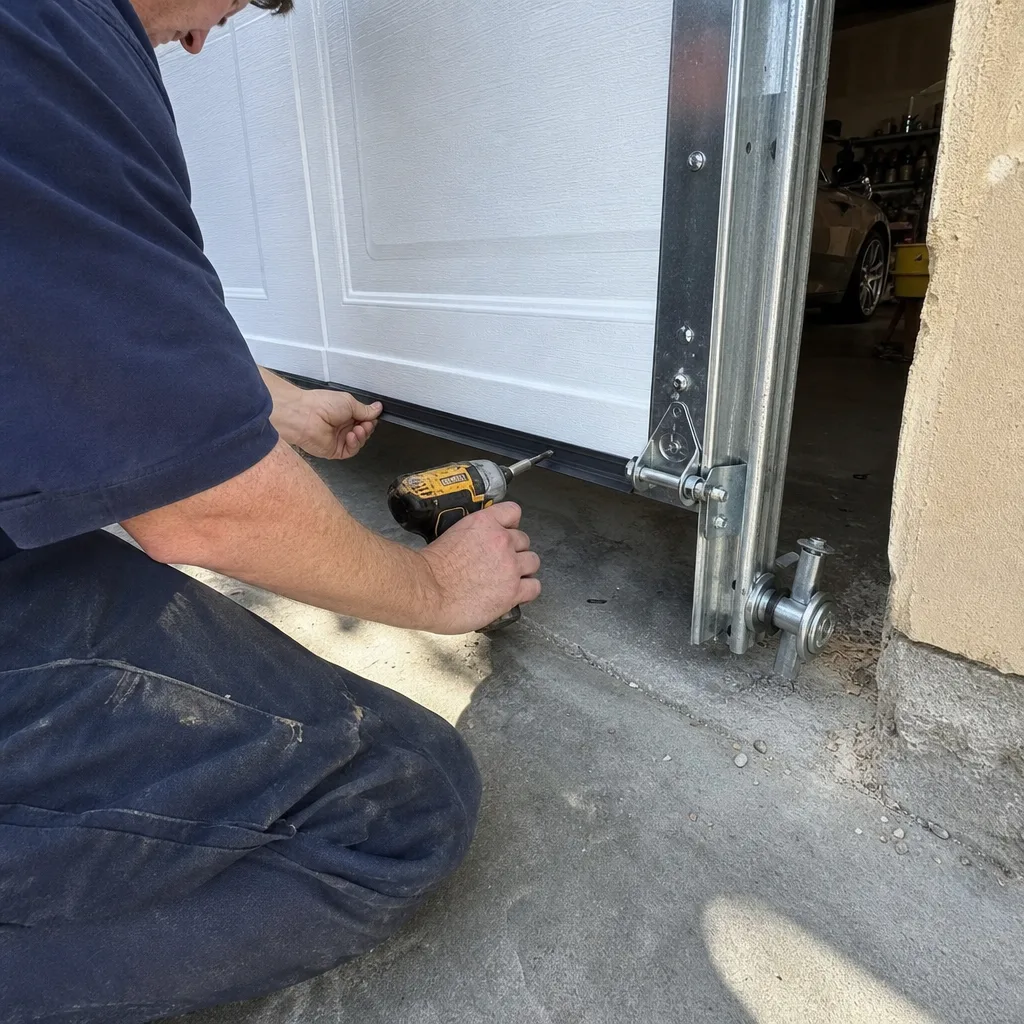
The core of hiring a garage door contractor in Tempe is the written quote, and the core of a useful written quote is that it breaks into four lines. A quote that does not separate these categories is hiding a margin somewhere, and the margin is usually in the labor line that has been inflated to cover a parts discount the contractor would rather not show you.
The four lines to look for:
- Labor - The cost of the technician’s time, stated as a line item. It should be a dollar amount, not an “included” marker.
- Parts with part numbers - The specific components being installed, identified by manufacturer part number. A quote that says “door spring” without a part number is a quote for whatever the tech finds in the bottom of the truck.
- Haul-away fee - The cost of removing and disposing of the old door or parts. In Tempe, haul-away is a service with real cost, and a contractor who absorbs it without a line item is either overcharging elsewhere or will surprise you at the end.
- Warranty terms - The exact duration and scope of the warranty on parts and labor, written in the document. A “lifetime warranty” that is not written is a marketing phrase, not a contract.
Clause 1 of The Haven Standard is exactly this: a flat, written price and written scope delivered before any work starts. No exceptions. When you demand the four-line quote, you are asking a Tempe contractor to operate at the same standard. The ones who agree are the ones you want to hire.
Step 4: Distinguish a Diagnostic From a Sales Call
Free inspection offers are everywhere in the Tempe garage door market, and most of them function as sales appointments rather than diagnostics. The distinction matters because the free inspection is priced into the visit. The technician who arrives under a free inspection flag is compensated on what they sell, which means the “inspection” is optimized to find a reason to replace.
Before anyone steps on your property, ask one direct question: “What does the inspection include, and will I receive the findings in writing whether I hire you or not?” A diagnostic protocol produces a written report of what was measured, what failed, and what the repair options are, regardless of whether you proceed. A sales funnel produces a verbal pitch and a “good news, we can get you fixed today” quote. The difference between the two is the entire difference between hiring a contractor and being sold to.
In our work across Tempe, from the older homes near ASU to the newer builds south of US 60, we have seen what happens when a homeowner asks this question and the sales rep exhales. The ones who will not put findings in writing without a signed work order are running a sales operation with a diagnostic label on it. That is not against the law in Arizona, but it is against your interests.
Step 5: Ask About the Failed Component Before It Leaves Your Property
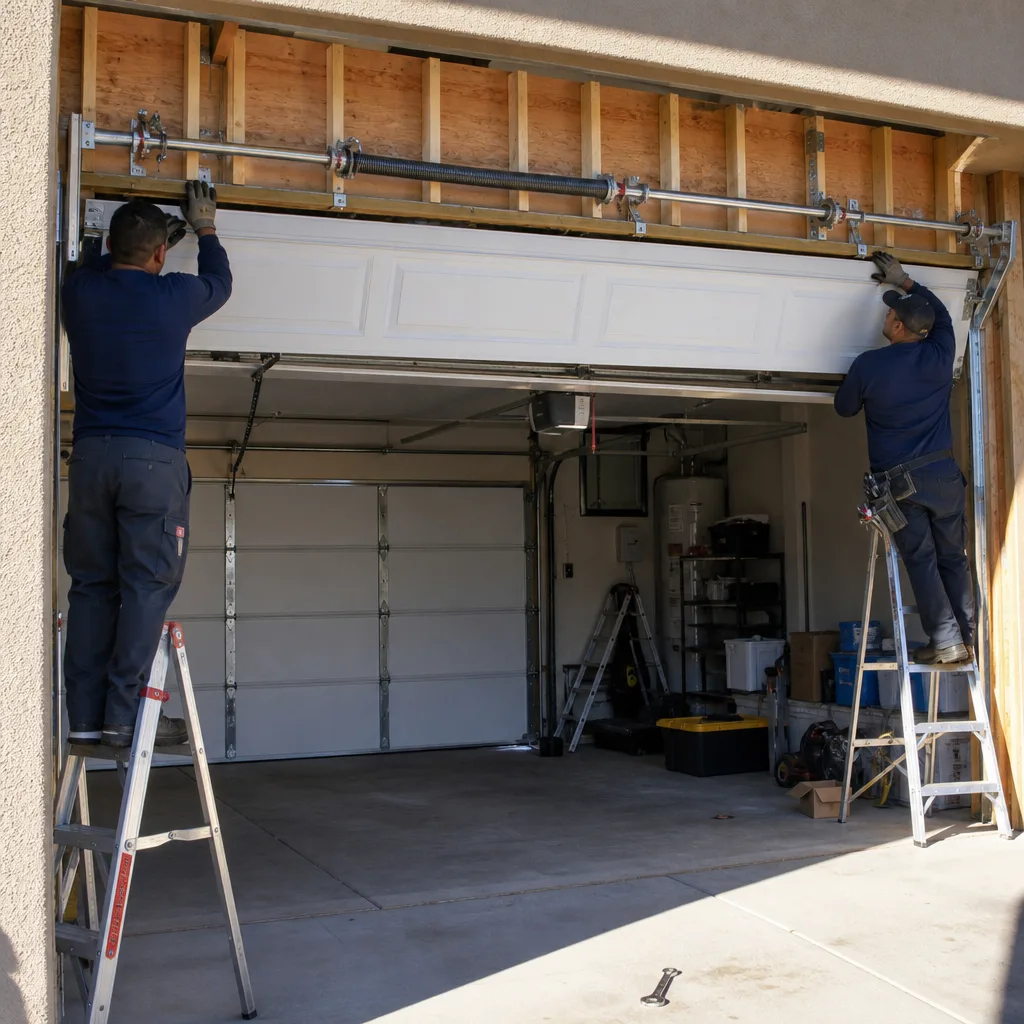
The question that tells you more about a garage door company’s operating standards than any online review is this one: “Can I see the failed part before it leaves my property?”
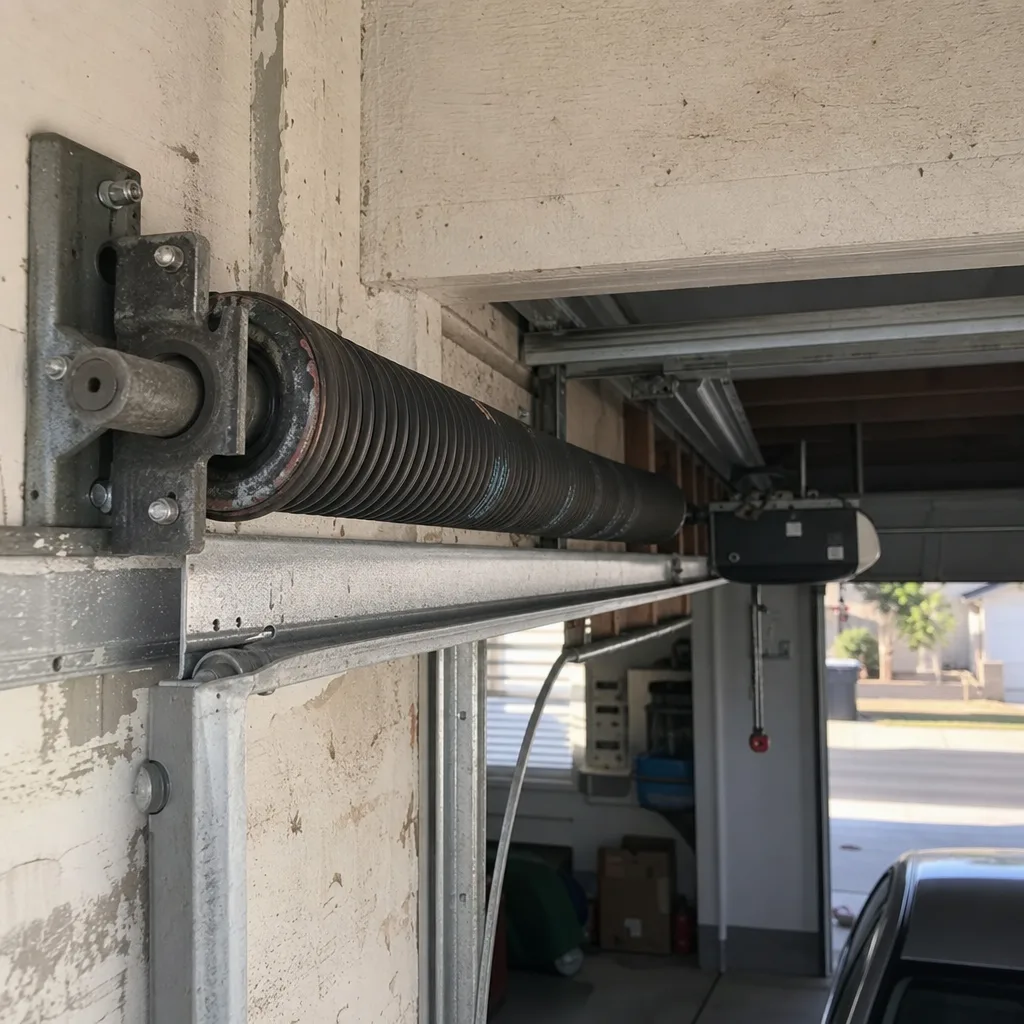
Here is why it separates contractors. A torsion spring that breaks at the coil leaves physical evidence: the wire diameter, the break surface, the age of the metal. A technician who replaces it without showing you the old spring is running an operation where the customer never sees the physical reality of the job. A technician who photographs the failed component, shows you the photo, and leaves you with the old part or the record of it is running an operation built on evidence.
Clause 4 of The Haven Standard exists because of this. The founding rule at Servo was that the customer sees the failed part before anyone quotes a replacement. Not because homeowners understand torsion spring metallurgy, but because the act of showing it changes the power dynamic of the whole transaction. You are no longer taking a contractor’s word for what happened under your ceiling. You are looking at the broken piece with your own eyes, and the quote that follows is anchored to something physical.
Ask the question on the phone before you schedule. “Will your technician show me the part that failed before quoting the repair?” The answer, and the speed of the answer, is the single most reliable predictor of how the job will go.
Step 6: Compare Quotes Without Chasing the Cheapest Number
Once you have two or three written quotes from Tempe contractors, you need a method for comparing them that does not default to the lowest line. The cheapest quote is frequently the one that omitted a line item, and the omission is discovered at the end when the invoice arrives higher than the estimate. Here is the comparison method we recommend:
- Lay the quotes side by side and check for identical scope. A quote that replaces one spring and a quote that replaces two are not comparable. A quote that includes new rollers and one that does not are not comparable. The scope must line up before the numbers mean anything.
- Compare the part numbers. A LiftMaster logic board and a generic aftermarket board are not equivalent parts, and the price difference is not markup. It is the difference between a part with a real warranty and a part with a 90-day hope.
- Look for the absent line. If one quote shows labor, parts, haul-away, and warranty, and the other shows one bundled number, the bundled quote is hiding something. It might be a small thing. It might be the haul-away fee that appears later. Either way, the four-line quote is the honest one.
- Check the warranty duration in writing. A “satisfaction guarantee” without a term is not a warranty. A “lifetime warranty” without a written scope is a phrase. Look for something specific: so many days, so many years, this part covered, this labor covered.
- Weigh the documentation record. One contractor hands you a written scope, a written quote, and a documented photo record when the job is done. Another leaves you with a receipt and a verbal claim. The former is worth a modest premium because the paper trail is the only thing that protects you if the repair fails in six months.
Servo offers a Free Second Opinion on any written estimate from another company. Bring the paperwork and we will review it line by line. That offer exists because the comparison process is where homeowners in Tempe get the most value, and because a written quote that cannot survive scrutiny is a quote worth walking away from.
What Tempe’s Climate and Housing Stock Mean for Your Door
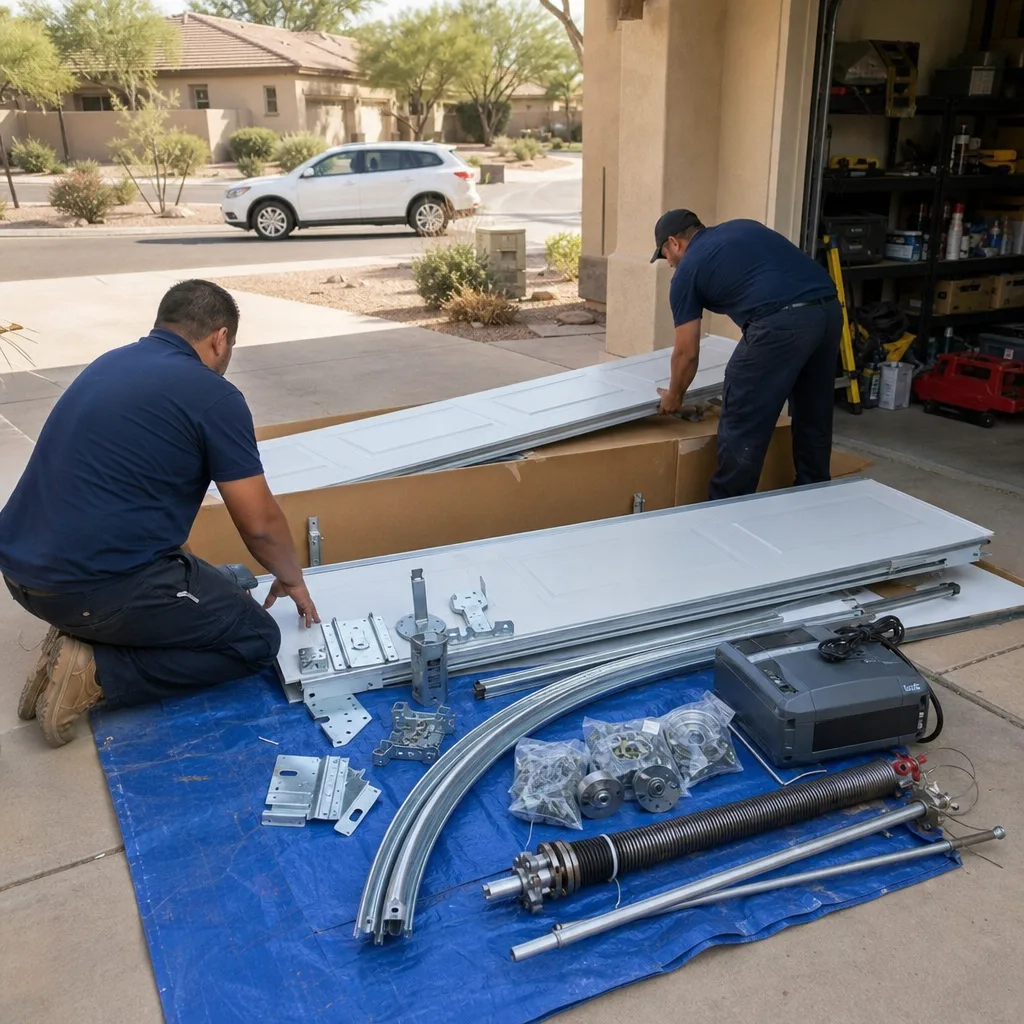
Tempe’s climate is harder on garage doors than most homeowners realize. The combination of extreme summer heat, monsoon humidity, and fine dust from the Salt River basin creates a specific set of failure patterns. Our Seasonal Garage Door Care for Tempe: Year-Round Homeowner’s Guide breaks down how to stay ahead of each season. Here is what that means when you are hiring a contractor:
- Heat accelerates torsion spring fatigue. A steel torsion spring rated for 10,000 cycles will wear faster in a Tempe summer, where the garage interior can exceed 120°F for weeks at a time. The contractor should be able to tell you the spring’s cycle rating and wire gauge. If they cannot, they are installing whatever was cheapest at the supply house.
- Roller and track wear from dust. The fine particulate that settles on every Tempe driveway works its way into rollers and hinges. Homeowners near the Loop 101 and Loop 202 corridors see accelerated grime build-up. A good contractor will inspect the rollers during any other repair and flag wear before it becomes a track replacement.
- Housing stock matters. The older ranch homes in the neighborhoods between Mill Avenue and College Avenue often have doors from the 1980s and 1990s, with non-insulated steel panels and springs that have been through two decades of Tempe heat. The newer builds in south Tempe and the Kyrene corridor have different issues: operator wiring installed by production electricians, and opener logic boards that fail from heat soak.
A contractor who has worked Tempe’s housing stock for years will know these patterns without being told. A national chain that flies a rotating crew through Arizona will not. That is not a knock on national chains; it is an argument for hiring a local Tempe operation that has seen 18,000+ garage doors made right since 2015, every one with a written price before work started.
Red Flags to Watch for During the Estimate Visit
Most of the hiring decision happens before the estimate visit, but the visit itself is a final screen. Here are the things we would watch for if we were hiring someone else in Tempe:
- The technician cannot name the part that failed. If the diagnosis is “your door is in bad shape,” that is not a diagnosis. A real technician identifies the torsion spring, the trolley carriage, the limit switch, the logic board. They use the vocabulary of the trade and then explain it in plain English.
- The quote appears while the tech is still talking. A contractor who produces a price before opening the door is not diagnosing. They are pitching. The number should come after the inspection, and it should be written.
- The truck has no markings or mismatched branding. This is not snobbery; it is basic verification. A uniformed, background-checked technician arriving in a marked vehicle is a signal that the company has operational infrastructure. A guy in a t-shirt driving a rental van is a signal that you are hiring a gig worker with a brochure.
- The tech pressures for a same-day decision. Urgency theatre is a sales technique, not a service technique. A real problem should be fixed promptly, but no legitimate repair requires a decision in the next ten minutes. Any contractor who runs a countdown on you is manipulating you.
- The license number is not on the estimate. A written estimate from a licensed contractor includes the license number. It is a requirement of the ROC for contracts over a threshold, and it is a requirement of basic transparency for anything under it.
- The old part disappears into the truck. See Step 5. If the failed spring or the dead logic board goes into the truck before you see it, you have lost the only physical evidence of what happened. Ask to see it first.
Common Mistakes to Avoid
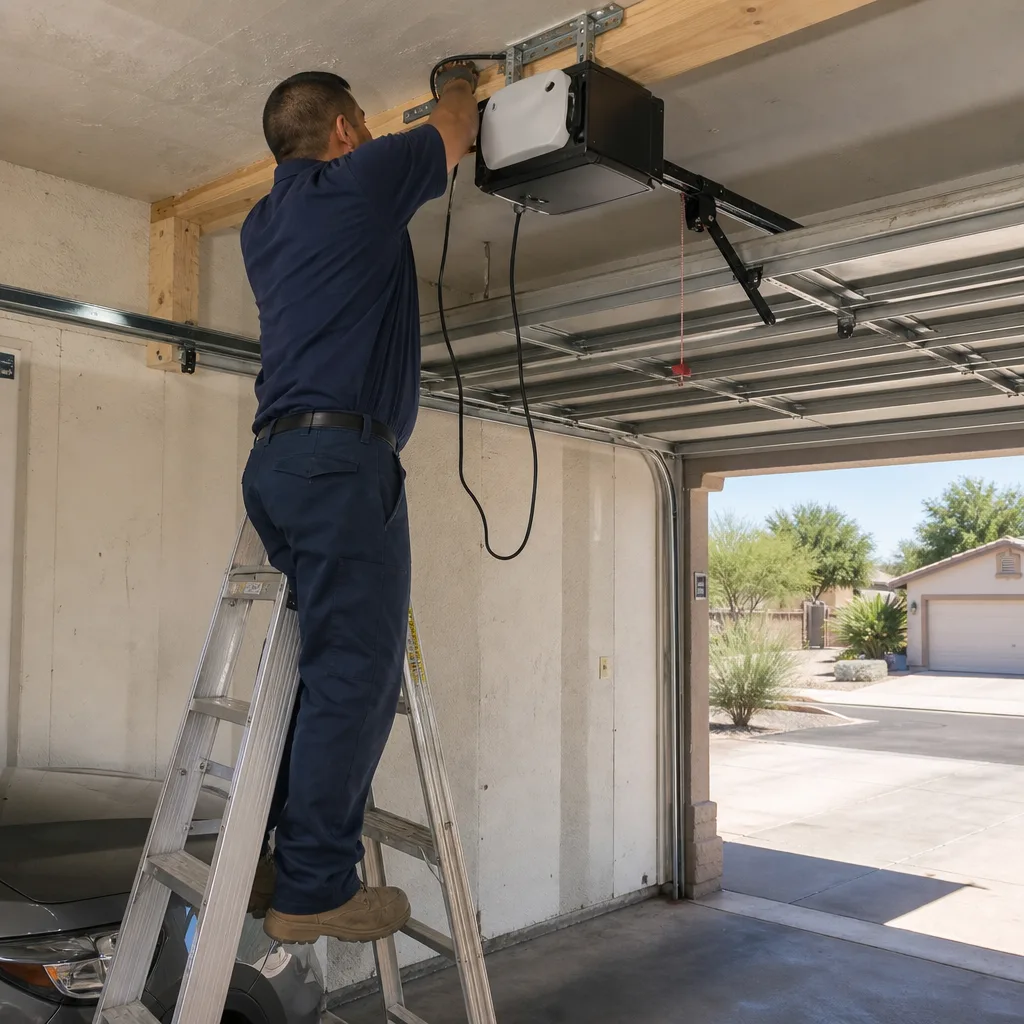
- Hiring based on the first search result without checking the ROC database. The top result in a Tempe garage door search is often the biggest advertiser, not the best contractor. Licensing verification takes four minutes and eliminates the worst outcomes before they happen.
- Accepting a verbal quote over the phone. A phone estimate is a number with no legal substance. In Arizona’s licensing environment, the written quote is the only thing you can hold anyone to, and the phone call is forgotten by both parties the moment it ends.
- Skipping the additional insured request. Certificate holder status notifies you if the policy lapses. Additional insured status protects you if the job damages your property. The two phrases are not interchangeable, and the default certificate most contractors send is the weaker one.
- Assuming a higher price means higher quality. Premium pricing in the Tempe garage door market sometimes reflects real overhead: uniformed technicians, marked trucks, documented records. Sometimes it reflects a marketing budget. The four-line quote is how you tell the difference.
- Rushing the diagnostic because the door is up. A door that goes up and down today can still have a spring at 5% of its cycle life, a track that is about to let go, a cable with visible fraying. The contractor you hire should look at the system, not just the symptom. Rushing past the diagnostic because the door “works fine right now” is how you end up with an emergency call on a 112°F Tempe afternoon.
- Replacing a door when the opener is the problem. A Genie or Chamberlain opener with a dead logic board produces symptoms that homeowners sometimes misinterpret as door failure. A competent diagnostic identifies the actual component before any replacement is quoted. If the tech proposes a new door without testing the opener, get a second opinion.
- Skipping the written warranty because “the guy seemed nice.” The nicest technician in Tempe can still install a spring incorrectly, and a verbal warranty is not a warranty. The warranty terms belong in the written quote, with the duration and scope specified. If they are not in writing, they do not exist.
When to Call a Professional
Garage doors are not a good DIY project outside of routine maintenance like track lubrication and photo-eye sensor cleaning. See our DIY vs Professional Garage Door: The Tempe Homeowner’s Decision Guide for where to draw the line. The torsion spring system is under high tension, and a snapped spring or cable can release that force without warning. If you see a gap in the spring coil, hear a loud bang from the garage, or find the door hanging unevenly on one side, stop using the door and call a professional. The same applies to opener logic board failures and any issue involving the high-tension cables. In our experience in Tempe, the most dangerous calls are the ones homeowners waited on: a door hanging on one cable for a week, a spring that snapped and was ignored, a track that pulled away from the wall and was “temporarily” propped up. Servo Garage Doors Tempe offers free estimates in Tempe, and our live phone coverage runs 24/7 for emergency calls. If the door is compromised, calling us at (602) 962-8352 is the safe move.
Frequently Asked Questions
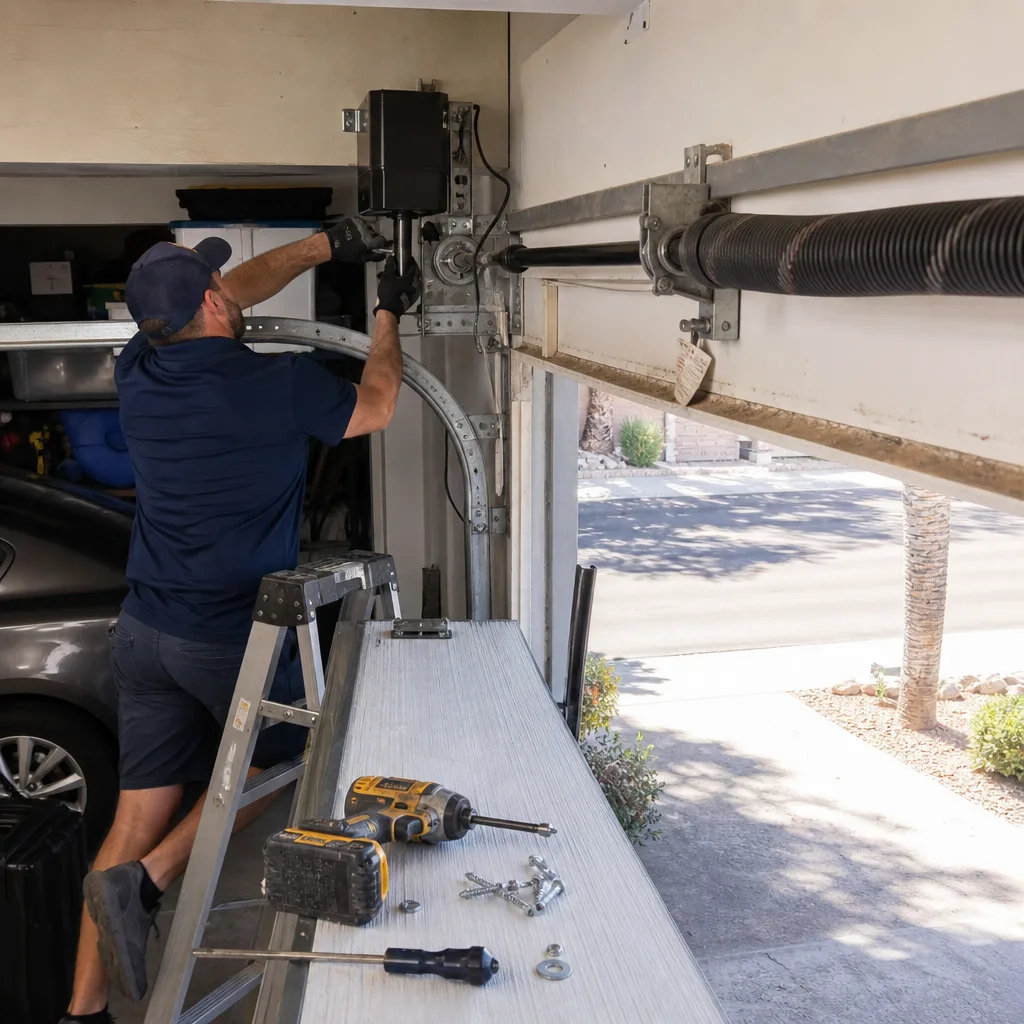
In Tempe, a standard service call for a garage door repair typically runs $75 to $125 just to get a technician to your door, and that fee is usually waived if you proceed with the repair. A torsion spring replacement on a standard two-car door in Tempe generally lands between $180 and $340 depending on the spring’s wire gauge and cycle rating, while a full garage door replacement runs $1,100 to $2,800 for a standard single or double door with installation. The exact number depends on what is found during the diagnostic, which is why a written itemized quote before work begins is the only price that matters. Call (602) 962-8352 for an exact quote, and we will put the price in writing before any work starts.
The hiring process itself, done properly, takes an hour of your total time: running the ROC lookup, requesting the insurance certificate, and reviewing the written quote. The work itself depends on the scope. A torsion spring replacement is typically a same-visit job once the spring is on the truck, which is why repair companies carry inventory. A full door installation takes longer because the door is measured, ordered, and scheduled, which is why installation quotes come with a written scope and a timeline rather than a same-day promise. At Garage Door Repair in Tempe, a typical spring replacement is completed the same day the technician arrives with the part.
In most cases, replacing an existing garage door in Tempe with a door of the same size and configuration does not require a city permit, because it is classified as a repair or replacement of existing equipment. A new door opening, a structural header modification, or a conversion from a carport to a garage does require permits through the City of Tempe’s building safety office. Your contractor should know the difference and should tell you before scheduling, not after. If the answer is “we handle all that for you,” ask what specifically is being handled and get it in writing.
Yes, and you should if the quote feels high or the diagnosis feels thin. Servo Garage Doors Tempe offers a Free Second Opinion on any written estimate from another company. Bring the paperwork, and we will review it line by line, comparing the part numbers, the scope, and the warranty terms against what we would quote for the same job. A written quote that cannot survive scrutiny is a quote worth walking away from. Call (602) 962-8352 to schedule a second opinion at no cost.
If a torsion spring breaks, stop using the door immediately. The door is now operating under partial or zero spring tension, which puts dangerous load on the opener and the cables. Do not try to open it by hand. The door is heavier than you think, and the high-tension components that remain under load can fail without warning. Call a 24/7 service provider and describe the situation. Servo’s live phone coverage runs 24 hours a day, 7 days a week, including holidays, and an emergency call is answered by a real person. For genuine spring failures at night, we can often have a named technician on the way with the right spring on the truck. Call (602) 962-8352 and tell us what happened, and we will tell you what to expect before anyone leaves our shop.
A LiftMaster or Chamberlain opener that grinds without moving the door usually has a stripped gear in the trolley carriage, which is repairable. An opener that is completely dead but has power at the outlet frequently means a failed logic board, which is repairable on many models. An opener that is more than about 12 to 15 years old, with a motor that overheats and trips the thermal protector, is usually at the end of its service life and is better replaced. The right answer depends on the diagnosis, not the age of the unit. At Garage Door Opener Repair & Installation in Tempe, we test the opener before recommending anything, and the written quote includes the specific part numbers involved.
The Bottom Line
Hiring a garage door contractor in Tempe is not a trust exercise. It is a documentation exercise. You verify the license on the ROC database, you confirm the insurance certificate names you as an additional insured, and you require a written itemized quote that separates labor, parts with part numbers, haul-away fees, and warranty terms before any work is scheduled. You ask the technician to show you the failed component before it leaves your property. The contractors who can do all of these things without hesitation are the minority, and they are the ones you want. The contractors who cannot are telling you everything you need to know. If you want a Tempe contractor who operates this way by default rather than by request, call Servo Garage Doors Tempe at (602) 962-8352 for a free estimate with a written price before any work begins, and a documented photo record when the work is done.
Written by Marcus Deller, Owner at Servo Garage Doors Tempe, serving Tempe since 2015.