
Last updated September 20, 2026
Full 25-point door and opener safety check with every visit - springs, cables, rollers, tracks, and your LiftMaster or Chamberlain opener included
You get a price before we start. It does not change when the truck arrives.
 Before
 After
After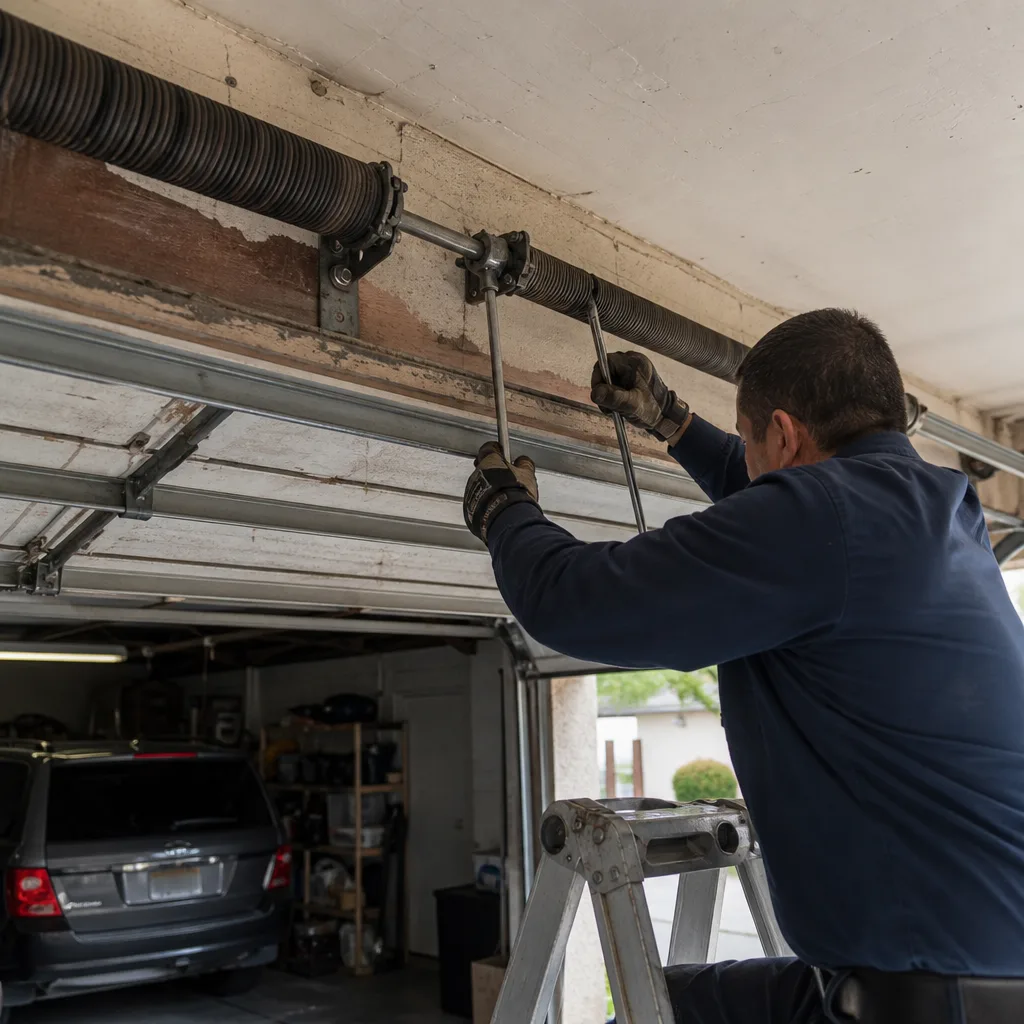 Before
 After
After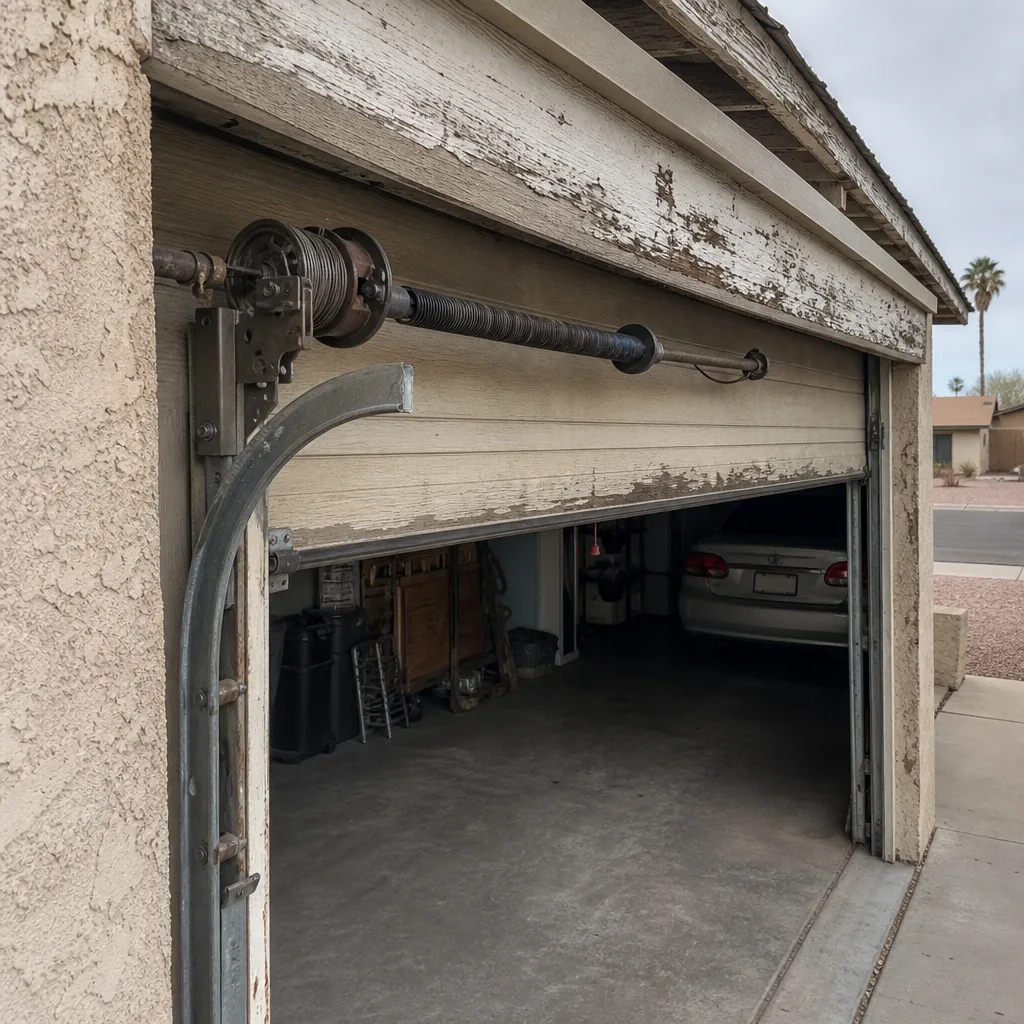 Before
 After
AfterSeasonal Garage Door Care for Tempe: Year-Round Homeowner’s Guide
Spring and fall garage door maintenance advice was written for the Midwest. Tempe’s stress calendar runs April, July, and December, and the failure modes in each window are different enough that the same checklist doesn’t cover all three. You’ll learn what actually breaks in a Tempe garage door, when it breaks, why it breaks, and what you can do about it before the opener starts making sounds your neighbors can hear. This guide is written from the repair bench, not the marketing department, and every maintenance window below is tied to a specific mechanical failure we see year after year in Tempe. For The Complete Guide to Garage Door in Tempe, see our full resource.
Quick Answer
Seasonal garage door maintenance in Tempe means servicing your door three times a year: in April before the heat ramps up, in July before monsoon season, and in December before the overnight temperature swings. Each window targets different failure modes: thermal overload on your opener in summer, weather seal and cable corrosion during monsoon storms, and spring tension changes from winter temperature drops. A homeowner can handle lubrication, seal inspection, and photo-eye cleaning in about 30 minutes per season, but spring tension adjustment should always go to a trained technician.
Table of Contents
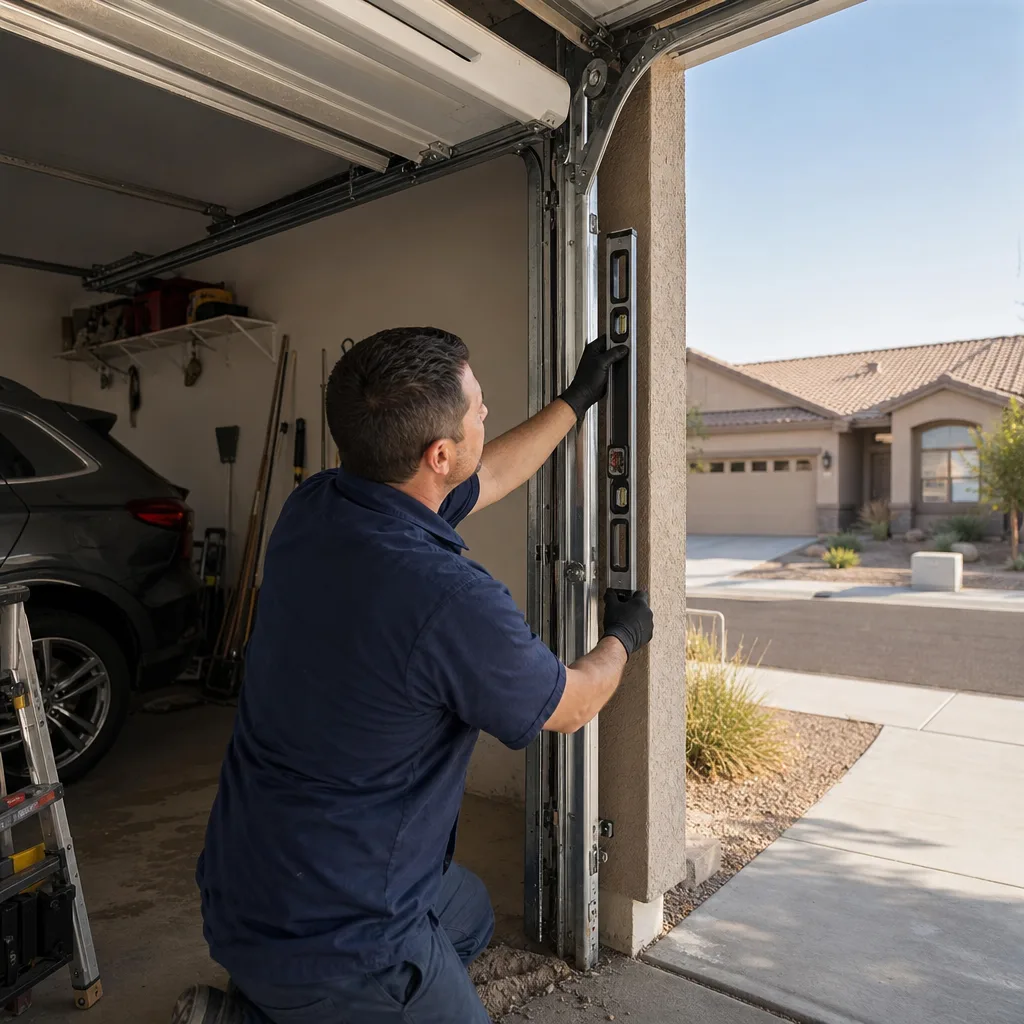
- April: The Pre-Heat Protocol
- July: Monsoon Season Preparation
- December: Temperature Swing Effects
- UV Degradation: Tempe’s Year-Round Attacker
- The Complete Lubrication Guide for Tempe Garage Doors
- What You Should Never Adjust Yourself
- Common Mistakes to Avoid
- When to Call a Professional
- Frequently Asked Questions
- The Bottom Line
BeforeAfterApril: The Pre-Heat Protocol
The first 100-degree day in Tempe usually lands in late April or early May, and it arrives before most homeowners think about their garage door. By the time you notice the opener struggling, the thermal protection cutoff has already been cycling for weeks. The April window isn’t about preventing heat damage. It’s about reducing friction before the heat adds thermal load to a system that’s already working against gravity.
Here’s what actually happens. Your opener motor generates heat every time it runs. In moderate temperatures, that heat dissipates through the motor housing into the surrounding air. In a Tempe garage in July, the ambient temperature inside the garage ceiling space can hit 130 degrees or higher, and the motor’s thermal protection cutoff, a built-in safety switch that shuts the motor down when it gets too hot, starts triggering. An opener that trips its thermal cutoff once will usually trip it again, because the heat hasn’t fully dissipated by the time you try the door again. We see this exact failure pattern every summer in Tempe, and it’s almost always preventable.
The April protocol, in order:
- Lubricate every pivot point with a high-temp grease. Standard white lithium grease breaks down at sustained temperatures above 250 degrees. The hinges, rollers, and bearing plates on a Tempe garage door can hit 160 degrees just from ambient heat in July. Use a silicone-based or synthetic high-temp grease rated for at least 300 degrees. Roller stems, hinge pins, and the torsion tube bearing plates at each end are the three points that seize first.
- Check opener ventilation clearance. Walk into your garage and look up at the opener. If it’s mounted less than 3 inches from the ceiling drywall, it has poor airflow. If it’s boxed in by storage shelving within 2 feet, that’s worse. The opener relies on passive air circulation to cool the motor. Clear anything stored within 18 inches of the motor housing.
- Run the door through three full cycles and listen. A door that’s running smooth in April will usually make it through the summer. A door that’s already grinding, squeaking, or jerking in April won’t just get better when it gets hot. It will get worse, faster.
- Check the balance. Disconnect the opener (pull the red release handle) and lift the door manually to about waist height. It should stay put. If it drops, the springs are losing tension and the opener is working harder than it should. In summer heat, that extra load is what pushes the motor past its thermal limit.
One clarification on the thermal cutoff: it’s not a malfunction, it’s a designed safety feature. The motor shuts down to protect itself from overheating. When it trips, the solution isn’t to reset it and keep going. The solution is to reduce the load on the motor, which usually means addressing the friction in the door or the spring tension that’s forcing the opener to work harder than spec.
If your door has been making a grinding sound since last summer and you’re reading this in April, that’s the window closing. Get it addressed now, before the first 110-degree week, because the opener doesn’t fail on the mild days. It fails on day three of a heat wave, when you’ve already left for work and the car is inside.
July: Monsoon Season Preparation
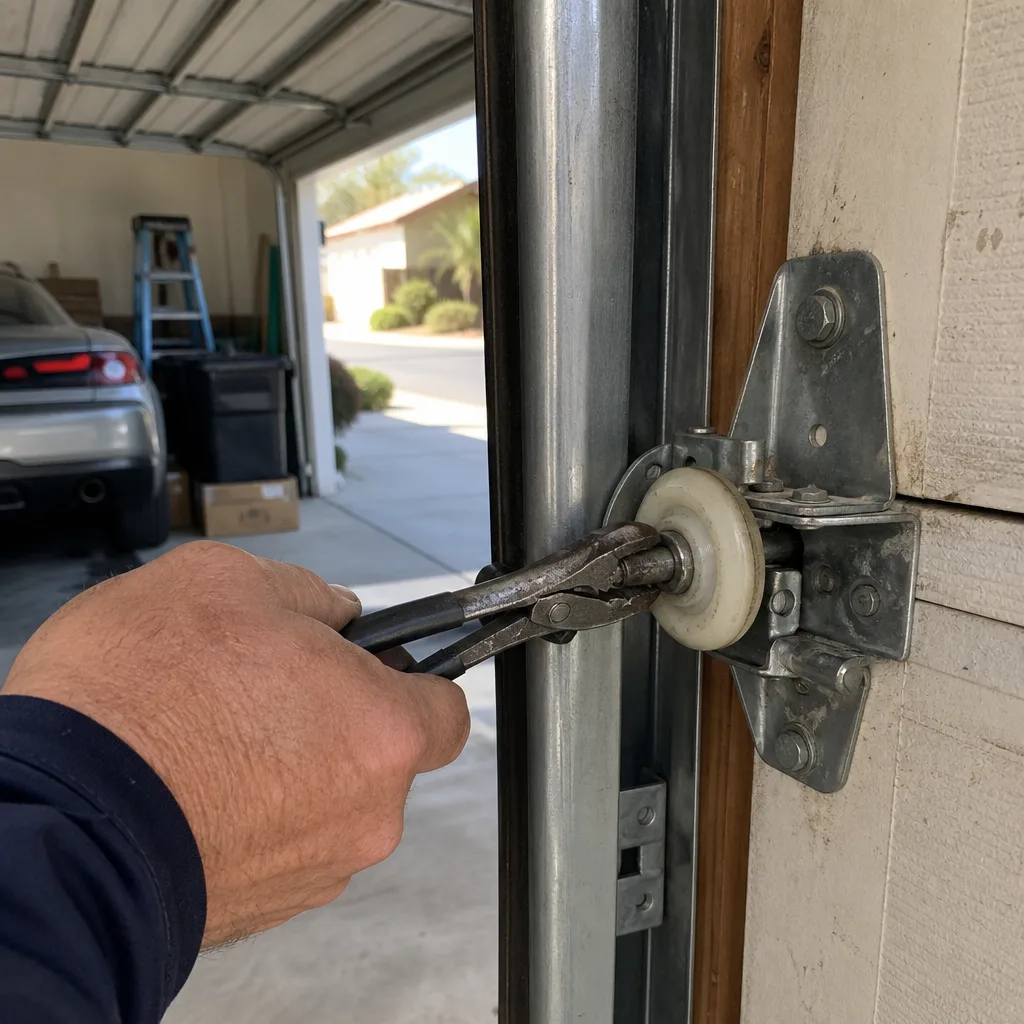
Monsoon season in Tempe runs roughly from mid-June through September, and the storms that hit in July and August are the ones that do garage door damage. The two threats during monsoon season are pressure differential and water intrusion, and they attack different components in different ways.
The haboob pressure problem. A haboob is a wall of dust pushed by a downdraft, and the pressure differential between the outside air and the inside of your garage can be dramatic. Dust gets driven into the gap at the bottom of the door, not just through, but into the seal itself. The bottom seal, a rubber or vinyl strip that runs along the bottom edge of the door, compresses against the concrete floor when the door is closed. When a haboob blasts against the door, the dust finds any gap in that seal and fills it. Over time, the seal becomes packed with grit and loses its ability to flex, which means the next rainstorm finds an entry point.
The bottom seal inspection, step by step:
- Close the door completely and walk the bottom edge with a flashlight.
- Look for daylight under the seal. On a flat Tempe garage floor, you should see no gap. If you see light, the seal is shot.
- Run your hand along the seal (the bottom edge only, not the moving parts). It should feel flexible, not cracked or rigid.
- Check for packed dust in the seal’s channel. A round bulb seal that’s stuffed with silt has lost its ability to flex, even if it looks intact.
Replacing a bottom seal runs $80 to $150 in Tempe for most standard doors, parts and labor included, and it’s a 30-minute job. Most homeowners we talk to in Tempe wait until water has already come into the garage before calling, and by then the cabling that runs along the bottom section of the door may have started corroding.
The drainage slope issue. Your garage floor should slope toward the driveway. In older Tempe neighborhoods (early 1970s construction in areas like Escalante or University Heights), floors have settled and the slope is sometimes gone or reversed. When it rains during a monsoon storm, water pools against the bottom of the door instead of draining away. That standing water wicks up into the bottom panel and soaks the cable drums and cables, accelerating rust. The cables on a sectional garage door are under high tension at all times, and a rusted cable that snaps in August is a failure that needs a same-day repair, not a wait-and-see approach. Check your drainage slope by pouring a bucket of water at the garage threshold during the dry season and watching which way it runs. If it pools, the fix is either a threshold seal strip or floor leveling, not a new garage door.
One more monsoon-era habit: after any storm with significant wind, run the door through one full cycle and watch the tracks. Dust gets into the rollers and tracks, and it acts as a grinding compound if you don’t flush it out. A dry rag wipe of the accessible track surface is enough. Don’t use oil on tracks, it turns dust into paste.
December: Temperature Swing Effects
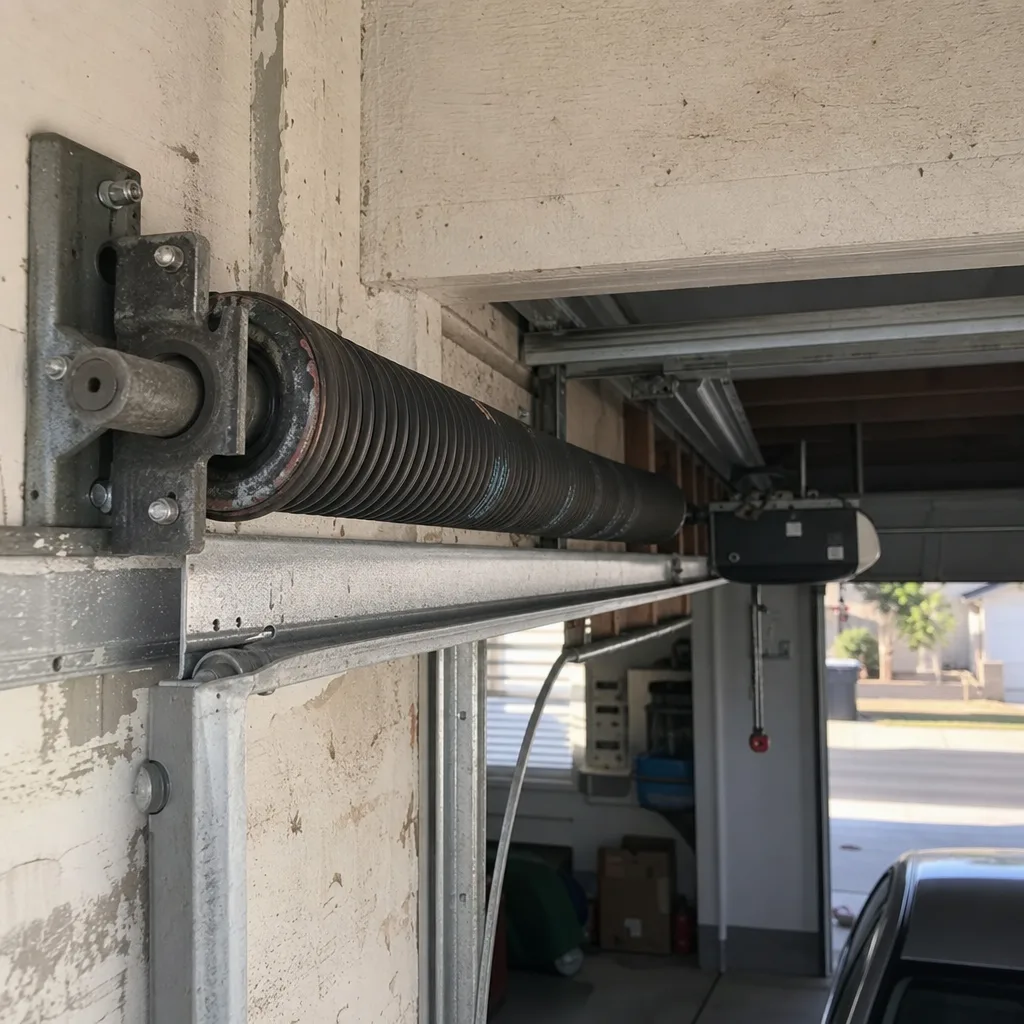
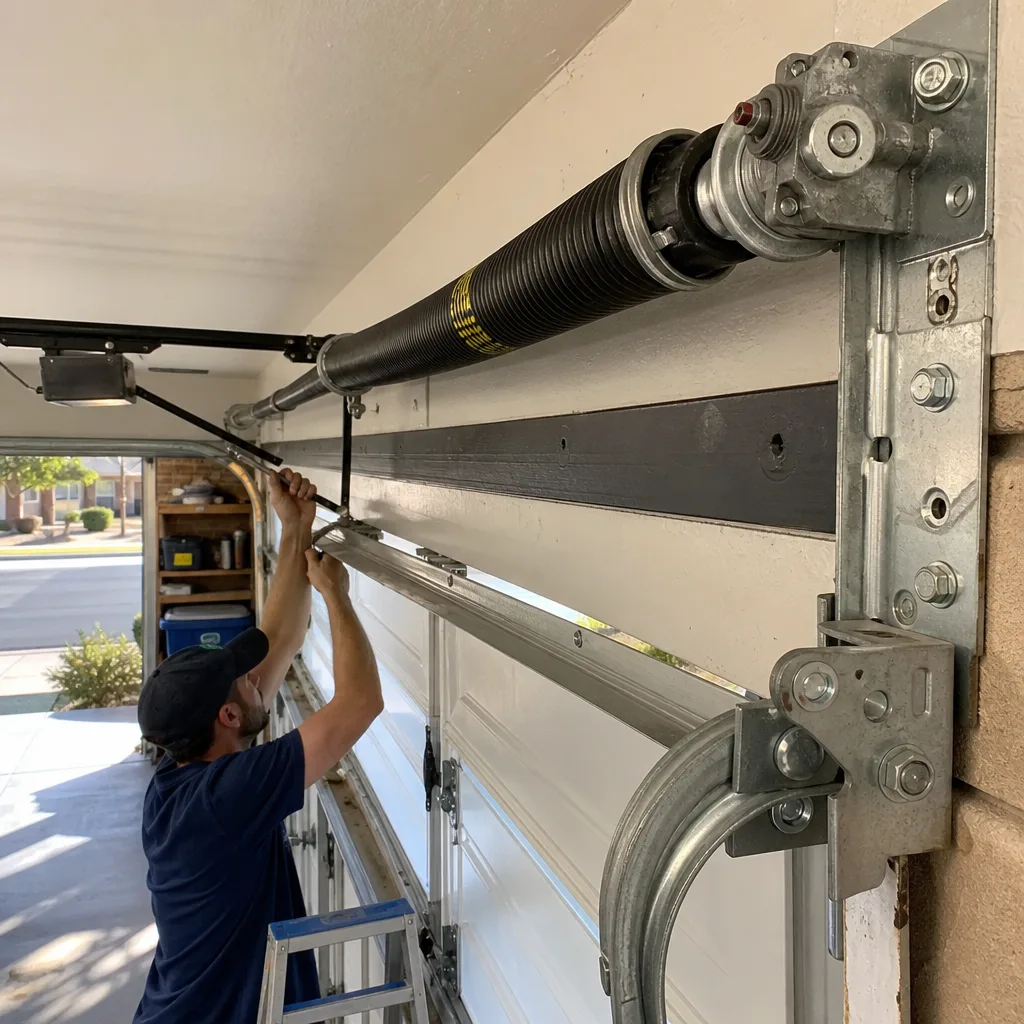
Tempe winters are mild by national standards, but the overnight swing is what matters. A December day might hit 65 degrees, then drop to 35 overnight. That 30-degree swing puts thermal stress on the torsion spring, the coiled metal spring mounted above the closed door that counterbalances the door’s weight. Metal expands when warm and contracts when cold. A torsion spring that’s been in service for five or six years, through a few hundred Tempe temperature cycles, is gradually losing its ability to flex. When it cools down overnight, the steel contracts slightly, and the tension in the spring changes, which means the door’s balance changes with it.
What an over-tensioned spring sounds like in winter: a high-pitched pinging or a sharp “ting” when the door moves, especially in the first lift of the morning. That sound is the coil releasing stored tension against the torsion tube. A normal cold-weather door just sounds a little stiffer, like it’s moving through thicker oil. The pinging is specific. If you hear it in December, the spring has been adjusted too tight somewhere in its service life, or it’s nearing the end of its lifespan and the coils are binding.
Most torsion springs are rated for 10,000 cycles, which translates to between 7 and 10 years for a typical Tempe homeowner who opens and closes the door three to four times a day. The springs don’t fail in the heat. They fail in the cold, because the metal is more brittle and the tension spike from the temperature drop is what finally snaps the coil. This is why December and January are our busiest spring replacement months in Tempe.
The December protocol:
- Run the door manually (red release handle pulled) on the first cold morning of the season. It should lift smoothly with roughly equal effort throughout the full travel. If you feel a hitch or a lurch at any point, the spring tension is uneven.
- Look at the spring gap. With the door closed, look at the torsion spring above the door. In a healthy spring, the coils are separated by a consistent, even gap. If you see coils touching in one section and spread apart in another, the spring is binding, a common Tempe winter issue that does not resolve itself.
- Listen for the pinging described above. One occurrence, note it. Two or more occurrences, that’s a pattern.
- Check the door’s behavior when opening automatically. If the door pauses, hesitates, or reverses, the opener’s force settings are tripping because the door’s balance has shifted. You can close a balanced door with two fingers. If yours takes real effort, the spring needs attention.
If the door starts moving unevenly after a temperature shift in Tempe, the right move is not to tighten anything yourself. It’s to get a technician out who can measure the spring’s wire diameter and current tension against the door’s actual weight. More on that below.
UV Degradation: Tempe’s Year-Round Attacker
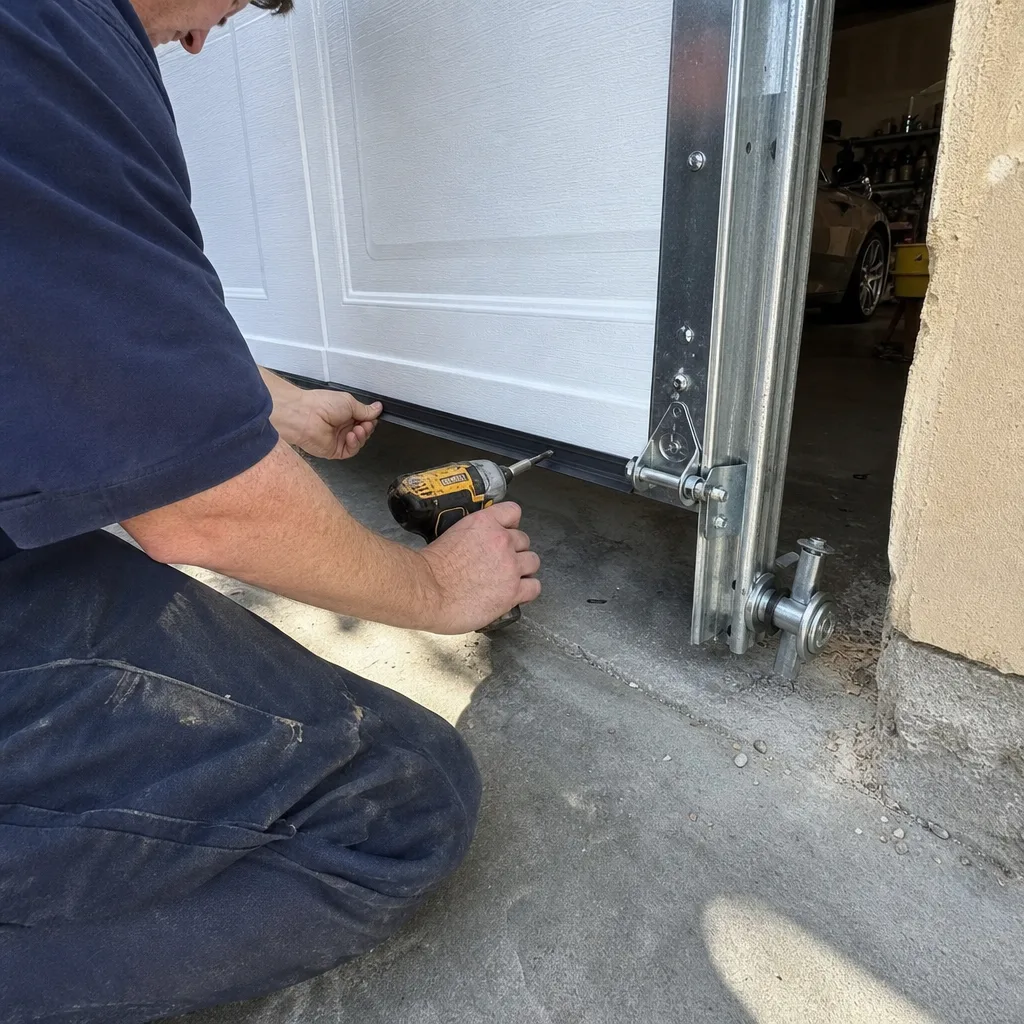
Phoenix and Tempe get about 300 days of sunshine per year, and your garage door takes a UV hit every single day. UV degradation follows a timeline, and Tempe’s timeline is accelerated compared to the national average that manufacturers quote. When a manufacturer says a steel door’s paint finish lasts 10 years, that’s based on a national average that doesn’t account for a Tempe summer.
Here’s what the UV timeline looks like for a garage door in Tempe, based on what we see at garage door repair calls across Tempe:
- Years 1-3: No visible change on a quality door (Clopay or Amarr steel panels with factory finish). The seal at the bottom is still flexible. The weatherstripping along the sides is intact.
- Years 3-5: Panel fade becomes visible on south-facing and west-facing doors. The color doesn’t match the rest of the house quite the way it used to. The bottom seal is starting to show surface cracking, especially on the sun-exposed side.
- Years 5-8: Seal brittleness is now measurable. You can snap a piece of the bottom seal off with your hands. The photo-eye lenses (the small plastic windows on the safety sensors near the floor) are clouding from UV exposure, and the opener may intermittently refuse to close because the sensors can’t see each other clearly. This is a classic Tempe failure that often gets misdiagnosed as a bad opener.
- Years 8+: Panel fade is pronounced. The steel is still structurally sound, but the finish has lost its UV protection and surface rust can start. The side weatherstripping is brittle and cracked. The photo-eyes need replacement or, at minimum, lens polishing on a regular basis.
Genie and Chamberlain openers use photo-eye sensors that mount low on the door tracks, about 6 inches off the ground. That puts them in direct sun for hours every day. When the lenses cloud over, the opener’s safety reverse system gets a false signal that something is in the door’s path, and the door refuses to close or reverses immediately after hitting the floor. We see this in Tempe often enough that it’s one of the first things we check. Cleaning the lenses with a dry cloth helps for a few weeks. Replacement sensors run $30 to $60 per pair, and a technician can swap them in under 30 minutes.
Panel fade is cosmetic until it isn’t. The UV breaks down the clear coat first, then the pigment. Once the clear coat is gone, the panel is no longer protecting the steel underneath, and pinhole corrosion starts within one or two more Tempe summers. You can’t restore UV-damaged clear coat. You can repaint, and there’s a specific process for repainting a steel garage door that involves etching primer and urethane paint, but most homeowners in Tempe never do it, and they get 8 to 10 years out of a door that should have lasted 15 with better care.
The one UV-proof component on your door is the torsion spring. It sits inside the garage, protected from direct sun. What gets it is heat cycling and load, not UV.
The Complete Lubrication Guide for Tempe Garage Doors
Lubrication is the one maintenance task every Tempe homeowner should be doing three times a year, and most people either skip it or do it wrong. The wrong way is to spray WD-40 on everything that moves. WD-40 is a solvent and water displacer. It’s not a lubricant for garage door hardware. It will strip whatever lubrication is there and leave the components drier than they were before.
The right products for Tempe:
- Hinges and roller stems: a high-temp synthetic grease or a silicone spray rated for 300+ degrees. Tempe garages get hot enough that standard white lithium breaks down.
- Rollers themselves (steel bearings only): a few drops of 30-weight motor oil into the bearing. Do not oil nylon rollers; the nylon doesn’t need it and the oil attracts dust.
- Torsion spring: a light coating of spray white lithium or silicone on the coil surface prevents rust and keeps the coils from binding. Don’t soak it. You’re not trying to fill the gap between coils.
- Track surface: nothing. The track is not a lubrication point. A dry rag wipe is all it needs, and only if dust has accumulated.
The 15-minute lubrication routine, three times a year:
- Disconnect the opener with the red release handle.
- Wipe down the inside surface of both tracks with a dry rag. Tempe dust builds up fast.
- Apply high-temp grease to all hinge pivot points (the spot where the hinge pivots on the door, and the pin where the roller stem attaches).
- Apply two drops of motor oil to each steel roller bearing.
- Spray a light coat of lithium spray across the full length of the torsion spring.
- Reconnect the opener and run the door through two full cycles.
This routine takes 15 minutes and prevents roughly 60% of the repair calls we see in Tempe. The other 40% are spring failures, cable failures, and opener logic board failures, which lubrication can’t prevent.
For homeowners who prefer a documented or professionally handled maintenance visit, Servo Garage Doors Tempe provides a written record of what was serviced and photographed on each call, so you’re not guessing what was done from a technician’s verbal summary.
What You Should Never Adjust Yourself
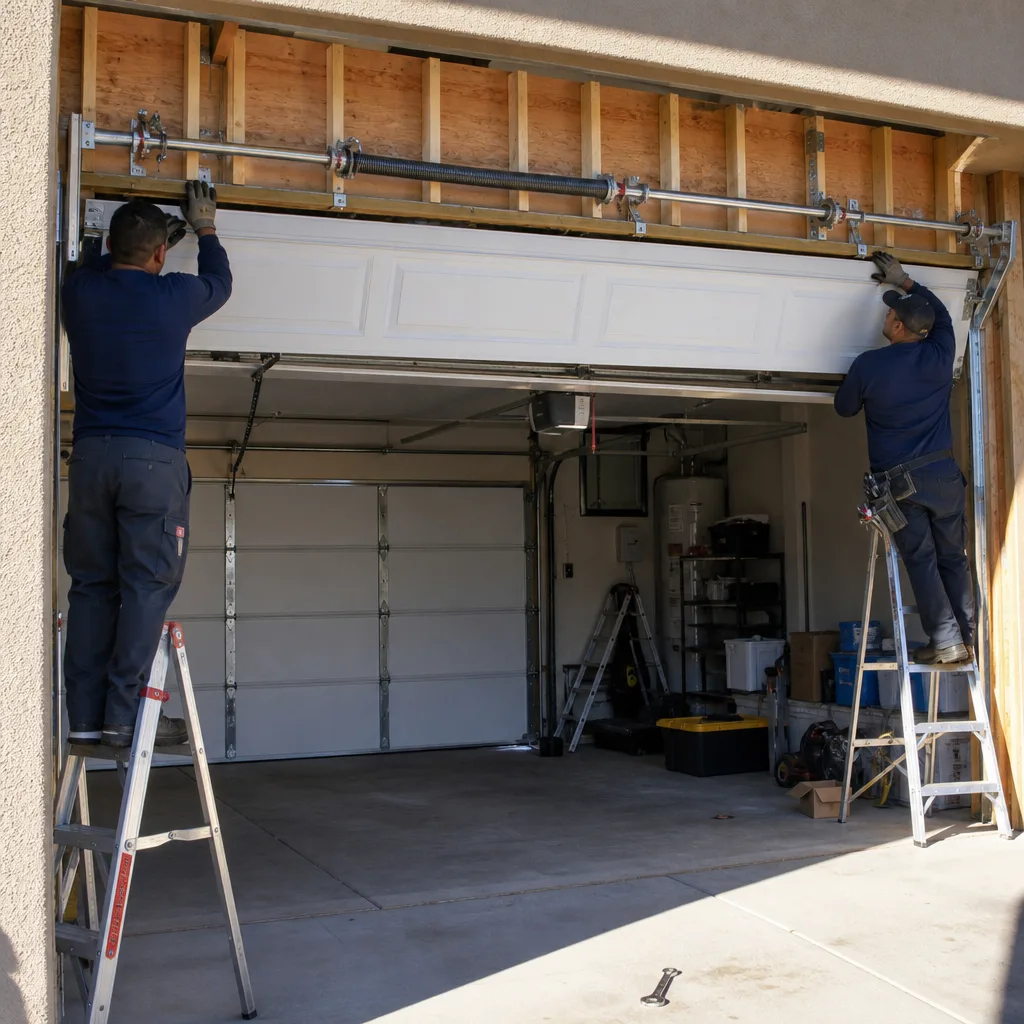
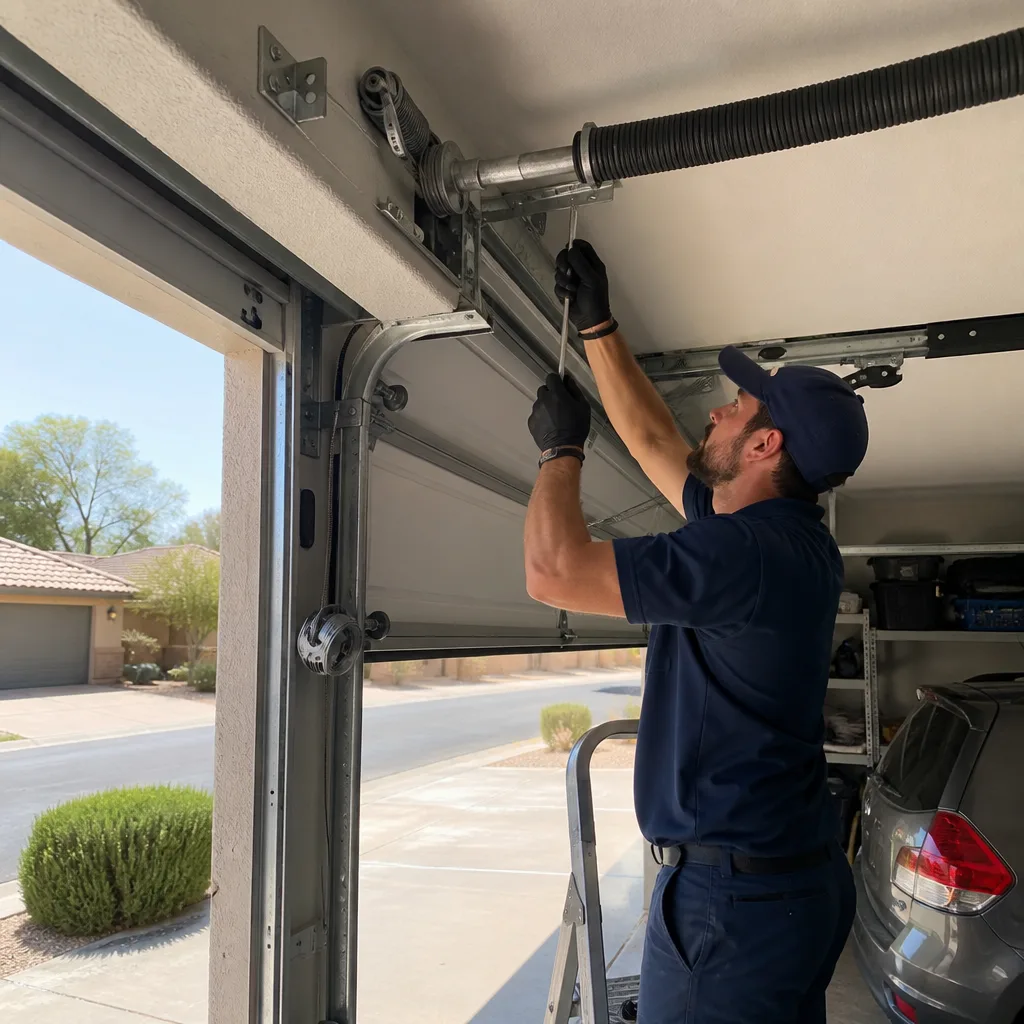
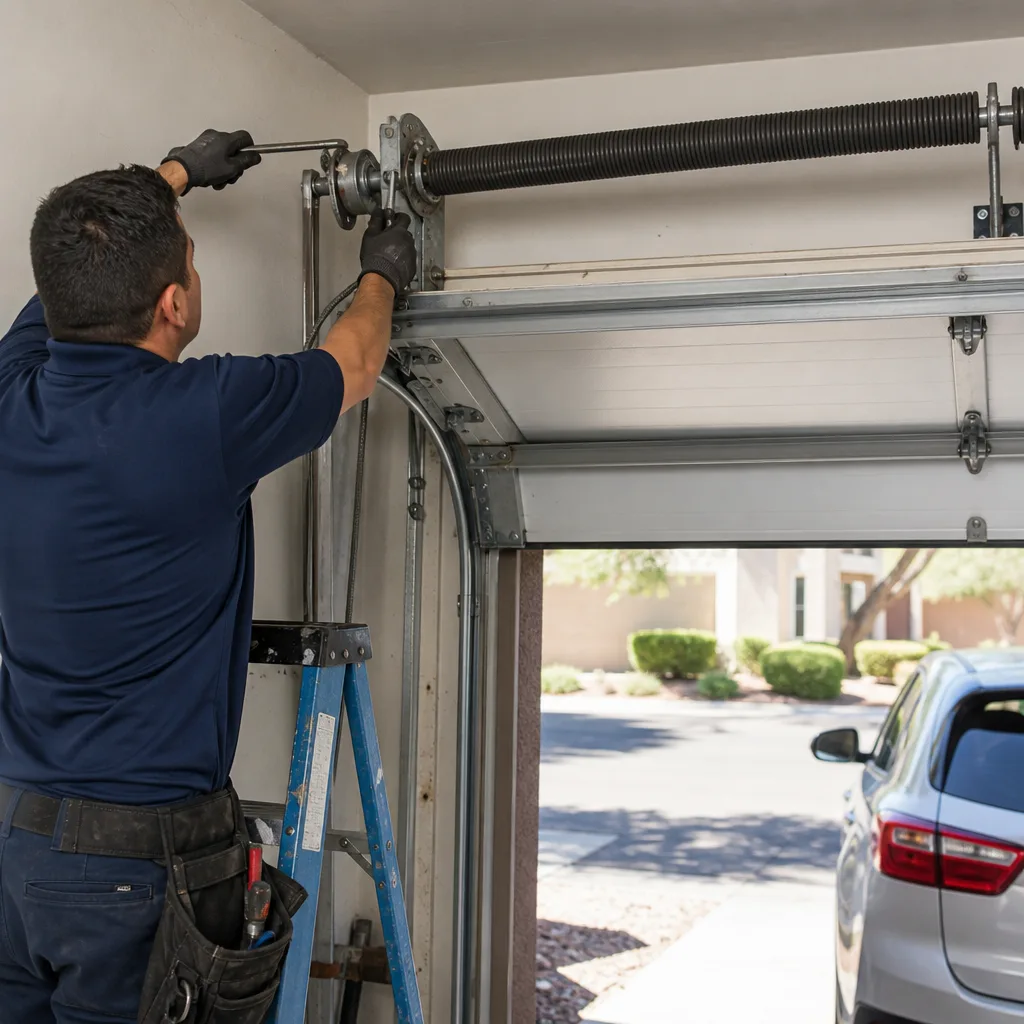
There’s one adjustment on a garage door that can seriously injure or kill a person, and it’s the torsion spring tension. The torsion spring holds the entire weight of the door in stored mechanical energy. When the door is down, that spring is wound tight. If it lets go while you’re working on it, the steel winding bar can move at speeds that break bones and the coils can shear through whatever’s in the way.
This is not a caution for people who don’t know what they’re doing. Even experienced technicians treat torsion springs with a healthy wariness, because the failure mode is sudden and the force involved is not something you can react to. The winding bars used to adjust these springs are half-inch steel rods, and they’re specifically sized to fit the winding cone. Using a screwdriver or a pry bar in place of a proper winding bar is how people lose fingers.
If your door is moving unevenly after a temperature shift in Tempe, here’s what to do instead of adjusting anything:
- Pull the red release handle and lift the door manually to waist height.
- Let go. Note whether the door stays, drops, or rises.
- If it moves in either direction, the spring tension is off. There’s no safe DIY fix.
- Call a professional. When the technician arrives, ask them to verify the spring’s wire diameter and the current tension against the manufacturer’s specified turns for the door’s weight. A technician who can’t tell you those numbers is guessing.
At Tempe garage door installation and repair calls, our technicians photograph the spring, measure the wire diameter, and document the tension before any adjustment is made. That’s Clause 4 of The Haven Standard: the customer sees the failed or out-of-spec part before anyone quotes a replacement. If a contractor won’t show you the part and explain what they’re adjusting, that’s a red flag, regardless of what their Google reviews say.
Common Mistakes to Avoid
- Lubricating the tracks. The track is one of the most commonly mis-lubricated parts in Tempe garages. Oil on the track attracts dust, and dust mixed with oil becomes an abrasive paste that wears out the rollers. The track needs a dry rag, nothing else.
- Using WD-40 as a garage door lubricant. WD-40 is a penetrating oil and solvent. On roller bearings and hinges, it briefly quiets the squeak and then strips the remaining lubrication, leaving the parts noisier than they were before. Use lithium spray or motor oil instead.
- Ignoring the photo-eye lenses until the door stops closing. If your door only closes when you hold the wall button down, and you’re in Tempe, the photo-eyes are the first thing to check. The UV clouding of the lenses is a year-round problem here, and cleaning only helps once the clouding has progressed too far.
- Waiting until the opener trips its thermal cutoff to address door friction. By the time the motor shuts down from heat, the underlying friction problem (bad rollers, poor balance, dry hinges) has been building for months. April is the time to reduce that friction, not July.
- Assuming a garage door spring is a DIY replacement. Torsion spring replacement is the single most dangerous home repair task, and it’s the one where the savings of doing it yourself are the smallest relative to the risk. A spring replacement in Tempe typically runs $180 to $340 for a standard single-door spring, and that includes the part, the labor, and a warranty. The hospital bill for a broken wrist starts higher.
- Deferring a seal replacement because the gap looks small. A bottom seal with a visible gap lets in dust, water, and pests. In Tempe, the dust alone is enough reason to replace a $100 seal before it becomes a $300 cable corrosion repair.
- Checking the door only when it misbehaves. The entire point of a seasonal protocol is that you catch problems before they become failures. A door that runs perfectly all year can still have a spring that’s one cycle away from snapping, and you won’t know until the door doesn’t open one morning.
When to Call a Professional
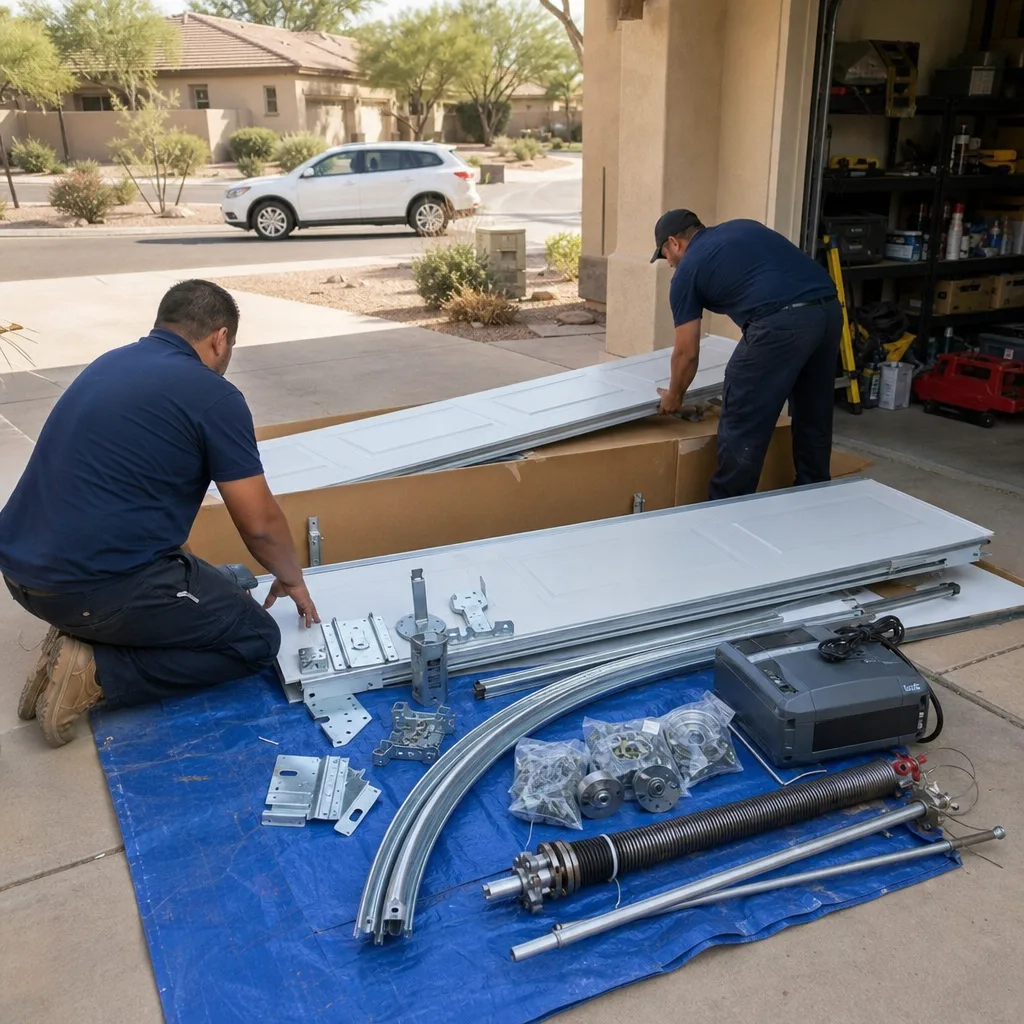
Some garage door problems are clear DIY territory: the lubrication routine above, the seal inspections, the photo-eye lens cleaning. Others are not, and DIY vs Professional Garage Door: The Tempe Homeowner’s Decision Guide can help you decide which is which. Call a professional when the torsion spring is involved, always. Call a professional when the door is off-balance and you can’t identify why. Call a professional when the opener’s logic board is misbehaving; diagnosing a board failure requires a multimeter and the specific diagnostic codes for your opener brand. Call a professional when a cable is frayed, because the cable is under the same tension as the spring and the failure mode is just as violent. Servo Garage Doors Tempe offers free estimates in Tempe, call (602) 962-8352, and we quote a flat written price before any work starts.
Frequently Asked Questions
For a homeowner doing the work themselves, seasonal maintenance costs about $25 to $40 per year in lubrication products and cleaning supplies. For a professional maintenance visit in Tempe, expect $85 to $150 depending on the scope, which typically includes lubrication, balance check, safety sensor test, and a written condition report. See our Garage Door Cost Breakdown: The Tempe Homeowner’s Reference for 2026 for fuller pricing.
Lubricate your garage door three times a year in Tempe: once in April before the heat, once in July before monsoon season, and once in December before the overnight temperature swings start. The heat, dust, and UV exposure in Tempe break down lubricant faster than in most climates.
Yes. The overnight temperature swings in December and January make the spring steel more brittle, and the thermal contraction increases the momentary tension spike when the door first moves in the morning. Most spring failures in Tempe happen between December and February.
No. Torsion spring adjustment is dangerous because the spring holds the entire weight of the door in stored mechanical energy, and a sudden release can cause serious injury or death. This is the one adjustment on a garage door that should always be handled by a trained technician with the proper winding bars.
Close the door and look for daylight under the bottom edge. If you see light, the seal is shot. Also flex the seal with your hand; a healthy seal is flexible, while a UV-damaged Tempe seal will be brittle or cracked. Replacing a bottom seal typically runs $80 to $150 in Tempe, parts and labor included.
No. Estimates are free, and every estimate includes a flat written price and a written scope before any work starts. That’s Clause 1 of The Haven Standard, and it applies to every job.
The Bottom Line
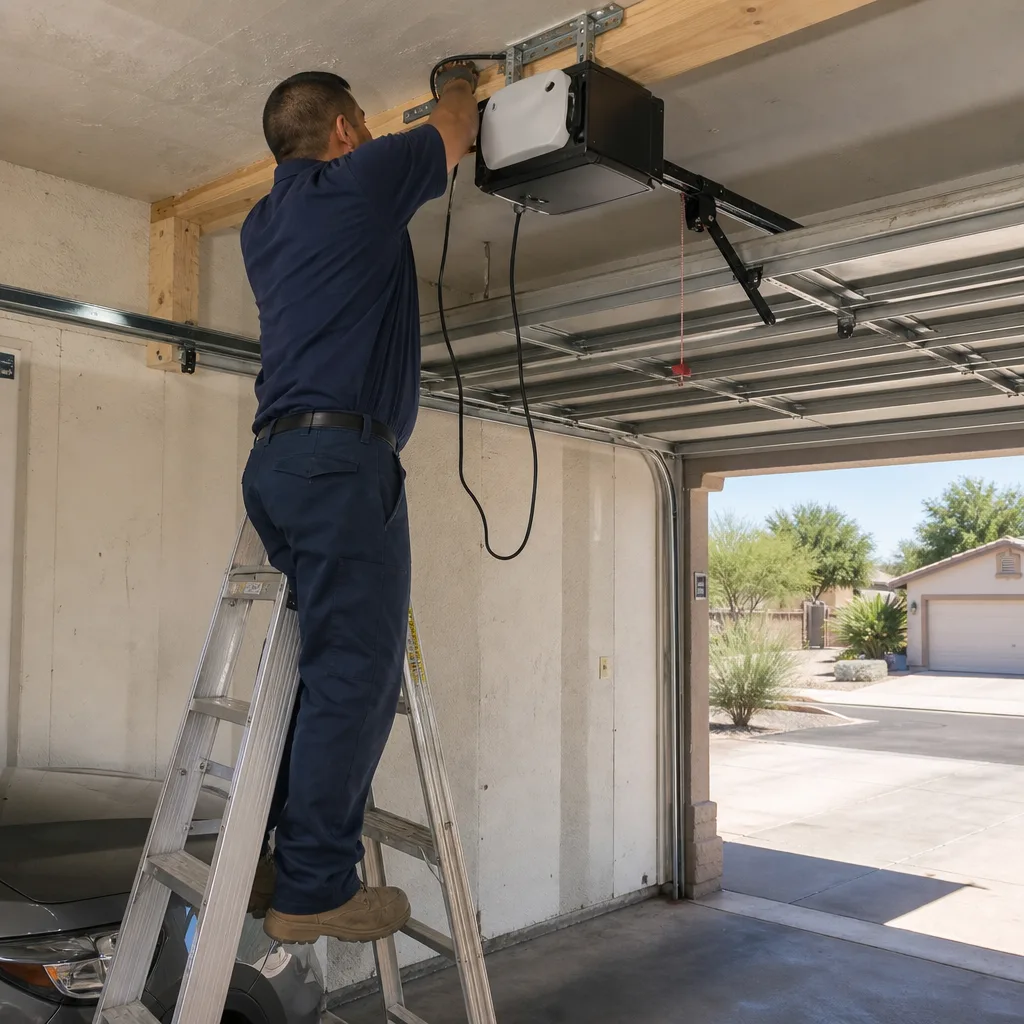
Tempe garage doors fail in predictable patterns, and those patterns follow the calendar. April is for reducing friction before the heat. July is for sealing against monsoon dust and water. December is for monitoring spring tension during temperature swings. The rest of the year, UV is quietly degrading your seals, your photo-eyes, and your panel finish. Do the 15-minute lubrication routine three times a year, keep the seal and sensors maintained, and never touch the spring yourself. That’s the full playbook. For more guides & resources on keeping your door running, visit our blog. Everything else is just reacting to failures that could have been prevented.
If you’d rather have it documented than do it yourself, garage door opener repair and installation in Tempe is one of the services we handle, along with full seasonal maintenance. Call us at (602) 962-8352 and we’ll give you a flat written price before any work begins.
Written by Marcus Deller, Owner at Servo Garage Doors Tempe, serving Tempe since 2015.